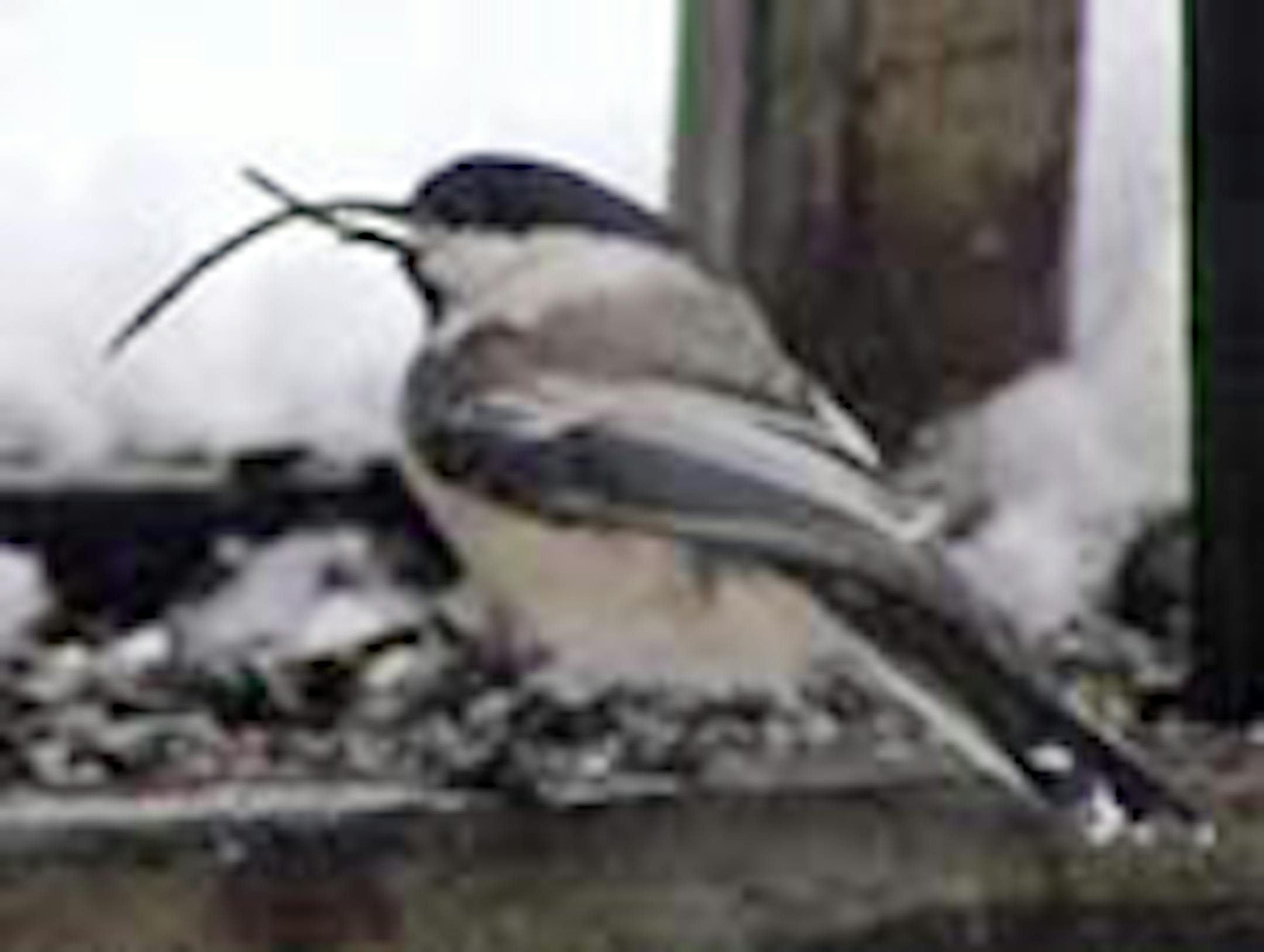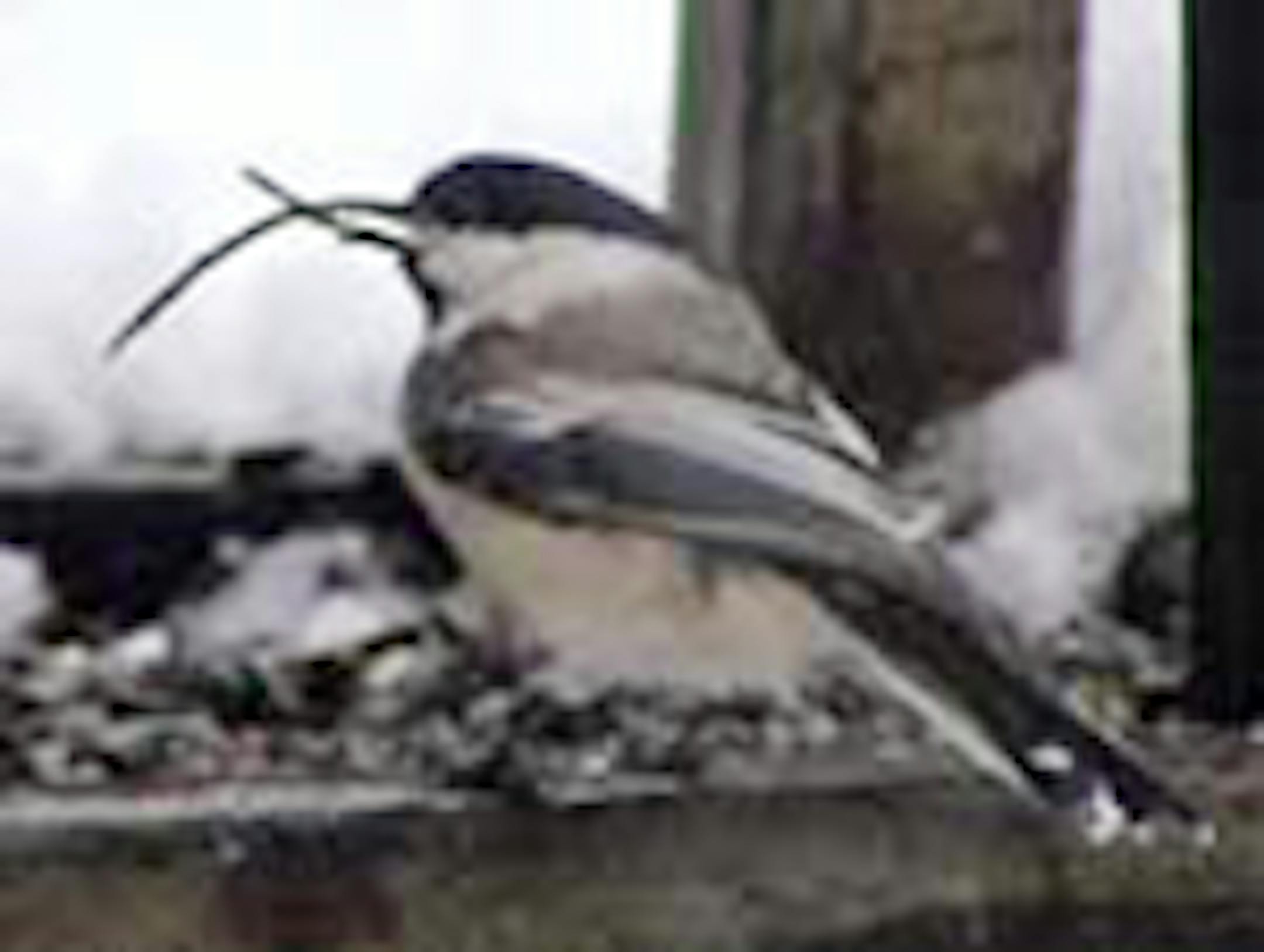
Chickadees with beaks over an inch long, the mandibles crossing each other like folded arms, are being found in disturbing numbers in Alaska. Other bird species also are showing this peculiar irregularity. Scientists believe that this is not a normal genetic defect because the numbers of birds with this deformity is far too large. But, they have little idea of what might be causing it. The problem is not new. Studies have been underway for at least three years, and will continue.
Birds with deformed beaks also have been found in British Columbia and the state of Washington. Besides chickadees, species affected include Northwestern Crow, Red-breasted Nuthatch, and Stellar's Jay.
The deformities hinder the birds' ability to eat, sometimes to the point of starvation. Nesting birds with this problem have trouble not only collecting food for nestlings, but also with feeding the young. Many of the birds with this deformity cannot groom themselves. This results in unkempt feathers that fail to adequately protect the birds from weather, and also in heavy infestations of parasites that normally would be groomed out of the feathers.
The deformities have been seen for the past 10 years. They are now increasing dramatically, according to researchers. This has become the highest rate of beak abnormalities ever recorded in wild bird populations. Seventeen percent of Northwestern Crows found along Alaska's coasts show deformed beaks.
The keratin layer of the beak (material similar to your fingernails) becomes overgrown. If trimmed, the deformity grows back. In some cases, abnormal skin, legs, feet, claws, and feathers have been found. The problem seems confined to adult birds.
Causes of such problems include environmental contaminants, nutritional deficiencies, and bacterial, viral, fungal or parasitic infections. Past clusters of beak deformities have been linked to environmental pollutants such as organochlorines. Once a cause was located, these situations were cleared up.
In Alaska, BC, and Washington, however, no particular cause has been pinpointed
One of the Alaska studies is being conducted by United States Geological Survey employee Caroline Van Hemert as part of her work toward a PhD. She contributed information for this article. Other information came from the USGS web site.