

About 15 years ago, Villanova University biology professor Robert Curry was looking for a project that would allow his students to investigate something interesting without much travel.
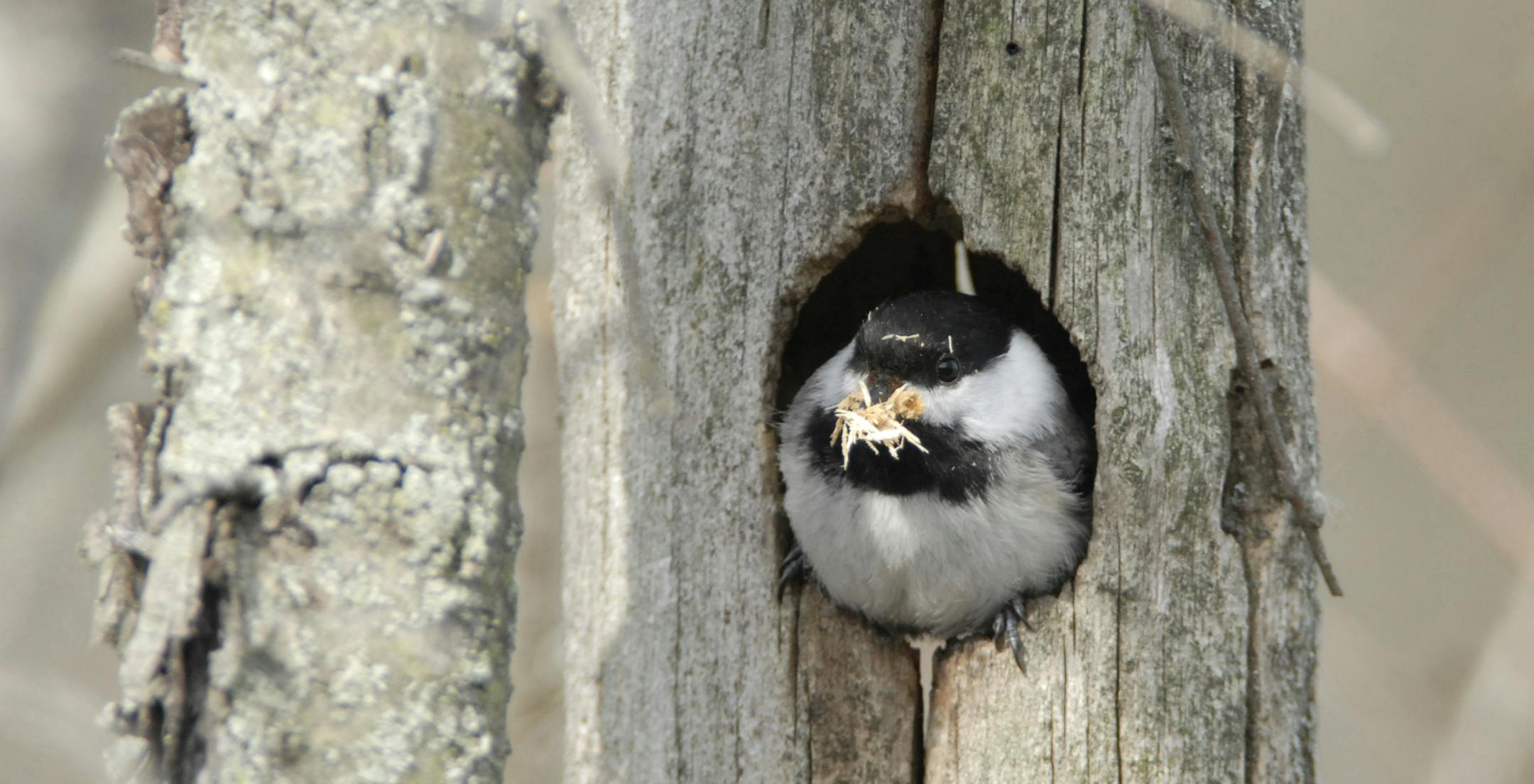
He found it in a cheeky little bird with a black cap, familiar to anyone with a back-yard feeder: the chickadee.
His idea was to catch a lot of birds (with special nets), band them to identify individuals, and keep track of all they did — who was nesting with whom and where, how many offspring they had, where the young went when they set out on their own.
Little did Curry know how quickly this creature, weighing less than two quarters, would provide clear evidence of birds moving northward — at quite a clip — in association with climate change.
Curry focused on two species: the Carolina chickadee and its more northerly relative, the black-capped chickadee. They look similar and are closely related, but genetic research indicates the two have been distinct for 2.5 million years.
The birds were good candidates for his project, since they don't migrate seasonally. At the time, Carolina chickadees existed only in the southern half of the Eastern United States, west into Texas. Black-capped chickadees inhabited northern North America, up into Canada and all the way across to Alaska.
The two ranges overlapped in a ribbon of habitat about 21 miles wide. Part of it crossed southeastern Pennsylvania.
Within that swath, the Carolinas and the blackcaps interbred, producing hybrids. One of the zone's telltale signs: Hybrid chicks were less likely to hatch and survive.


