
Chevy Volt pulls plug on range worry

At last: An electric car that acts like a regular car.

August 9, 2011 at 11:04PM
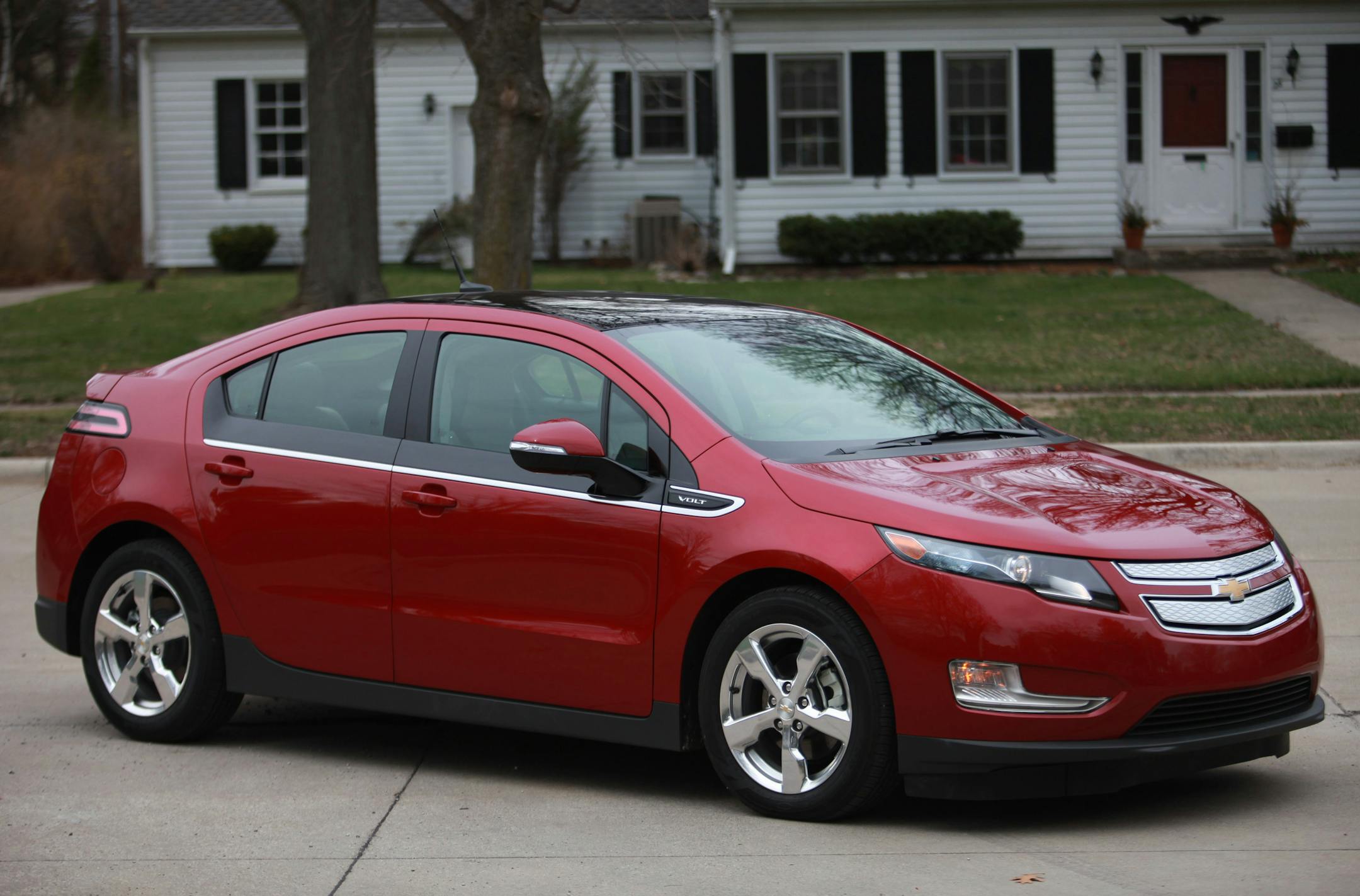
The 2011 Chevrolet Volt is not like any other car. Among countless other differences, the fuel gauge adapts to your performance, like a teacher grading a class on a curve. (Mandi Wright/Detroit Free Press/MCT)
The 2011 Chevrolet Volt is not like any other car. Among countless other differences, the fuel gauge adapts to your performance, like a teacher grading a class on a curve. (Mandi Wright/Detroit Free Press/MCT) (Casey Common — MCT/The Minnesota Star Tribune)

Seems like yesterday -- well, it was only earlier this year -- that the expression "range anxiety" slipped into our lexicon when it came to discussing these newfangled, plug-in electric vehicles.

How far can I make it without another plug-in? And how many miles do I gain from the recharge?

Now, just like that, the new 2011 Chevy Volt has pulled the plug on all this talk.

That's because the much-anticipated Volt removes all the guesswork: Once the charged up lithium-ion battery pack poops out -- after 30 miles or so -- the Volt's "range extender" takes over. That's a 1.4-liter gas-driven engine/generator so the electric motor can continue driving the wheels. For another 300 miles or so.

Voila! An electric car that acts like a regular car.

One could get very comfortable with the Volt, providing one can get comfortable with plugging in the dang thing every night in order to up your mileage figures. With no garage space left for a car, I found it a bit of a nuisance going to the trunk, unraveling the cord, plugging into the outdoor outlet and then inserting the nozzle into the port at the left front of the car.

And, in the morning, unplug, rewrap and put it back in the trunk. Oops -- don't forget to unlock the car first: A theft alarm goes off if you remove the nozzle from the port without unlocking.

With a garage, of course, you could leave the cord plugged in and ready to insert. A 10-hour charge bought me 32 miles -- for around a buck-and-a-half. What a bargain! If you spring for a 220-volt charger, rather than the 110, you can charge the Volt in four hours instead of 11.

The savings improve if you do the right kind of driving. The Volt is best suited for those who travel 40 miles or less a day, which Chevy folks says is nearly 80 percent of us. I commute 70 miles a day, so my savings were greatly diminished. Still, as I plugged in nightly, I calculated that I was getting the equivalent of around 70 mpg. Very sweet.

If your daily mileage is low, most of your miles will be on that cheaper, $1.50 plug-in charge. GM figures the Volt costs about the same to run as your refrigerator. And the carmaker claims many folks can save 500 gallons of gas a year -- maybe more than $1,500.

Love it or don't, but I warn you not liking it could leave you very lonely. This Volt, still in its infancy, has caused quite the commotion, with popularity rampant in my neighborhood, judging from the inquiries and comments.

Same excitement, nationally. There are too many honors to keep track of, but let's mention "Car of the Year" from Motor Trend, Automobile Magazine and Green Car magazine for starters.

GM has actually dabbled in electric vehicles for nearly a century. A timeline in the January edition of Automobile magazine laid it all out, from a 1912 electric truck to the experimental EV1 that ran on nickel-metal hydride batteries and mysteriously vanished, to the Volt concept which debuted at the 2007 Detroit auto show.

But only the Volt has generated this much excitement with its brisk 149-hp electric motor that that takes its power from a 16-kW-hr battery. After its charge is expended, the engine/generator goes to work.

It's a wonderfully seamless transition, too. No jolt, no skip. The only real evidence is when the battery icon on the instrument panel shrinks to a corner while a gas-pump icon takes center stage.

If I had one, I might get lazy and keep pumping gas. But the Volt should be charged at least once a month. And, for those who think they'll never need gas assistance, the car is programmed to run the engine at least once a month to keep the parts moving and get rid of stale gas.

Acceleration is decent for a green car, with 0-60 happening in around 9 seconds. Nothing to brag about -- except to your green-car cousins. It'll leave the Prius and others in your rear-view mirror.

The ride is impressive. It's a quiet ride, though with no engine noise expect to hear road and wind noise as a substitute.

But is it fun to drive? Not bad at all, with crisp steering and nice balance on corners (some thanks to the 435-pound battery pack that stretches down the center and gives it a lower center of gravity).

While driving, the trick for best mileage is to keep the green-leaf icon on the instrument panel in the middle of the "green zone." Not hard to do under normal driving conditions. Not easy otherwise.

Interior room is ample, with plenty of headroom and legroom and decent legroom in the back seat, too. With a battery pack running down the center, the rear seats only two, though.

The center console is sharp-looking -- flat and adorned with touch-sensitive buttons. Two high-definition screens offer all the details on energy usage, driving range, mileage figures and even "vehicle messages."

So here's a message for those thinking about a Volt. Act quickly. One dealer told me he gets one or two a month and they're gone in a flash. GM has accelerated its national rollout by six months, entering 11 more states in the third quarter and aiming for all 50 states by the end of the year.

The Volt, as many experts have said, is not for everyone. How many miles you drive is a big consideration for real savings. So is your willingness to shell out $40,280 (base price). It could take a couple of hundred thousand miles to make up the difference when compared to other high-mileage cars.

But remember this: You'll be driving a budding legend. The Volt marks a truly historic step forward in automotive history. And I'm guessing we'll see more like it down the road.

about the writer

about the writer

BARRY SPYKER, McClatchy Newspapers