The earliest historical reference to cheesecake involves an ancient Greek physician, Aegimus, who wrote a book on the art of making the luscious dessert of cream cheese, sugar and eggs. That Dr. Aegimus also was the first to write a treatise on the pulse is, we're sure, mere coincidence.
Cheesecake gets a bad rap when it comes to dessert, a reputation fueled partly by the veritable cornerstones served by some restaurants, further troweled with rich sauces, fruit compotes, or chopped-up candy bars.
Diners who are incautious (or freshly jilted) could finish a full meal, only to polish off another thousand calories without missing a beat.
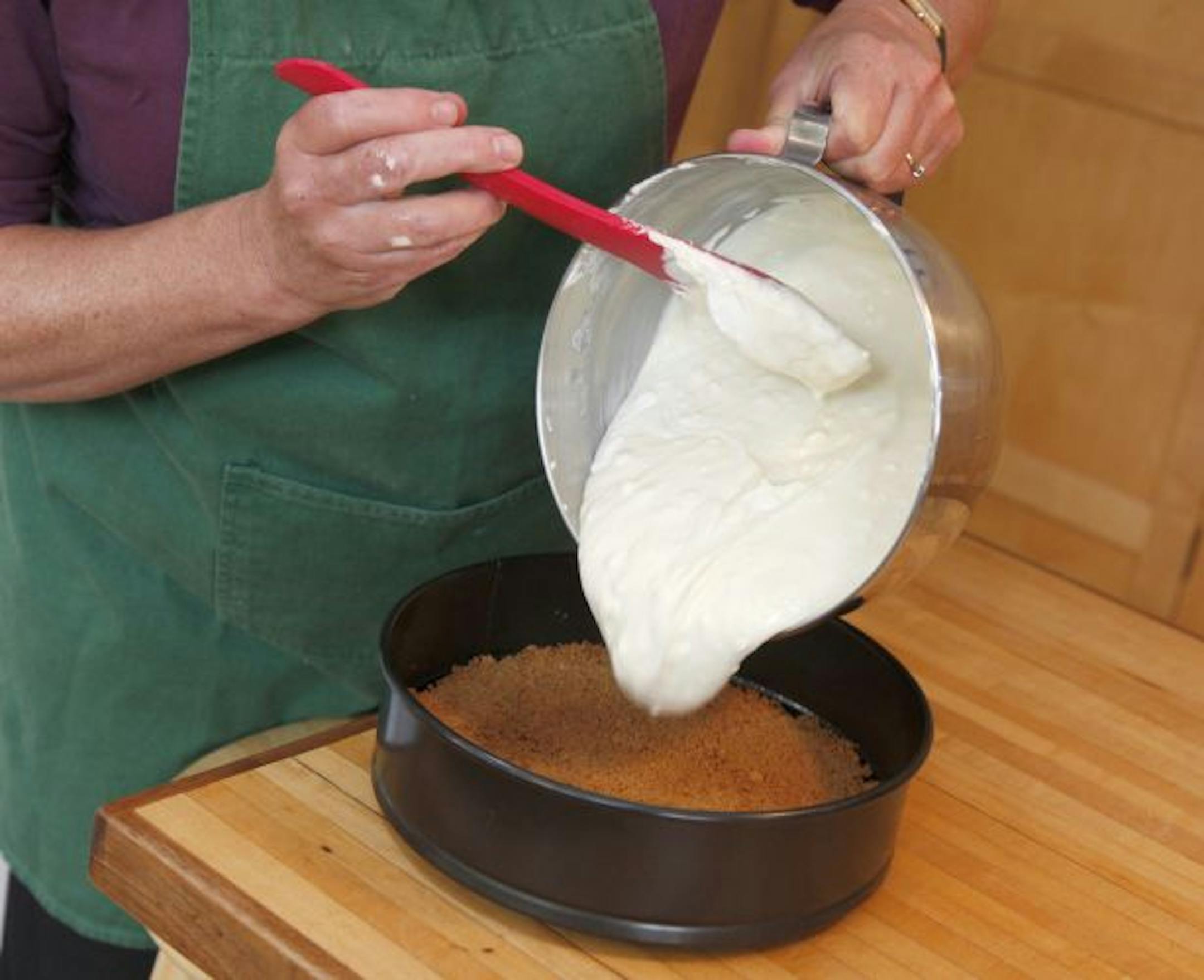
But cheesecake, enjoyed in moderation, is a great gustatory pleasure. Better yet, it requires no tricky techniques, or even gear, although an electric mixer and springform pan (a high-sided round pan with a removable bottom) makes serving easier.
First, though, a definition of terms: There are several styles of cheesecake, most made with cream cheese. New York style traditionally incorporates heavy cream into the cream cheese. Italian cheesecakes use ricotta cheese, while Germans use a variety of cheese called quark.
Chicago-style cheesecake is baked to be firm on the outside and creamy inside. The lighter Pennsylvania Dutch tradition uses a cheese that's more like cottage cheese. (There's even a recipe floating around that starts with a box of white cake mix.)
Crusts are all over the place, as well, running the gamut of crushed graham crackers, shortbread cookies, chocolate wafers, gingersnaps, or nothing at all.
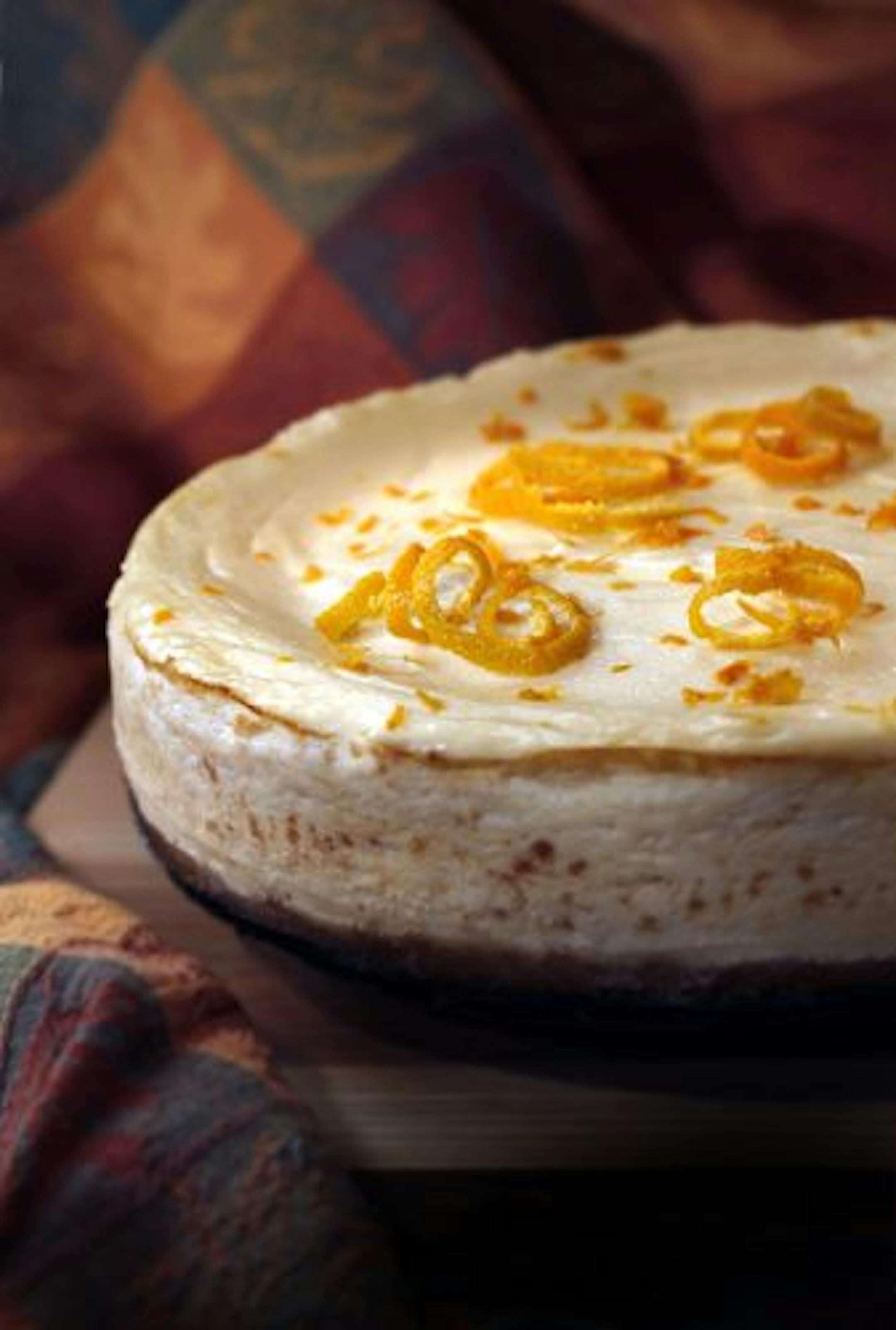
For our purposes, sour-cream-style cheesecake with graham cracker crust is the best of these several worlds. Sour cream replaces New York's heavy cream, which also gives this cake the advantage of freezing well without loss of texture.