

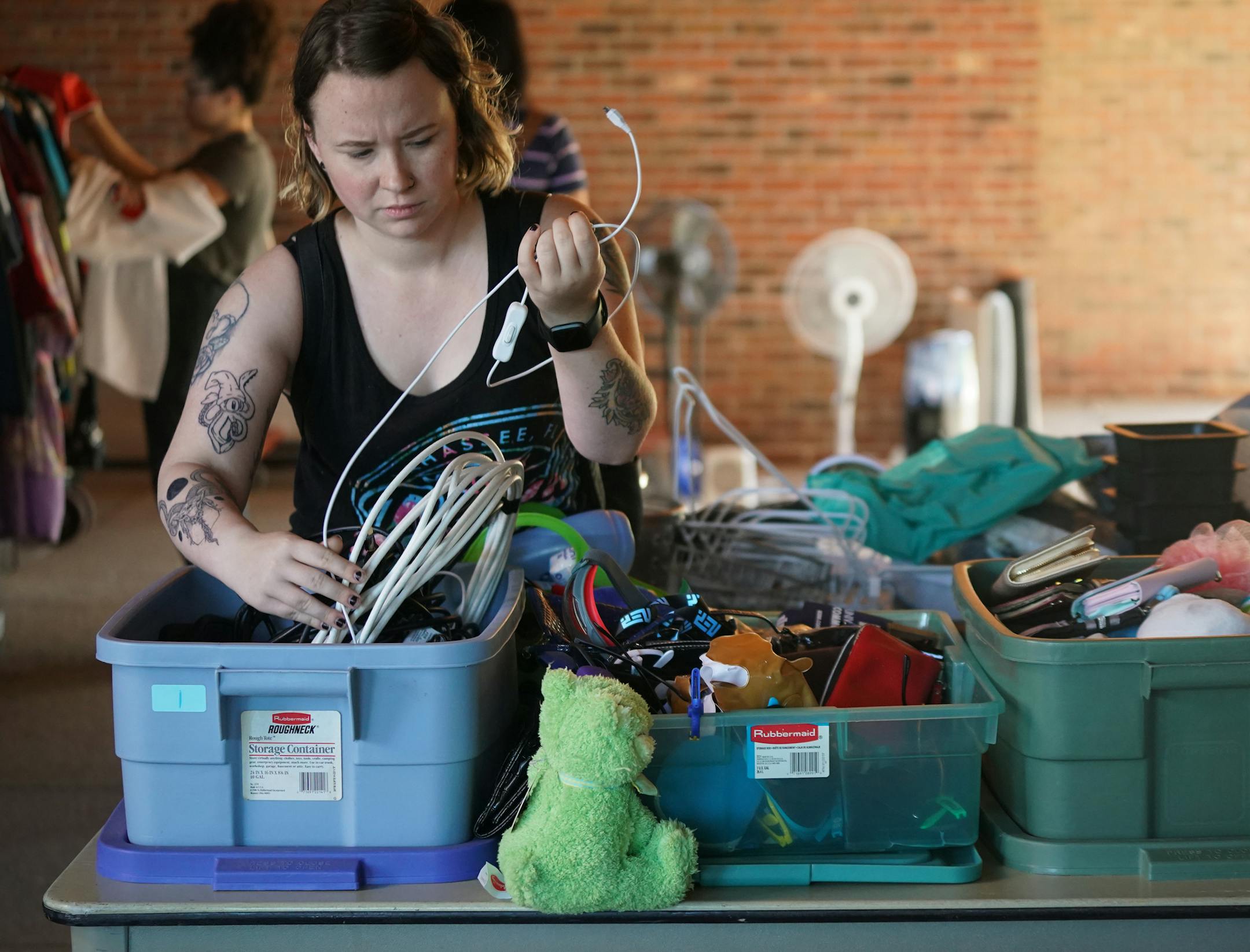
Balancing hampers piled with clothes, shower caddies, desk lamps and other dorm essentials on their hips, a cluster of Hamline University students were looking for the checkout counter.
There wasn't one.
"You can just take it," Emma Kiley said. "Everything is free."
Kiley, an AmeriCorps VISTA staffer at Hamline, was volunteering during the St. Paul college's second annual Pop-Up Free Store, where arriving students were able to pick up futons, coffeemakers, full-length mirrors, even pompoms in Hamline's colors of burgundy and gray.
College staffers and volunteers had saved thousands of pounds of merchandise from being thrown out during move-out week last spring. Now it was clean and carefully arranged on tables and racks in front of the Bush Memorial Library.
For these college kids, back-to-school shopping doesn't necessarily mean a trip to the store anymore.
"I keep saying, 'You know, before you do your Target run, see if there's stuff that's reusable,' " said Valentine Cadieux, director of sustainability at Hamline. "The average college student throws away 640 pounds of stuff a year. And over half of that is when they move out."
The free store at Hamline is just one example of how sustainability efforts have become the norm at many higher education institutions. From reducing energy use to sourcing food locally and composting leftovers, practices that once seemed ultra-green are becoming commonplace on campuses statewide and across the country.


