

The Journalists' Association of Serbia was among the first to protest the Charlie Hebdo assault in Paris, drawing parallels to a deadly attack on a Serb media outlet sone years ago.
Today as we're awash in post-Hebdo invective, we need to reconsider this earlier incident where journalists died — and where we were the attackers.
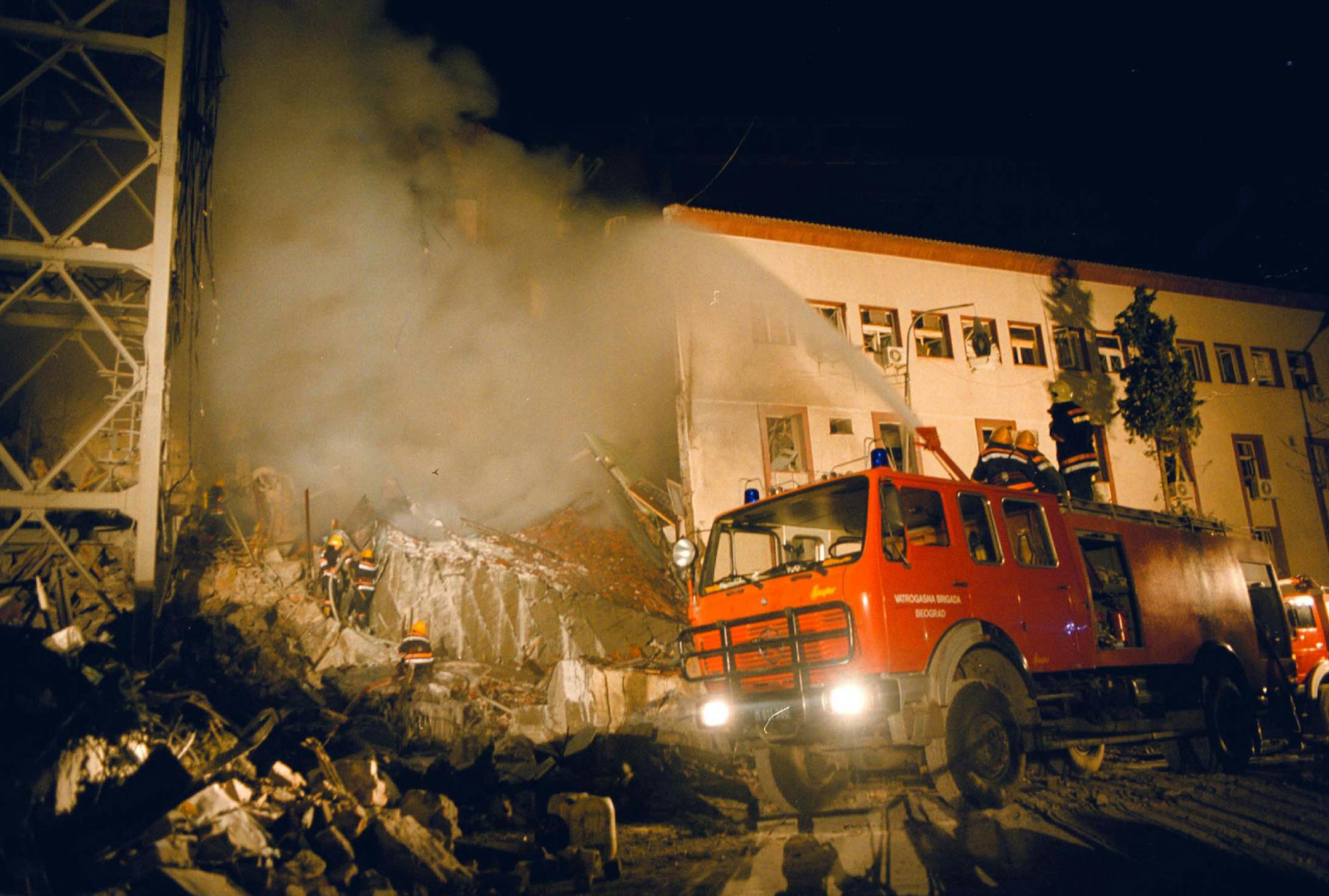
At 2:06 a.m. on April 23 1999, the United States and NATO attacked Serbian State Television (RTS) in Belgrade, pancaking six stories of cement into rubble and killing 16 of the 100 civilian workers in the building. Victims included Jelica Munitlak, a young makeup artist who was simply proud to be working at Serbia's largest station, and Tomislav Mitrovic, a production manager near retirement who had sent subordinates home for their own safety.
The RTS attack came as U.S. leadership and NATO faced intense political pressure to broaden their targets in the bombing campaign against Yugoslavia. The Star Tribune Editorial Board joined the mob, editorializing on March 31, 1999, for "more planes carrying more bombs against more targets around the clock."
NATO delivered. In early April, attacks became more indiscriminate, killing farmers, suburbanites and miners. Attacks damaged a maternity hospital in central Belgrade, and accidentally killed scores in attacks on a passenger train and a refugee convoy. On April 8, NATO warned RTS that its equipment would be attacked, but then offered assurances that civilian staff members were not a target. Yet NATO leaders changed their minds again, and on April 23 they attacked without specific warning.
People were still trapped in the wreckage when Western leaders began defending the raid as an attack on a propaganda outlet. President Bill Clinton said he approved the bombing because RTS "basically spread disinformation" (this coming just months after his perjury impeachment). Tony Blair insisted the attack was "entirely justified," later citing a concern that RTS footage of NATO victims was being rebroadcast in the West and that it might undermine support for the bombing.
Pentagon spokesman Kenneth Bacon added a blunt terroristic threat: "The broad message is that [the Serbs] should put pressure on their leadership to end this.'' In other words, we'll continue bombing civilian resources until the Serbian government changes.
Amnesty International, Human Rights Watch (HRW), Reporters Without Borders and the Committee to Protect Journalists all protested the attack. Amnesty and HRW viewed the attack as a war crime, though the International Criminal Tribunal for the former Yugoslavia declined to prosecute on narrow legalistic grounds.


