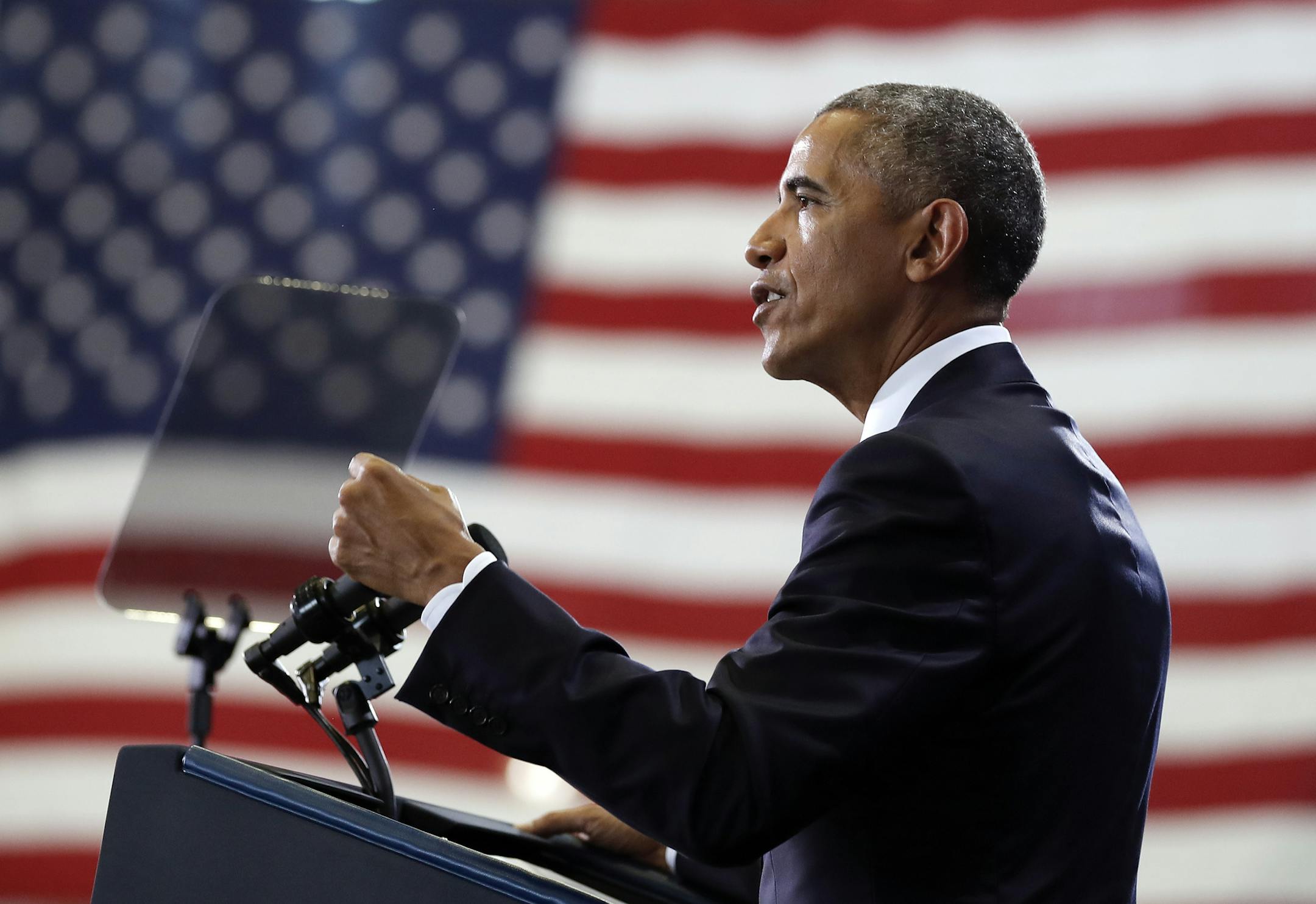
During his eight years in office, Bloomberg View has published hundreds of columns about President Obama, critiquing his policies, assessing his successes and analyzing his failures. As he delivers his parting shots this evening in a farewell address, our columnists are returning the favor, remarking on things they will miss, others they will not, and moments that have left a mark no matter what you think of him or his administration.
The cost-benefit president
What I will most miss about President Obama is his staggering capacity to evaluate trade-offs — to identify the multiple effects of competing courses of action before making a decision. Insisting on evidence, objectivity and counterarguments, he was the cost-benefit president.
Obama's attention to trade-offs was on clear display during the Great Recession, where he undertook bold action and prevented a depression, even as he calmly resisted the left's calls for nationalizing banks and jailing bankers. In the domain of regulation, he declared that the benefits of rules must exceed the costs, not because politics can be reduced to arithmetic, but because officials need to focus, every hour of every day, on the human consequences of what they do.
Because of that focus, Obama improved the lives of many millions of people — rich, poor and everywhere in between, in the U.S. and abroad. If most of them will never know how much he helped them, well, that's unimportant; what matters is that he did so.
Cass Sunstein
Academic approach
The love affair between our nation's commentariat and Barack Obama has given us a decade of sidelong glances, fierce blushes, extravagant praise. Fundamentally, he is simply one of us: bookish, possessed of middling-high technocratic ideals, fonder of clean ideas on paper than of the sordid business of making them reality.
This has been his great strength as president: He ran an administration on evidence and principle, unplagued by major scandals. This academic approach has also been his great weakness, because the engine of democracy does not really run on ideas. It works by the kinds of relationships that breed scandal. Obama managed to get by without those, ultimately retreating to executive rulemaking and, more than occasionally, a petulant resentment of the plebs who didn't appreciate his magnificent logic. And in part because of that, he bequeaths the presidency to a man who may undo basically everything the Obama approach achieved.
Megan McArdle
Ferocious about free speech
Like his predecessor George W. Bush, Obama inspired a derangement syndrome in opponents. To many, he couldn't just be wrong. He had to be illegitimate, of consistently bad character and motives, and not entirely human.
It's all the more impressive, then, that Obama broke with much of his base to speak eloquently and repeatedly in favor of freedom of speech on college campuses and that he did so not with a legalistic First Amendment argument but an appeal to the ideals of liberal inquiry and practical democracy. He told students to listen to, learn from, and argue with those with whom they disagree rather than trying to shut them down. It's a message that now more than ever his admirers — and his detractors — need to hear.