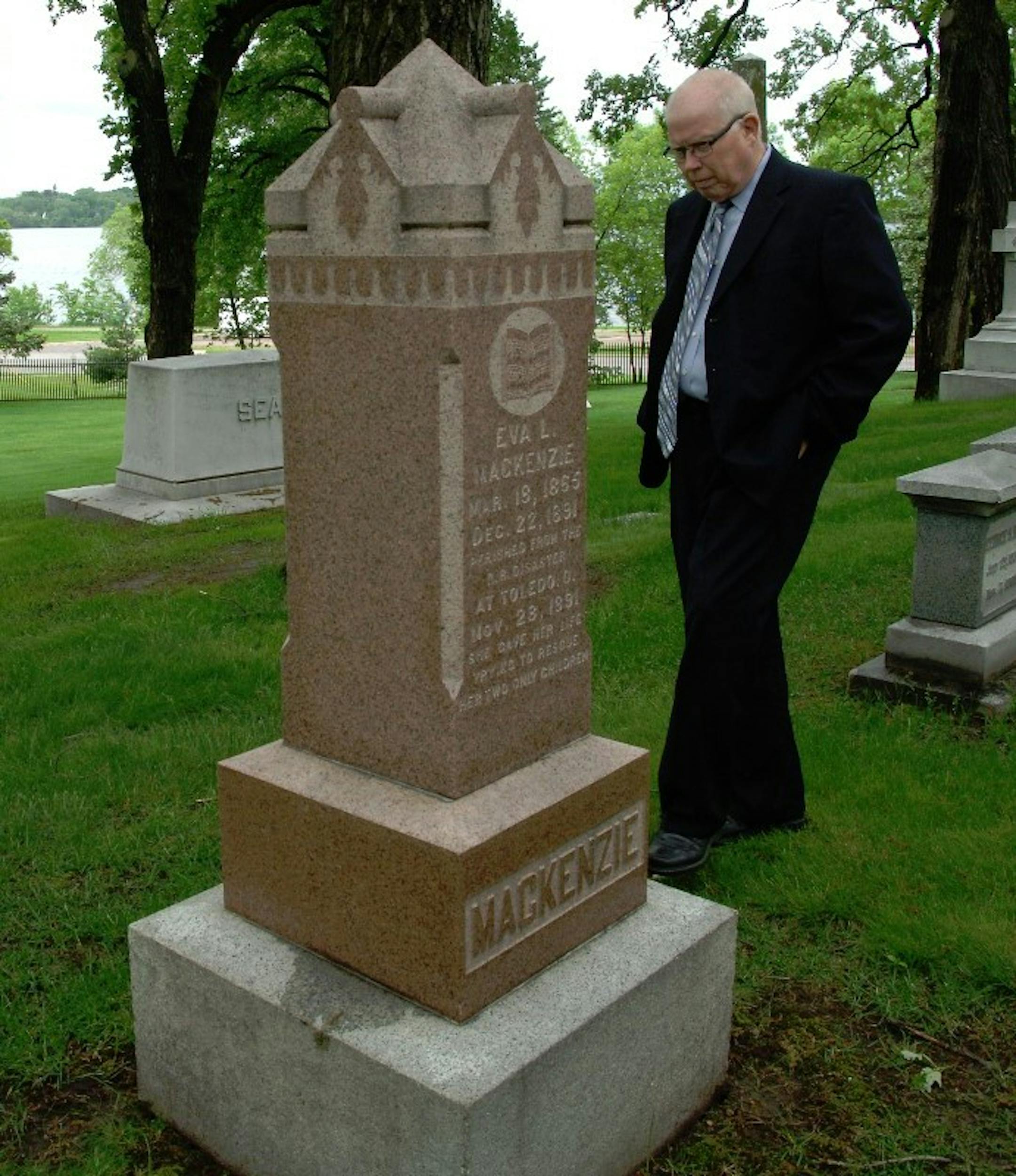
Ron Gjerde halts the walk through Lakewood Cemetery near a monument topped with a sculpture of a robed Grecian woman. He points at a flat stone marker in the Fridley family section of the sprawling, parklike graveyard in Minneapolis.
"She was married to a guy named Fred Price but you won't see any 'Price' engraved on her stone," Gjerde says.
That's because Mary's husband was convicted of shoving her off the Mississippi River bluff near Town and Country Club in 1914, part of a plot to collect inheritance from her pioneering family — namesakes of the northern suburb of Fridley.
"He said she fell by accident chasing their dog, Chum," Gjerde said. "But a private investigator determined she survived getting pushed and her husband then crashed her skull in with a rock."
Fred died 16 years later in Stillwater prison and is buried at Lakewood, too. Theirs are just two of the 175,000 stories buried in the 250-acre, 146-year-old cemetery along the southeast corner of Bde Maka Ska (Lake Calhoun).
Cemetery walking tours aren't for everyone. But if you like history, check out Lakewood's free, Memorial Day walking tours from noon to 3 p.m. on Monday. In a weird way, Minneapolis history comes alive when passing through the gates at Hennepin Avenue and 36th Street.
Monday's tours, and a new display in the cemetery's Garden Mausoleum, are pegged to the 150th anniversary of Minneapolis' incorporation. The cemetery came four years later in 1871 in what was then open lake country to the south of Minneapolis, pop. 13,000.
The site, purchased for $21,000, was originally part of Richfield — accessible only down an unpaved path for horses and buggies. The cemetery's founders wanted a garden-like setting to bury their dead, following the East Coast trend.