

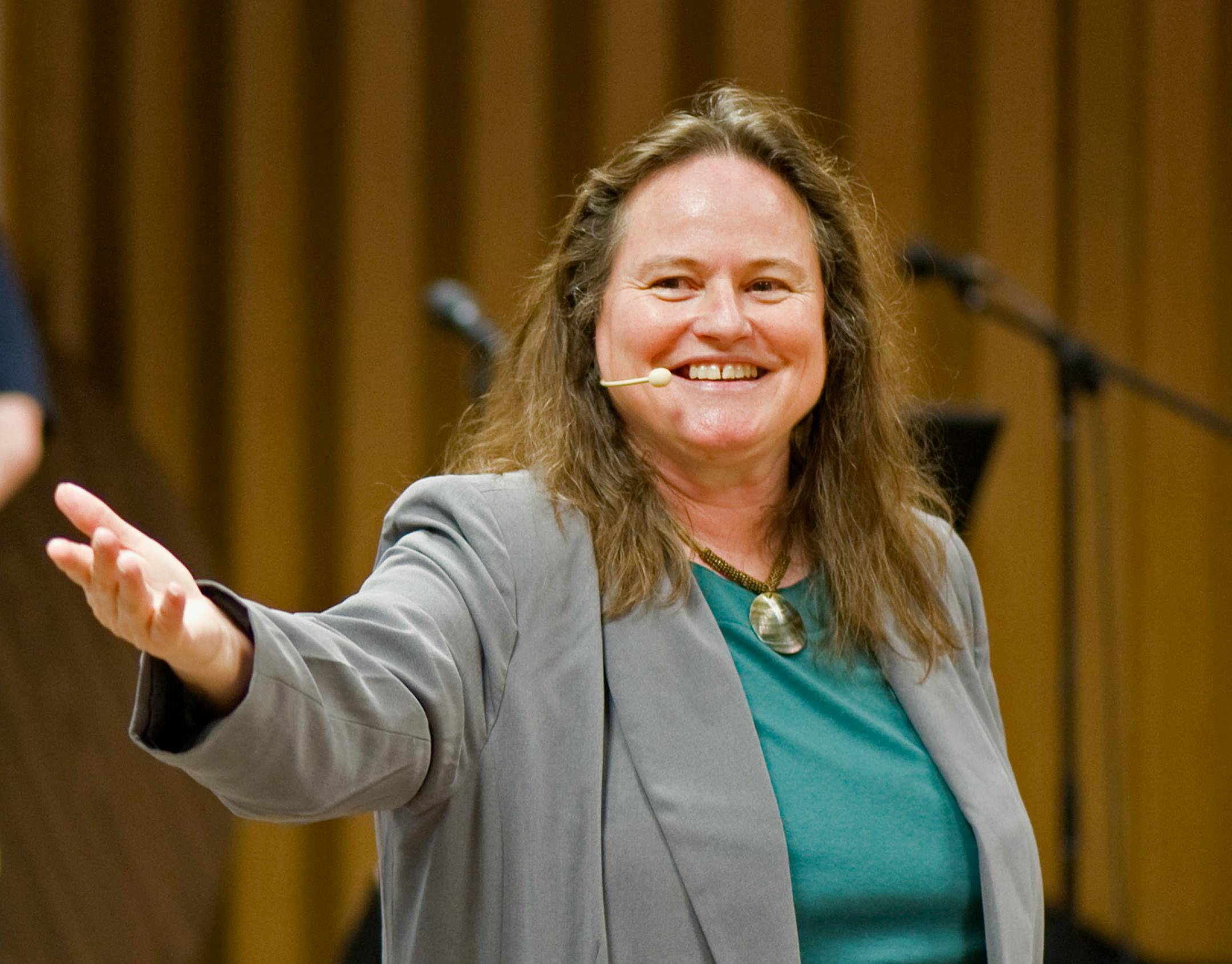
Cheri Hardwick knows the name of every person attending her religious service. She knows their spouses' names, their kids' names and even some of their pets' names. She's not a memory expert. She knows everyone because there are only seven other people at the service.
Hardwick, who lives in New Brighton, is part of a cell church, the opposite end of the spectrum of the mega-church. While mega-churches measure their membership in the thousands, cells cap their membership at 10 to 12. Beyond that, it splits into two cells.
Although most cell churches meet in members' homes, they are different from home churches. And they are different from the fellowship groups that many large churches support. They are set up to be entities in and of themselves, with every member of the cell taking a turn leading services.
"Instead of sitting in a pew while a pastor or priest does all the teaching, we learn and grow from each other," Hardwick said. "I really like that concept."
The leaders of the cell church movement in the Twin Cities are the Rev. Julie Jacobs and her husband, Robb, and their organization, Rivertown Christian Ministries International. (They live in Stillwater; thus the Rivertown reference.) They oversee cell churches in North Dakota, South Dakota, Iowa, Nebraska and, of course, Minnesota, where the group officially is known as the Frontier Fellowship Cell Church. They also have full-time jobs outside their ministry.
"People are starting to realize that big-box churches don't always meet some of the deeper needs of the members," she said. "People are becoming aware of the need for more fellowship. Too many people just sit in the pews and are not fully engaged."
She quickly added that she doesn't see the cell churches vs. traditional churches issue as an either/or proposition. On the contrary, she and her husband, who also attended seminary but is not ordained, regularly attend worship services in larger churches.
"All churches are good; that's not why we started this," she said.


