

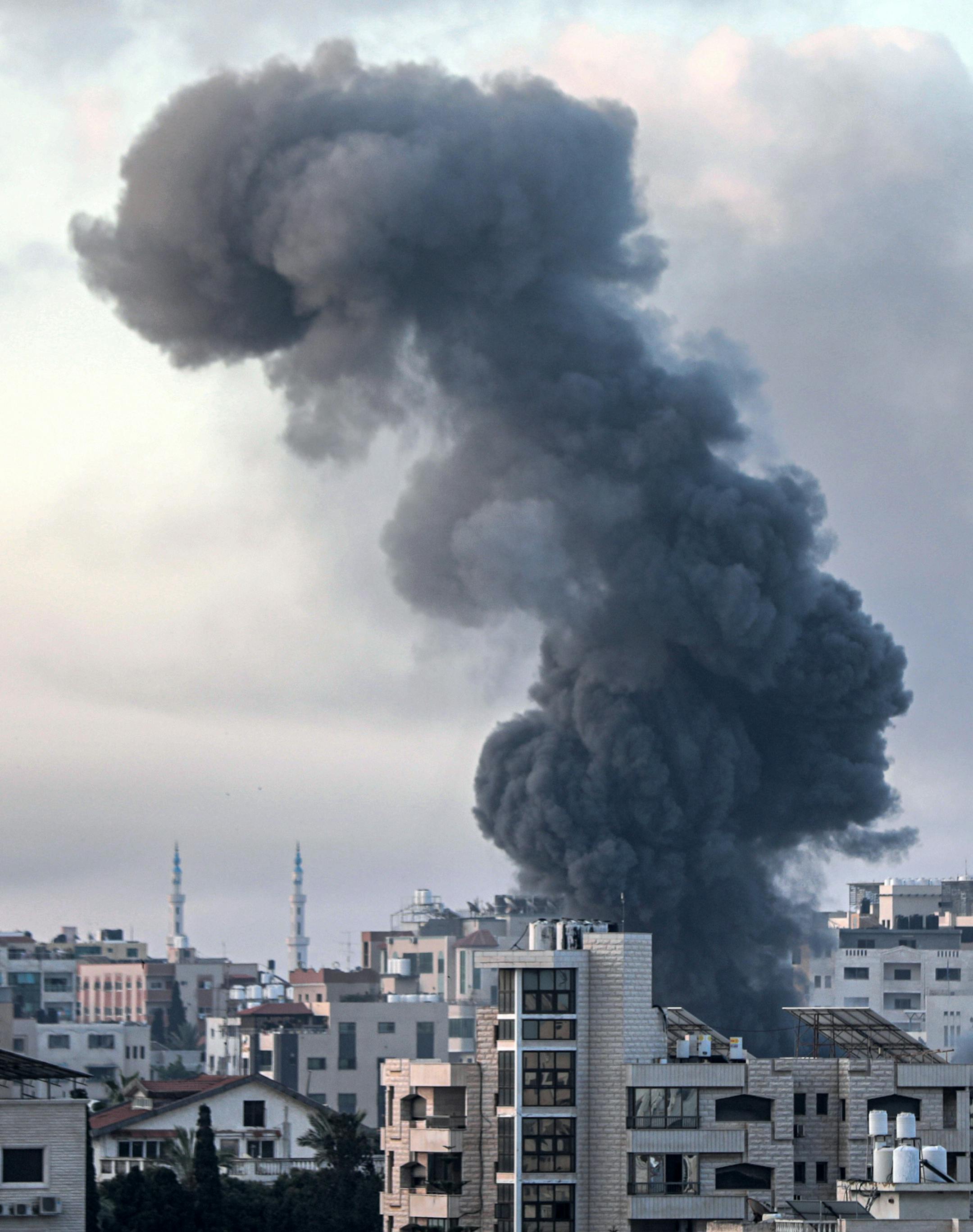
Ultimately, it's up to Israelis and Palestinians to stop their conflict's spiral of violence. But because neither seems to have the immediate ability, or even willingness, to come to a peace accord, outside powers, including the U.S., need to get more directly involved.
Several sparks may have started the current conflagration: A dispute over access to the area around the Al-Aqsa Mosque, as well as a police raid on the mosque itself; an impending court case that may result in the eviction of some Palestinian families in an East Jerusalem neighborhood; provocations from each side that are amplified on social media. Each alone could have ignited the kindling that has blazed into an all-out war.
The Israeli government has a right — indeed a responsibility to its citizens -- to defend the country. No nation, anywhere, would tolerate indiscriminate rocket fire into its territory. But however justified the self-defense, civilians, including children, are being killed, Gaza's humanitarian disaster is worsening, a building housing the Associated Press and Al-Jazeera (and, Israel says, Hamas) was bombed, and an anti-Israel movement in the Mideast and beyond is intensifying. These outcomes are unacceptable. A cease-fire and, more profoundly, a comprehensive solution to the enduring cycle are essential.
Any doubt that Hamas, which rules Gaza (misrules, really), is a terrorist organization should be put to rest as it endangers impoverished Gazans by operating among the teeming population. The Palestinian Authority, which governs the West Bank, is a more legitimate representative of Palestinian aspirations, but its sclerotic leadership, ineptitude and corruption make it deeply unpopular among Palestinians, which may have been a key factor in the cancellation of an already long-delayed Palestinian election this spring.
Domestic politics impair Israel's initiative, too. The country has had four inconclusive national elections in about two years and appears to be heading to its fifth since neither Prime Minister Benjamin Netanyahu nor the opposition has been able to cobble together a durable coalition. Much of the political energy is with right-wing, religious movements that would move Israel farther from an accommodation, let alone an accord, with Palestinians.
Netanyahu, who is fighting for his political and legal status (he faces charges of bribery, fraud and breach of trust), may have bought some time as his nation rallies in the current crisis. But what's needed is a leader willing to prioritize the nation's interest over his own. And it's in Israel's diplomatic and demographic interest to make a lasting peace once and for all.
Peace is in America's interest, too. So President Joe Biden must overcome his reluctance to spend political capital on Mideast peace that might otherwise be focused on challenges like China's rise. While he has rightly reassured America's key regional ally on its right to self-defense, he is also right to call for a cease-fire, which Netanyahu is wrongly resisting. The pressure for a halt from the U.S., Europe and the Mideast will only intensify as the war's horrors unfold.
While the U.S. may not be the broker it once was, it still has the ability to make a profound difference. While there's no guarantee of success, failure could be catastrophic for Israelis, Palestinians and the world.

