

Hannah Stonehouse Hudson has every reason to be afraid of stepping onto the ice.
But she's not, even though next month marks the fourth anniversary of her husband's death. On Jan. 26, 2013, Jim Hudson, 34 and a well-known fishing guide out of Bayfield, Wis., died after the snowmobile he was riding fell through the ice while he guided on Lake Superior.
"A lot of people in this situation would say, 'I'm never ice fishing again,' " said Hudson, who owns and operates a photography business (stonehousephoto.com). "But I love ice fishing more than anything. I basically arrange my schedule so I can fish throughout the winter."
The key, she said, is staying safety-conscious on the ice. That means having the proper gear, understanding the conditions and not being afraid to trust your gut if something doesn't feel right. Stonehouse Hudson said her husband "was the king of ice safety." He wouldn't let her take ice-fishing photos unless the fishermen in them wore or were using proper safety gear. He'd get angry if people drove ATVs onto iffy sections of ice, and had little time for anyone who simply followed old tracks without checking ice conditions for themselves.
The main reason she isn't scared to be on the ice is because she never believed Jim Hudson's death was only about the ice. There were some bad decisions involved, too, which she attributed in part to a lack of sleep because his guiding business had been so busy. While the ice should have been safe where he drove his snowmobile, it wasn't, and he apparently didn't stop to check it. Plus, he wasn't wearing the float suit he normally did, and had removed from his snowmobile an emergency flotation device known as a Nebulus.
"[Jim used to say] anyone can have a bad day on the ice, and anything can happen," Hudson said. "He talked about that for years."
Staying safe
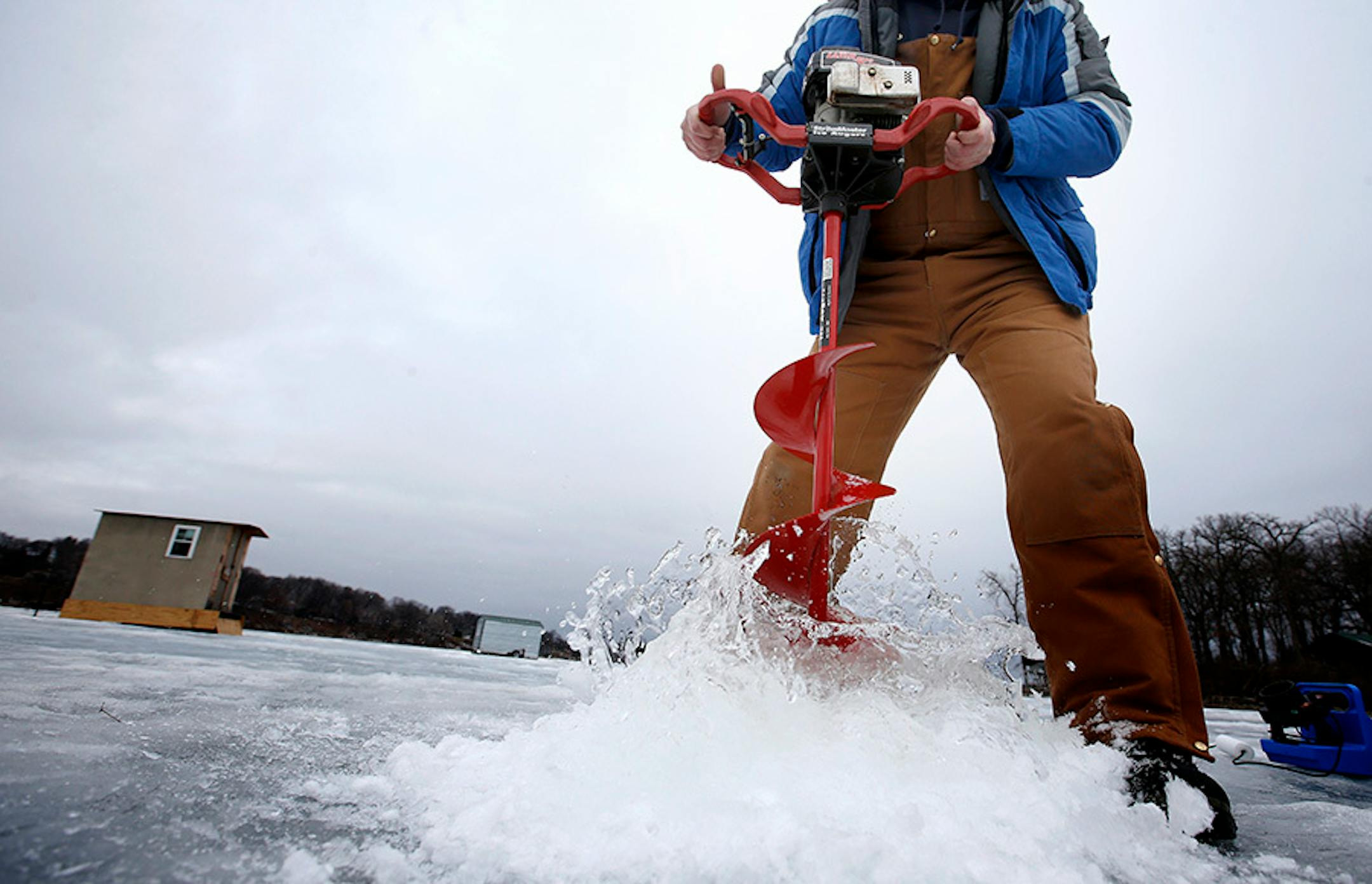
The thing to remember, said Stan Linnell, boating and water safety manager for the Minnesota Department of Natural Resources, is that ice conditions are in constant flux. He recommended anyone who is atop the ice, regardless the time of year, to carry a chisel, drill or other device to check thickness. In general, the agency recommends at least 4 inches of clear ice before people ice fish and at least 5 inches before they drive a snowmobile or ATV. Eight to 12 inches is enough for a car or small pickup, while 12 to 15 inches is sufficient for medium-size pickups.
"Just pounding on the ice is one thing," Linnell said. "But periodically drilling or chiseling a hole through the ice will tell you how thick the ice actually is."

