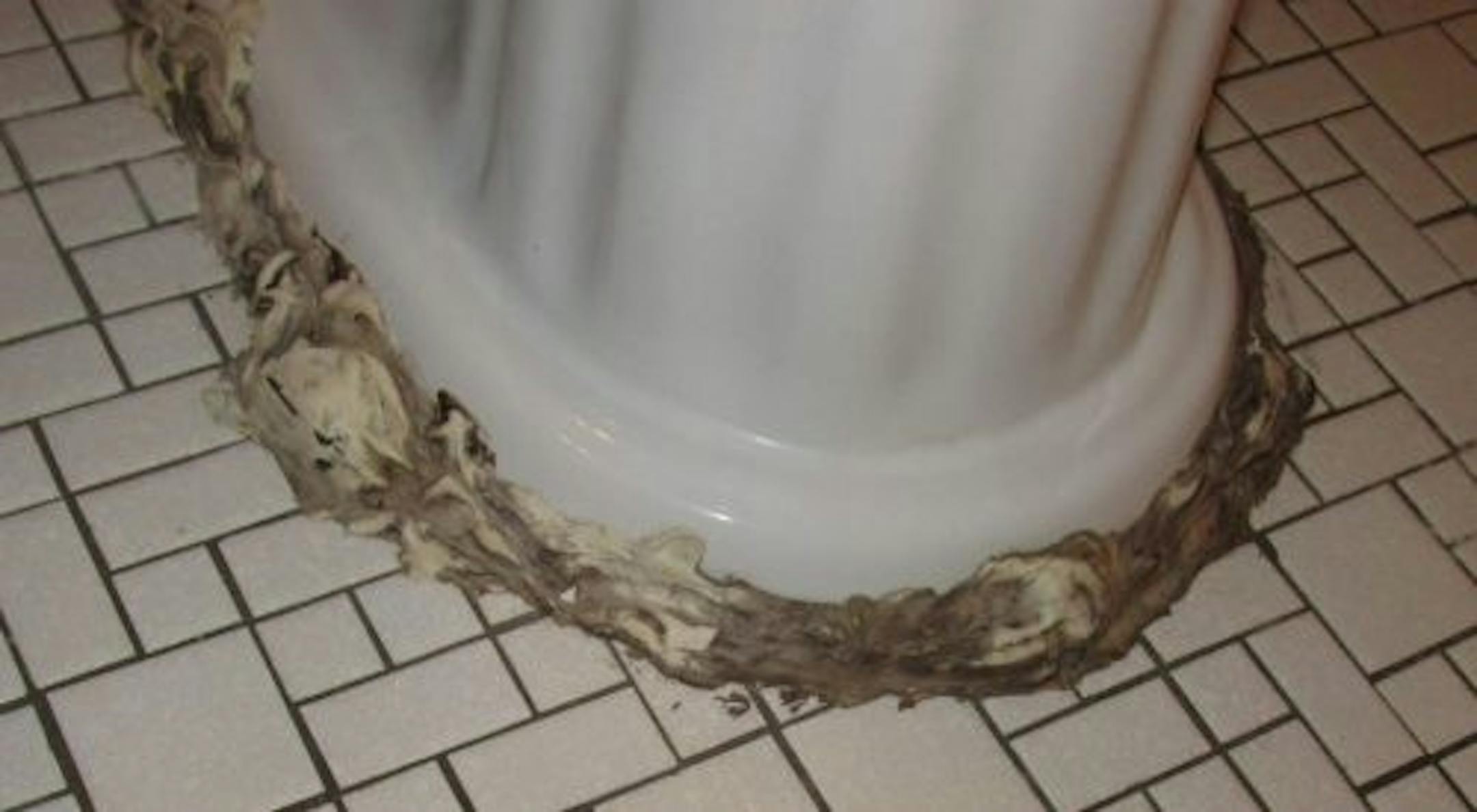

Toilets are a divisive topic, but today I'll be setting the record straight once and for all on three important toilet topics. First, the toilet paper roll: overhand or underhand? There's only one right answer, of course, and it's overhand. There's no point in even discussing this one.
Toilet seat: up or down? Wrong question! It's not about the seat. It's about the lid. The lid is there for a reason. Put it down. Ladies, you're guilty of this too. I've been in countless female-only homes where I found the lid up at every toilet. I document every one of them in my toilet lid journal.
And now, onto the most divisive topic. Unlike the first two, this one is real, and it actually gets a fair amount of discussion. Should toilets be caulked at the floor? The answer is yes.
Toilets should be caulked at the floor
As standard procedure for every home inspection that I perform, I check the toilets to make sure they're properly anchored to the floor. Almost every time I find a toilet that's loose, I also find missing caulk at the base of the toilet. The two go hand-in-hand.
When I find a loose toilet I tell my client to properly secure the toilet to the floor and to caulk around the base of the toilet, but I frequently get clients that tell me they've heard otherwise.
The thought process behind not caulking a toilet to the floor is that if the toilet leaks at the floor, you'll quickly find out about the leak as long as the toilet isn't caulked. If it is caulked, the thinking is that if the toilet flange leaks, you'll end up trapping water between the toilet base and the floor in an area that you can't access.
In reality, toilets rarely leak onto the floor. More often, they leak through the floor around the flange. I've found plenty of toilets that leak down into the basement, but very few that leak onto the bathroom floor.
Why caulked?
There are two great reasons to caulk a toilet to the floor: