

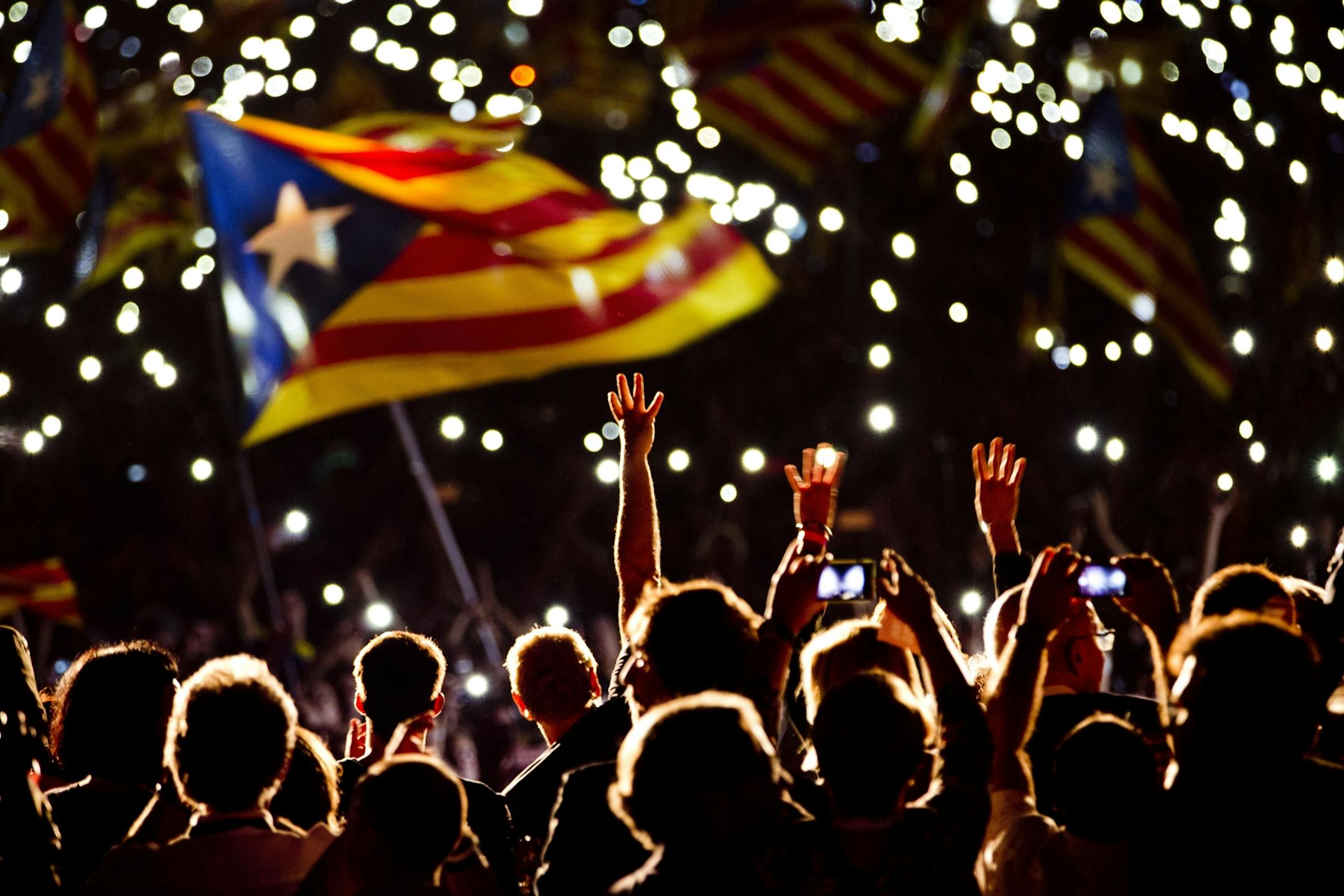
MADRID – In a warehouse in Barcelona, more than a thousand volunteers worked shifts through the summer bombarding Catalan voters with phone calls to persuade them to abandon Spain.
From the call center, the volunteer army has made more than 300,000 calls and had conversations with more than 56,000 people leading up to Sunday's regional election.
Working with advisers who helped Barack Obama's 2008 presidential run, they asked voters how they would spend an $18 billion annual windfall from independence: Did they want to help the poor? Upgrade the region's infrastructure? Raise pensions?
But secession will bring no such windfall — at least not according to the pro-independence officials in charge of the regional administration.
An independent Catalonia would have had a modest surplus this year, according to estimates by the Catalan Economic Department. Regional President Artur Mas' election manifesto relies on optimistic fiscal benefits. Neither includes the untold costs of potentially getting kicked out of the euro, which Spain's central bank governor Luis Maria Linde warned of this week.
"It's all a massive propaganda effort to bring people who don't have a strong independence sentiment to embrace independence for economic reasons," said Josep Borrell, the former president of the European Parliament who has been touring his home region trying to paint a different picture of independence.
Independence on the line
After a five-year campaign and centuries of resentment, Catalans are voting for the first time this weekend in a legally sanctioned ballot on which the central question is whether to remain part of Spain.
Voters in the economically powerful region of northeastern Spain are being presented with two choices: parties promising efforts to make Catalonia independent, and parties that want Catalonia to keep its special identity but don't want it to break away. Polls show the independence parties headed for a slim win.


