

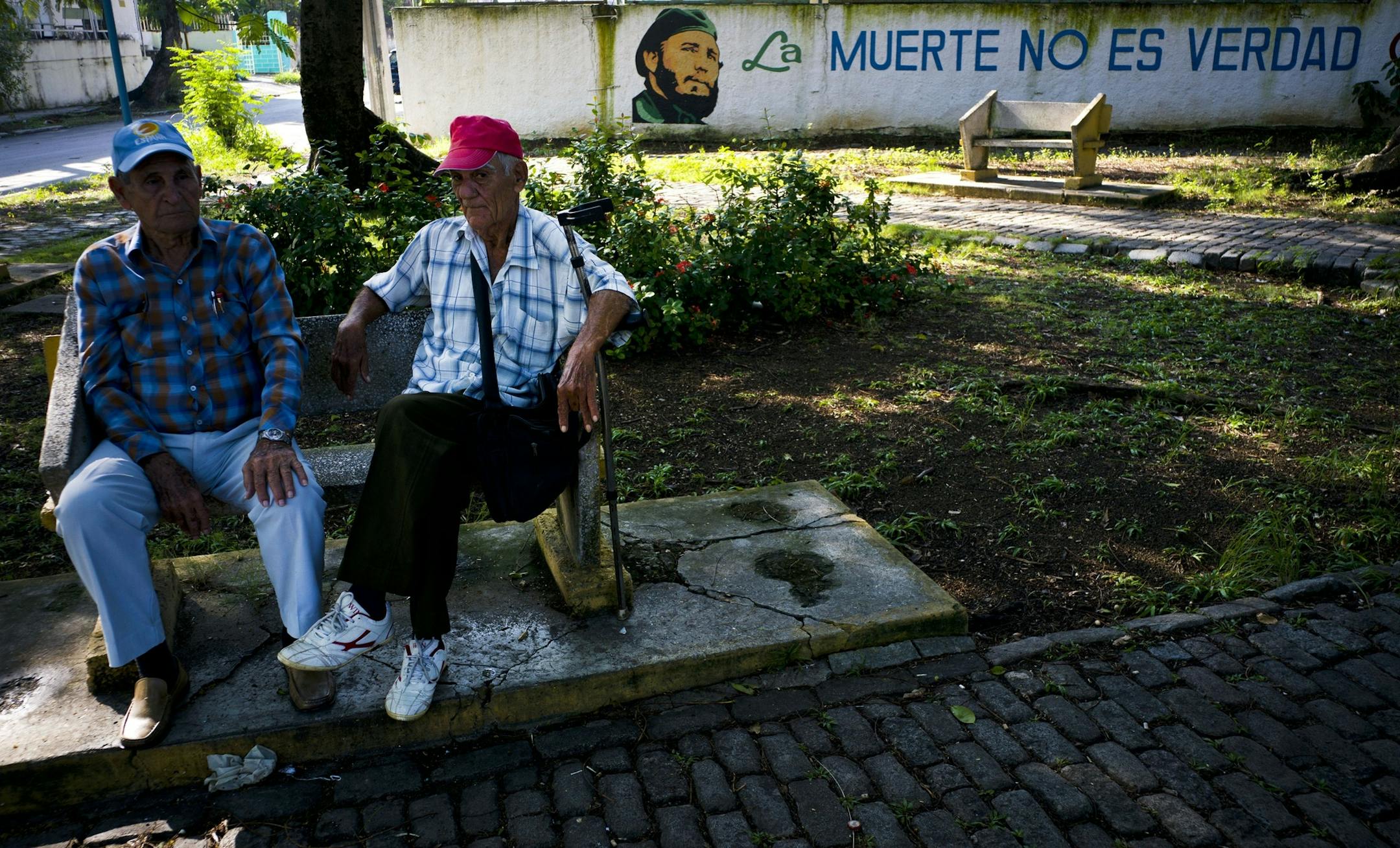
MIAMI – It's been a year since the death of Fidel Castro, the historic leader of the Cuban Revolution, but on the island, his name is still invoked almost as much as when he was alive.
The music stopped and the rum didn't flow for nine days last year when Cuba went into official mourning after the Nov. 25 passing of Castro who, for better or worse, had been an intimate part of Cubans' lives for more than half a century.
A year later, the country is planning a series of Castro-focused events from Saturday through Dec. 4, the day he was laid to rest at Santa Ifigenia cemetery in Santiago de Cuba. On the island, homages both in the official media and on social media have reached a frenzied pace.
And across the world, tributes have begun springing up in the form of statues, photo exhibits, a musical called "Fidel" and a giant olive-green cap, crafted in metal, to look like the hat he frequently wore.
In South Florida, though, where Castro's death at age 90 was almost anticlimactic after so many years of anticipation by the exile community, the anniversary is likely to pass with little notice or outright dismissal. Many of those who fought long and hard against Castro have already passed on.
"It's an intense, painful memory, but the generation of my parents has died," said Andy Gomez, the interim director of the University of Miami Institute for Cuban and Cuban-American Studies. "The topic has lost some of its interest. I think there is a bit of Cuba fatigue now in the Cuban-American community."
That's not the case in Cuba. For months, the country's main newspapers and state television have been publishing and broadcasting so many stories focused on the Castro legend that he seems more alive than ever.
Many of the commemorative activities will be centered in Santiago, the cradle of the Cuban Revolution and the city where Castro was laid to rest. Historian Rogelio Salietes Toro will walk the streets of the city in remembrance of the time Castro spent there, students at the University of Oriente will hold a patriotic vigil and memorial events will be held at workplaces, according to Trabajadores, the newspaper of Cuba's labor union.


