

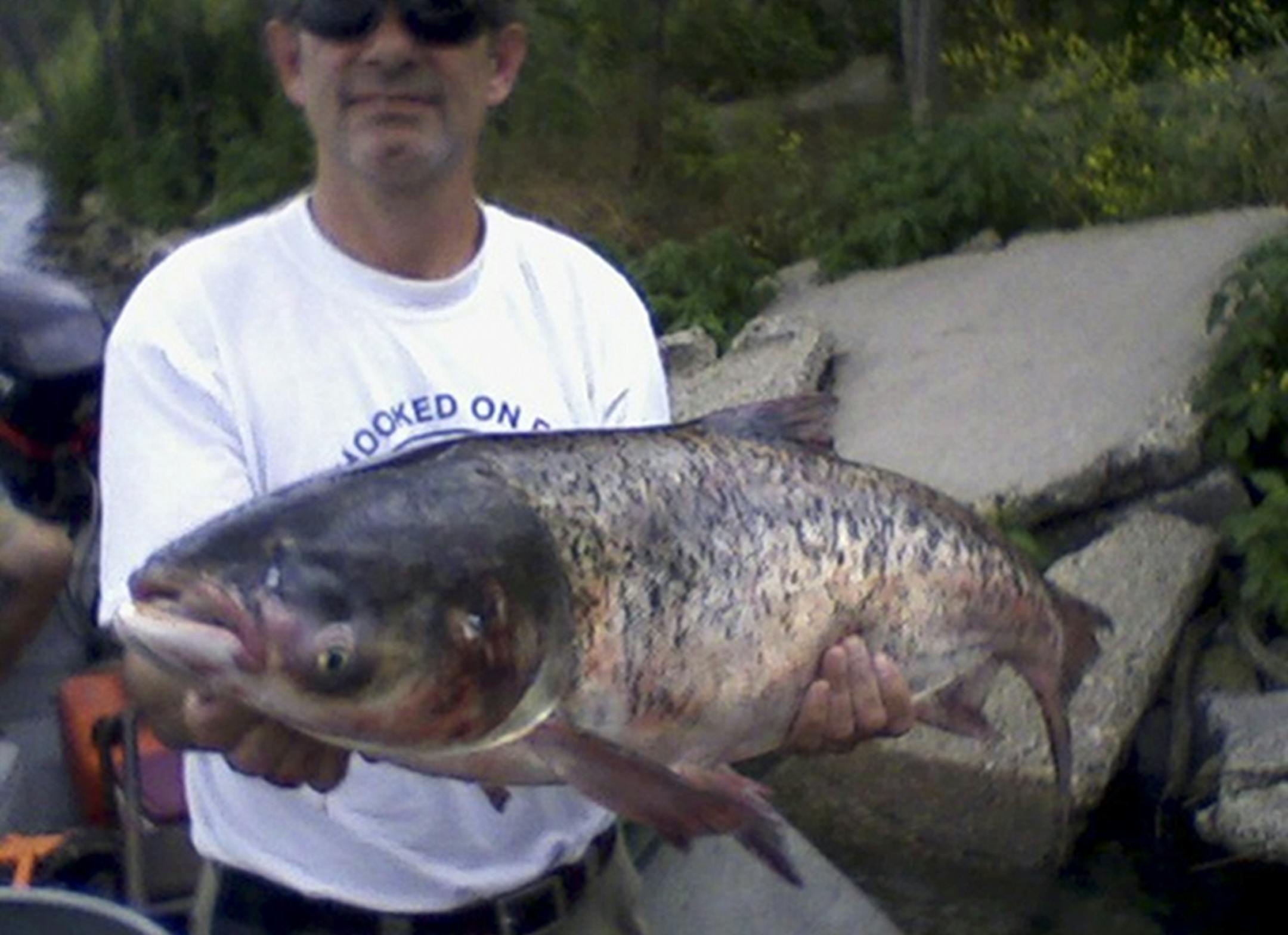
Alarm bells went off in 2011 when wildlife researchers found surprising amounts of DNA from invasive carp in the St. Croix and Mississippi rivers and even above the Coon Rapids Dam.
Could the voracious fish already be here in large numbers? Could the DNA have come from the droppings of birds who had eaten the carp elsewhere? Or from illegally released baby carp used as bait?
None of the above, it turns out. It was a false alarm.
A new, comprehensive analysis released Thursday shows that if there are invasive carp in Minnesota's rivers, they haven't left behind any biological fingerprints to prove it. That doesn't mean there aren't any — a silver carp was found near Winona in February. But it does mean Minnesota may have more time than it thought to defend against an invasion of voracious carp working their way up the Mississippi River from Illinois and Iowa.
"It's good news, but it doesn't change the fact that Asian carp are starting to show up more frequently," said Irene Jones, of Friends of the Mississippi River.
Two years ago, a new technology that tracked DNA fragments left in water showed the presence of silver carp, one of four invasive species, by St. Croix Falls and even above the Coon Rapids Dam in the Mississippi River. Invasive carp have been caught from time to time, but the DNA suggested that Minnesota might have more of the fish than anyone knew.
Then last year researchers collected 50 water samples from eight sites on the Mississippi and St. Croix Rivers, plus samples from the Mississippi in Iowa, where silver and big head carp are plentiful. And, using a much more precise way of identifying it, they concluded that none of DNA fragments in Minnesota waters were from carp. While they did find DNA from silver carp in samples from Iowa, they didn't find any at all for big head carp, a puzzler that raises questions about the validity of the technology, said lead researcher Peter Sorenson, an invasives expert at the University of Minnesota.
The different findings likely mean one of two things: Either the DNA found earlier wasn't from carp, or it was and the carp have skedaddled. Researchers are not sure which.


