
Carnival scraps transformed into revenue

Remnants of Rio's festival are remade into income.

The Associated Press
March 5, 2014 at 5:16AM
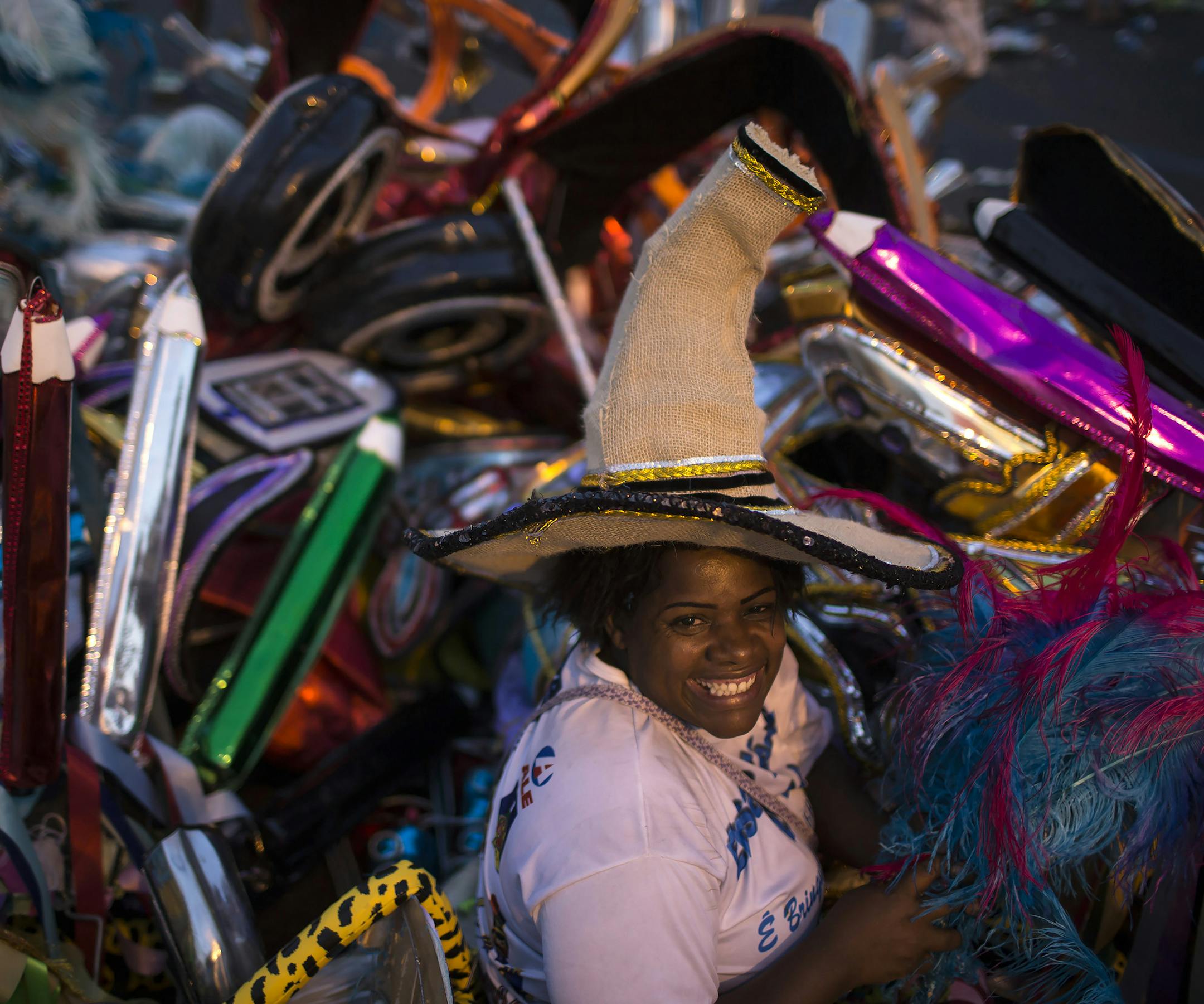
Elaine da Silva Moraes poses for a photo backdropped by piles of discarded costumes after carnival celebrations at the Sambadrome in Rio de Janeiro, Brazil, Tuesday, March 4, 2014. Moraes is a "catadora," or trash picker, and hundreds of others like her, for whom Carnival represents an annual boon. Dressed in a patchwork of costume parts rescued from the detritus, Moraes fills plastic garbage bags with her treasures - feathers, props, headgear and costly fabrics that she re-sells or transforms i
Elaine da Silva Moraes posed near piles of discarded costumes after Carnival festivities in Rio de Janeiro, Brazil, on Tuesday. She is a “catadora,” or trash picker, for whom the event is an annual boon. (The Minnesota Star Tribune)

RIO DE JANEIRO – Elaine da Silva Moraes clambered up mounds of abandoned fabric, foam and feathers that minutes earlier were the glitzy essence of Rio de Janeiro's multimillion-dollar Carnival parades.

The creative costumes on display at the all-night Sambadrome parades that ended early Tuesday have made Rio's Carnival celebration the most famous in the world. But the handmade confections often have a short shelf life.

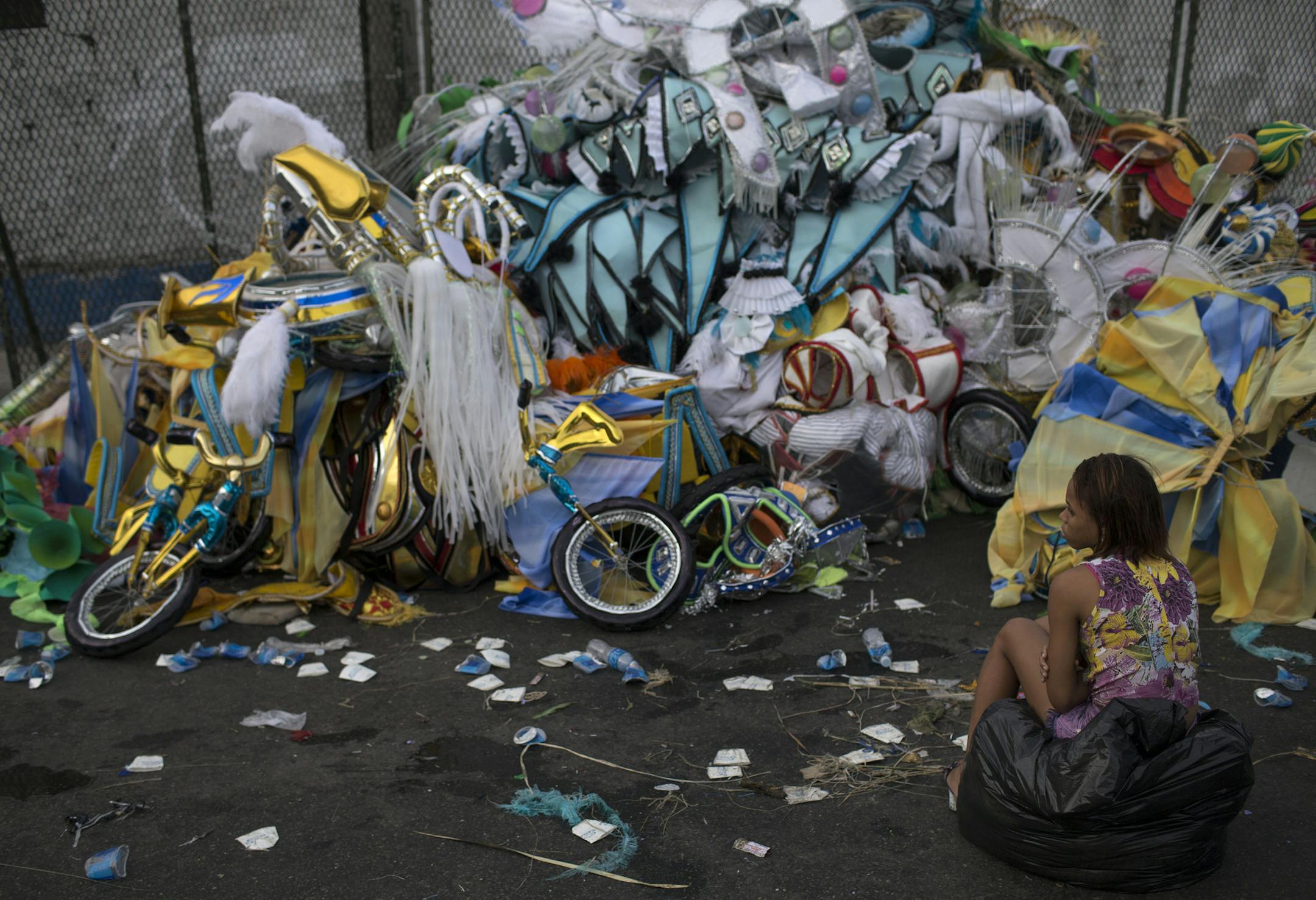
As the tens of thousands of revelers streamed out of the Sambadrome, a surprising number of them immediately abandon their costumes, leaving them strewn on the ground amid a sea of ordinary trash.

Enter Moraes, a "catadora," or trash picker, and hundreds like her for whom Carnival represents an annual boon.

Moraes filled plastic garbage bags with her treasures — feathers, props, headgear and costly fabrics that she resells or transforms into new costumes or clothing.

The catadores, who include small children, worked swiftly to keep ahead of the crews of garbage men who pitch the piles of costumes and props into trash-compacting trucks.

"I think they're crazy," said Moraes. "They're literally throwing money away. I wouldn't dream of throwing money away the way they do."

Each of the 12 top-tier Samba schools pours at least $3 million annually into over-the-top floats and costumes. The schools get funding from governments, television rights, ticket sales and sponsors.
The schools often provide free costumes for members from the city's slums, but tourists can buy the right to participate in the parades by purchasing a costume, which start at several hundred dollars each — a way for the schools to raise even more cash.

During Carnival, Moraes and two of her four children slept outside the Sambadrome, collecting dozens of trash bags full of rescued items that she paid a trucker $50 to haul back to her home in an impoverished suburb. She spends the rest of the year selling her finds to small samba schools and repurposing the costumes into more conventional disguises for parties and other holidays.

The catadores' eco-friendly ways are catching on among the samba schools themselves.

Officials from Unidos da Tijuca have said that as much as 25 percent of the school's materials are recycled or re-purposed. Plastic bottles, empty beer cans and old scraps of fabric are turned into floats, while the psychedelic-hued ostrich feathers that flood the Sambadrome parades are stripped off old costumes and used year after year.

Efigenia Beta Silva snipped feathers from a headdress.

"Really," she said, "we're doing the world a favor by coming here and rescuing all these beautiful things from the garbage. It breaks my heart to see all the work and love and time and money that goes into these costumes go straight to the dump."

A woman sits in front of a pile of discarded carnival costumes after carnival celebrations at the Sambadrome in Rio de Janeiro, Brazil, Tuesday, March 4, 2014. The costumes on display at the all-night parade that ended early Tuesday have made RioÌs Carnival celebration the most famous in the world. But the handmade confections often have a short shelf life. As the tens of thousands of revelers stream out of the Sambadrome, a surprising number of them immediately abandon their costumes. (AP
A woman with costumes left behind by thousands of revelers after an all-night parade that ended early Tuesday. The parade was part of Rio’s annual Carnival celebration, the most famous in the world. (The Minnesota Star Tribune)
about the writer

about the writer

Jenny Barchfield

More from No Section

See More
FILE -- A rent deposit slot at an apartment complex in Tucker, Ga., on July 21, 2020. As an eviction crisis has seemed increasingly likely this summer, everyone in the housing market has made the same plea to Washington: Send money — lots of it — that would keep renters in their homes and landlords afloat. (Melissa Golden/The New York Times) ORG XMIT: XNYT58
Melissa Golden/The New York Times

It’s too soon to tell how much the immigration crackdown is to blame.