

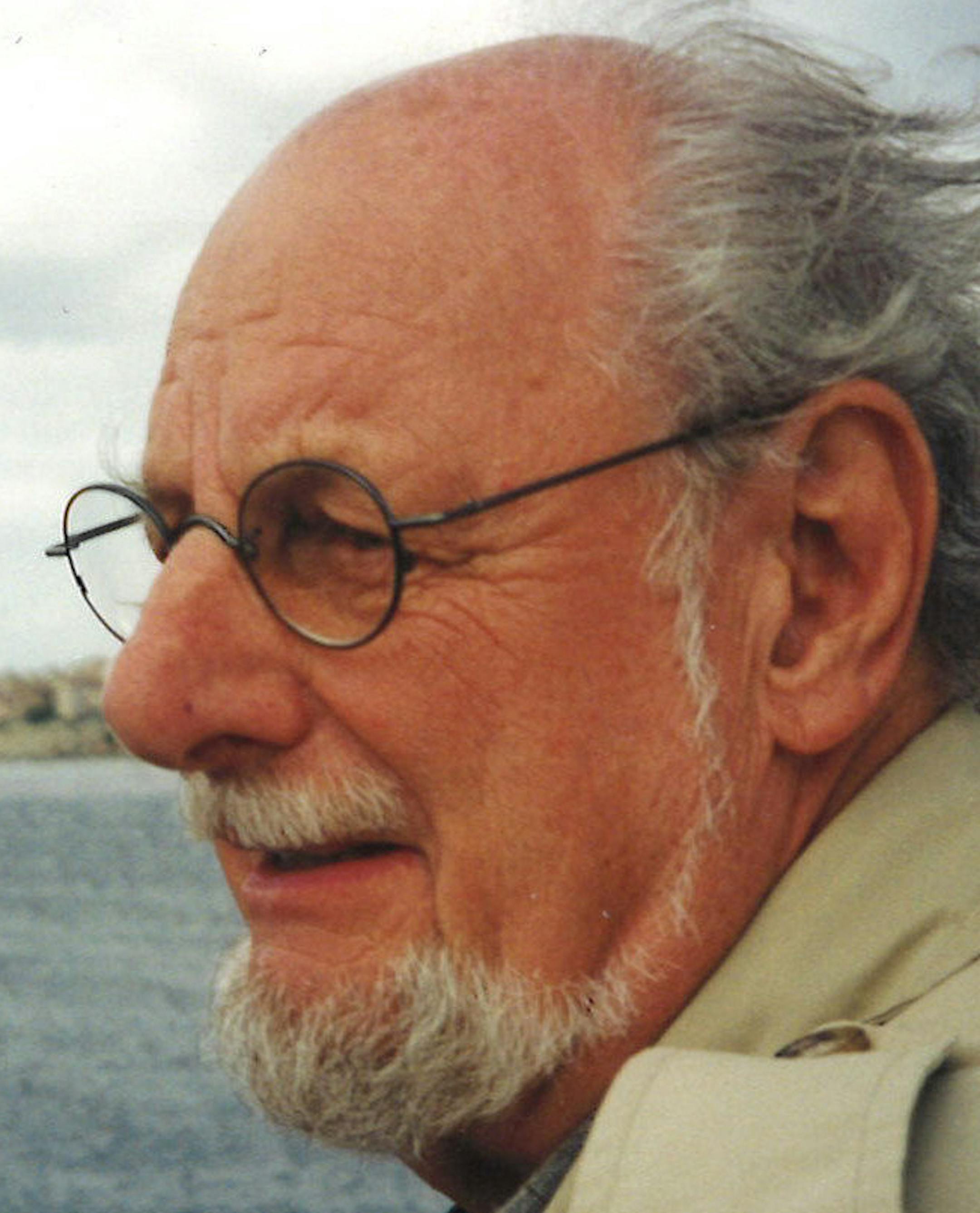
Russell L. Langworthy, a distinguished anthropologist at Carleton College who traveled to remote regions of Italy to research traditional farming life, died July 1 at a hospice in Providence, R.I. He was 92.
Friends and relatives remember Langworthy as an eccentric polymath who became so immersed in the rural societies he studied that he operated a small farm in Tuscany and spent much of his free time atop a tractor, plowing fields outside Cannon Falls, Minn. Along the way, he published numerous articles exploring how technological advances in farming threatened traditional agricultural societies, among other topics.
During trips to the Italian countryside in the 1960s and 1970s, it was not unusual for Langworthy to get so overwhelmed at the sight of a rare piece of farm machinery that he would jump out of his car and talk to farmers in fluent Italian. Old photos show the scholar-cum-farmer sporting a wardrobe that included colorful French-style neck scarves mixed with Caterpillar farm hats.
"My father was the rare academic who was not afraid to get his hands dirty," said his son Peter Langworthy of St. Paul. "It made him very grounded and real, and people picked up on that."
Langworthy's lifelong interest in farming stemmed from his childhood in Alfred Station, a small town in rural upstate New York. His father operated an old-fashioned threshing machine, and he would haul it from farm to farm with a steam-powered tractor.
After a year of college, he enlisted in the U.S. Army in the early years of World War II. Because he was fluent in French, he was placed in an intelligence unit behind enemy lines, assigned to track the movements of the French Resistance. For awhile, he hid in the barn of a Normandy family and monitored troop movements by night.
After the war, Langworthy returned to France on behalf of the Allies to help rebuild Europe, in part by showing French farmers how to use modern tractors. Pulling a few strings in the U.S. military, he secured a new tractor for the family that sheltered him during the war. They remained lifelong friends and decades later, in the 1980s, Langworthy was given the keys to the city of Caen, France.
"His attitude was: This family put their lives on the line to hide me, and we should help them in return," his son said.


