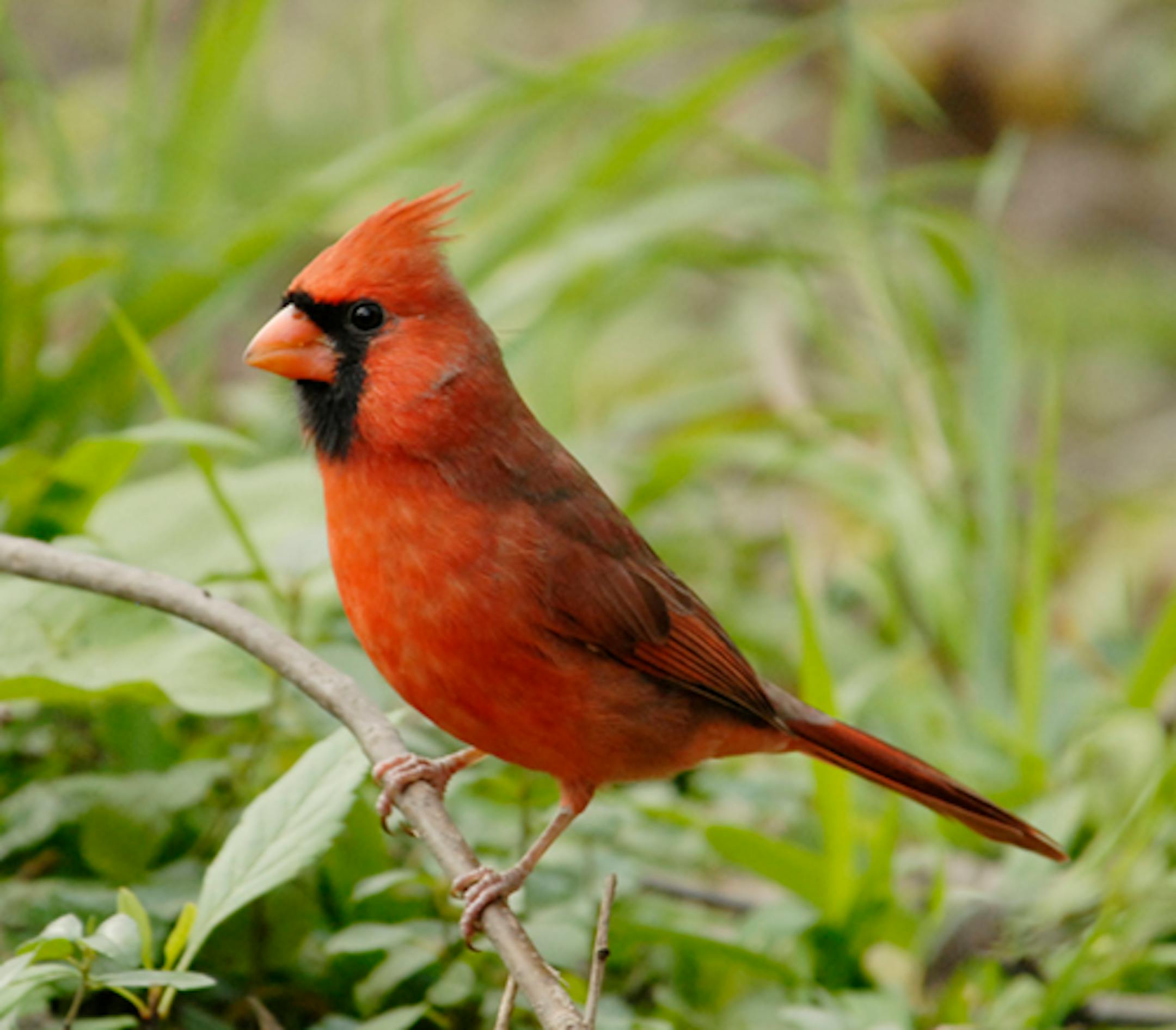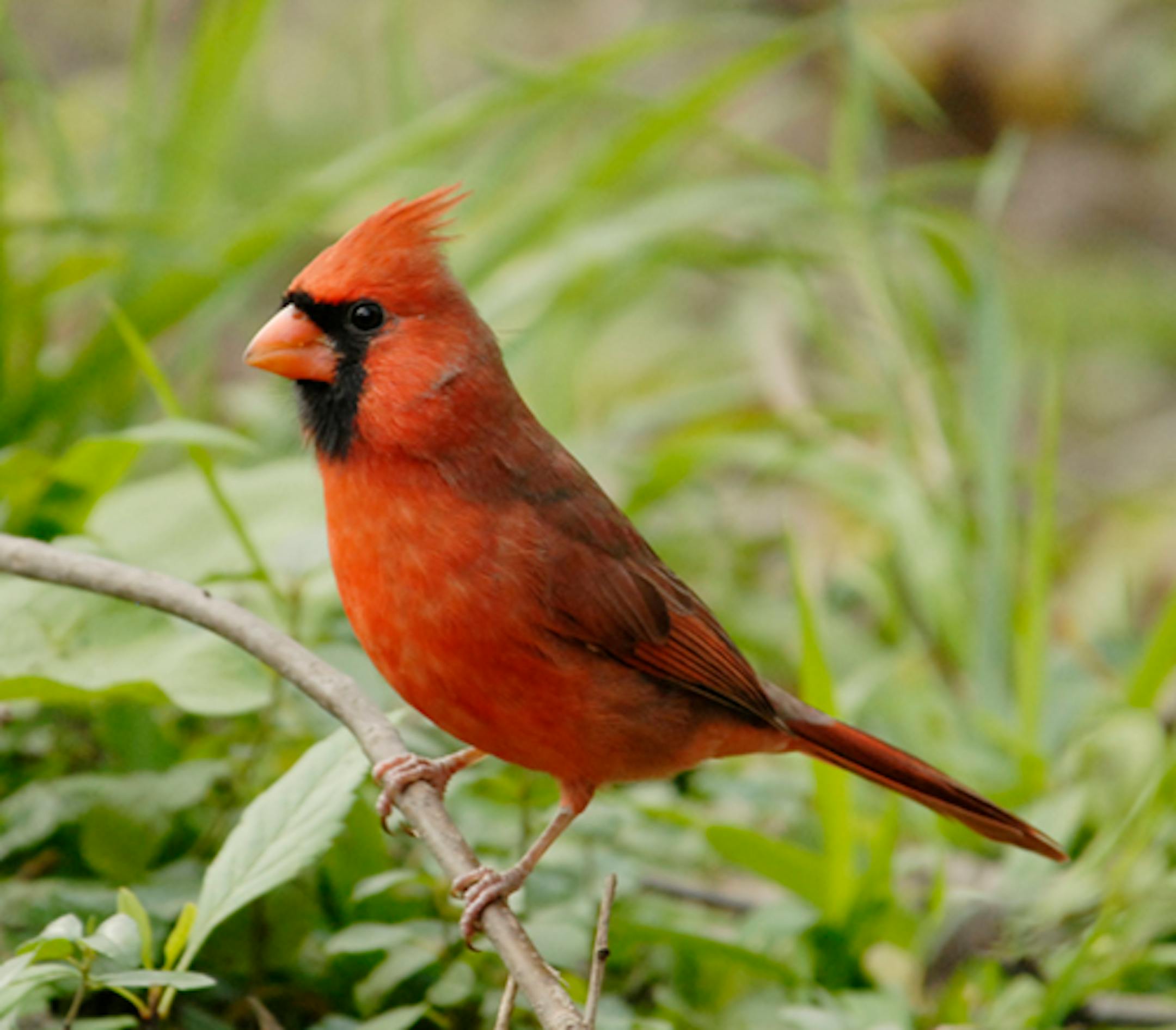
Scientific name: Cardinalis cardinalis, meaning important, as the red-robed church official for whom the bird is named.
Range: Eastern North America, swinging south to deep southern Mexico. A mostly southern species that moved north as conditions (including growth of bird feeding) allowed, arriving in Twin Cities area in or around 1930. Has since moved as far north as Cook County in Minnesota's Arrowhead region.
Weight: About 1.5 ounces.
Name: Was simply Cardinal until 1982 modification to Northern Cardinal by American Ornithological Union. Folk names include Red-bird, Virginia Nightingale, Virginia Redbird, Crested Redbird, and Top-Knot Redbird.
Migration: Year round resident throughout range. Almost all cardinals stay very close to where they were hatched.
Food: About one-third animal matter, two-third vegetable. Young fed almost exclusively insects (higher nutritional content). Bird-feeder studies with variety of seed types found black-oil sunflower the most preferred.
Sounds: Ornithologists describe as many as 16 different calls. Males sing all year, most common in spring courtship.
Territory: During nesting season will defend about four acres.