There are many common misconceptions and misunderstandings about furnaces, water heaters, and carbon monoxide that I hear repeated regularly, and I'd like to clear a few of them up. To start, here's a video discussion: https://youtu.be/40gyIF0WUGI
False: Carbon Monoxide is also called CO2. Carbon Monoxide is CO. Carbon Dioxide is CO2. Mono = 1, Di = 2. Just don't tell the folks at Walmart; they actually have a section on their website where they sell "carbon dioxide" alarms.
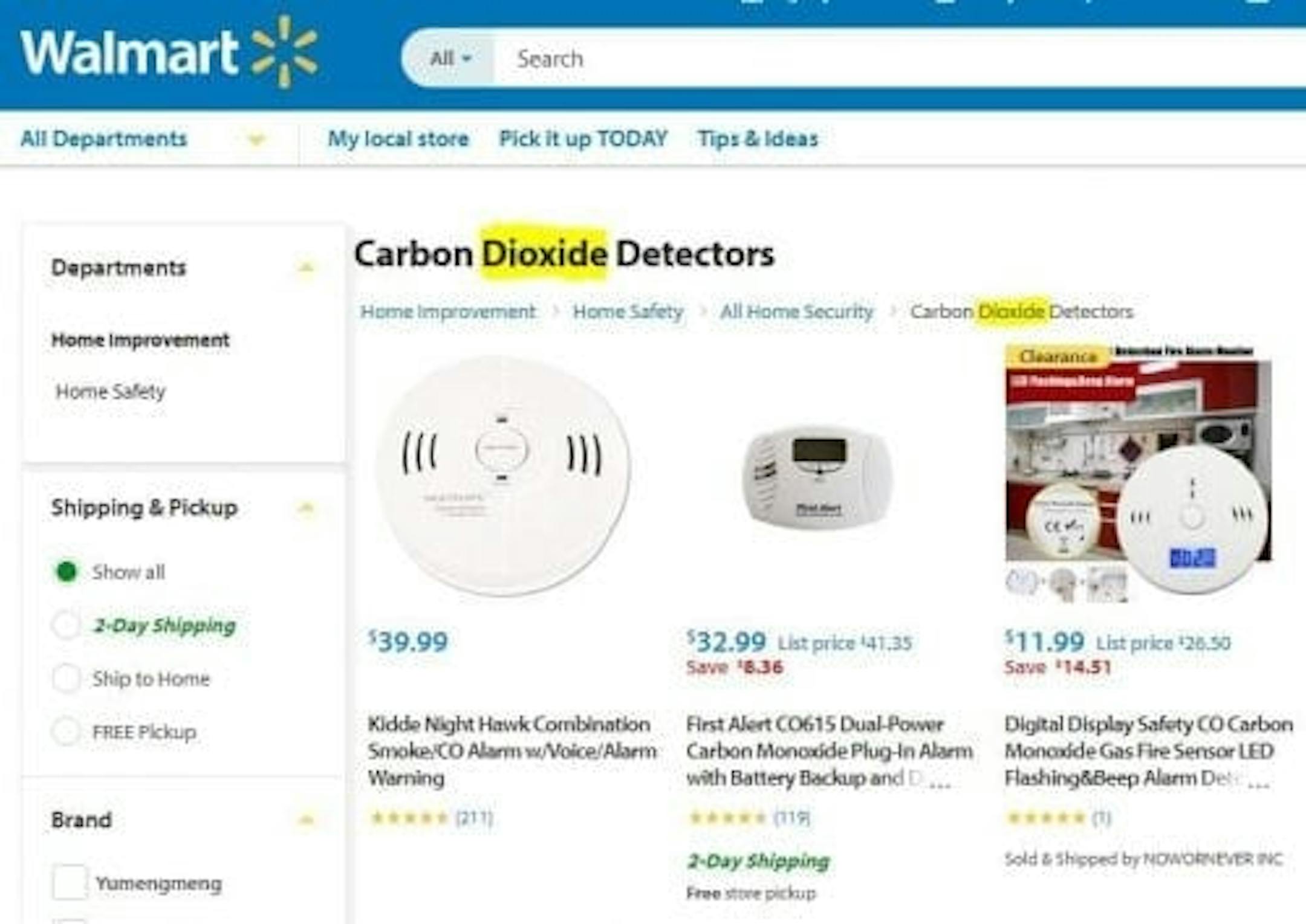
They're actually selling carbon monoxide alarms, but I'm guessing they have the wrong thing listed to help people find what they're looking for even if the wrong thing is typed in. Google is a master at this, so don't get me wrong, I'm not complaining. I'm just sayin'.
False: Carbon monoxide alarms are needed to sell a home in Minnesota. Carbon monoxide alarms are required within 10' of sleeping rooms, but this has nothing to do with a real estate transaction. You don't install carbon monoxide alarms because it's the law, you do it because it's a $15 life safety device. See R315 for the exact rules on CO alarms.
False: Backdrafting at a furnace or water heater means CO is filling up the home. Backdrafting means that exhaust gases are spilling back into the home, rather than leaving through the vent. A properly functioning water heater or furnace will not create high levels of CO. Even if a properly functioning furnace or water heater backdrafted into a home all day long, you might not ever see an elevated level of CO. Not that this is ok. This should still be considered a hazardous situation that requires immediate correction. Backdrafting has the potential to fill the home with CO. It will always contain CO2 (carbon dioxide), which can cause sickness and headaches in higher concentrations.
Hmm... maybe Walmart ought to start selling CO2 detectors for real ;-). They do exist, after all: CO2 Meter
False: Cracked heat exchangers create CO. CO is caused by incomplete combustion, not a cracked heat exchanger. A heat exchanger is the part of a furnace that transfers heat from the flames to the household air. A functional heat exchanger keeps the household air and the combustion gases completely separate from each other.
A cracked heat exchanger might, under the right conditions, create elevated levels of CO, but this is not typical. If a furnace has a cracked heat exchanger, the combustion gases can mix with the household air. It's usually just a little bit, but this is still unacceptable, and it means the furnace or heat exchanger should be replaced. More on that topic here: Heat Exchanger Cracks and Carbon Monoxide Myths.