

 1:53
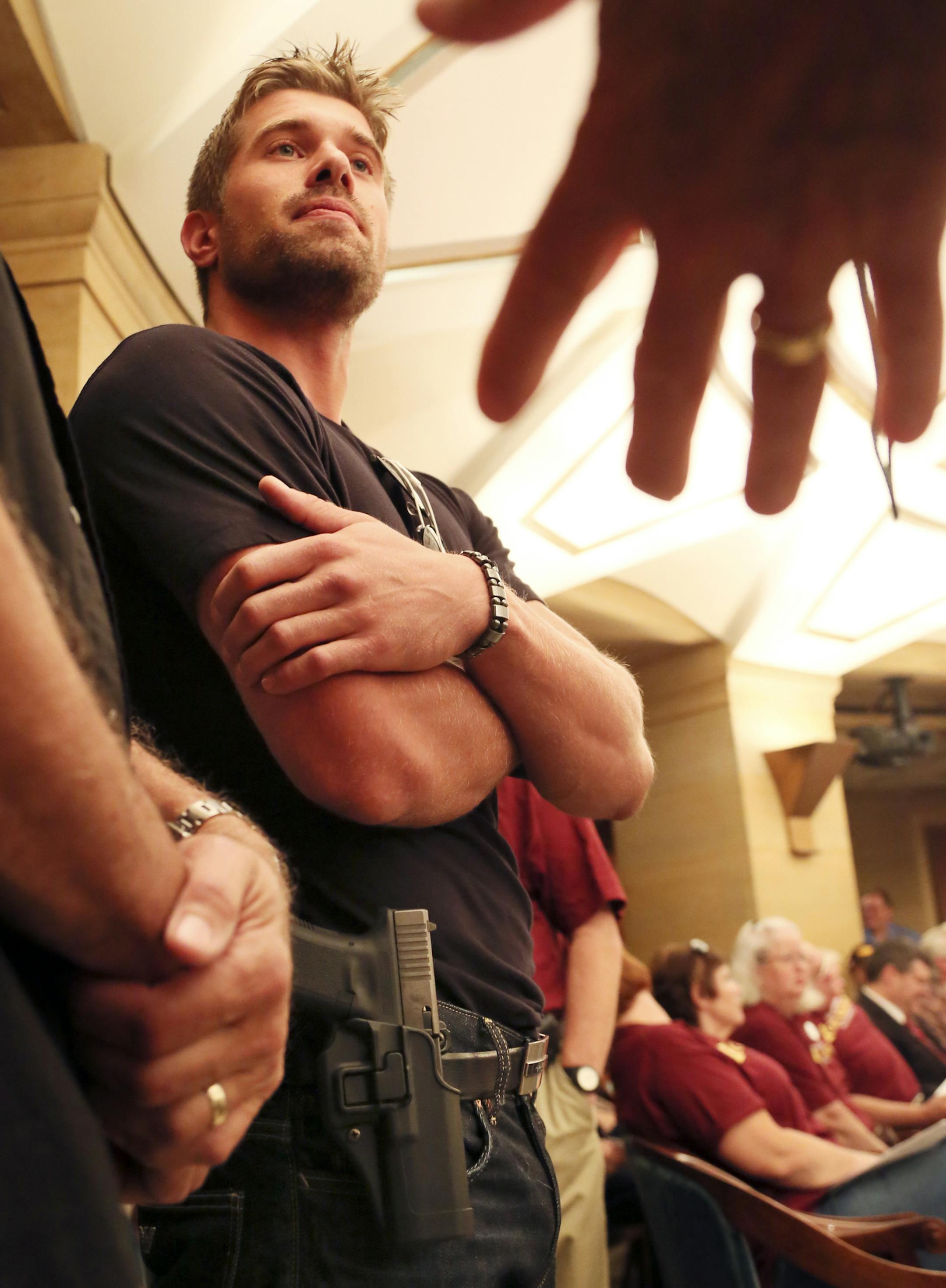
1:53A man openly wearing a loaded Glock on his hip stood a few feet from a legislative committee that was discussing whether civilians should carry guns to volatile meetings at the Capitol.
At a witness table nearby, another man testified how his father died at the hands of an assailant who, like 150,000 other Minnesotans, was legally allowed to carry his loaded weapon in public places.
Minnesota's emotional battle over gun violence came home to the "People's House" on Tuesday.
"The Capitol is a place for a free-flowing exchange of opinions and ideas — not bullets," said Sami Rahamim, whose father and six others died when an employee who had just been fired pulled out his Glock at Accent Signage in Minneapolis last September and started shooting. Rahamim urged a state panel to recommend a ban to gun-carrying at the Capitol both as a safety measure and to prevent intimidation.
Kris Kranz, who brought his .40-caliber Glock to the hearing loaded with 15 rounds, said he feels safer with his own weapon. "You have to be your own hero on your own white horse," Kranz said, adding that he should retain that right.
In a room crowded with those waiting to testify, Kranz leaned against a pillar in Room 15 of the Capitol in such a way that his gun was clearly visible to members of the Advisory Committee on Capitol Security, which is looking at ways to make the Capitol area safer. Other gun-rights advocates also wore holstered guns on their hips.
The sanctity of the Capitol itself, a place that prides itself on intense debate without physical violence, was the committee's topic.
The committee was told that Minnesota is definitely in the minority among states, both in allowing citizens to bring loaded weapons into the museum-quality Capitol building, and in having no weapons screening at any of its entrances.
 djoles@startribune.com During the second day of hearings on gun-carrying at the Capitol, comments from public were heard with both sides of the issue wei](https://arc.stimg.co/startribunemedia/IK4NLBUESCKH7TPRZNJM5TE2OE.jpg?&w=1080)
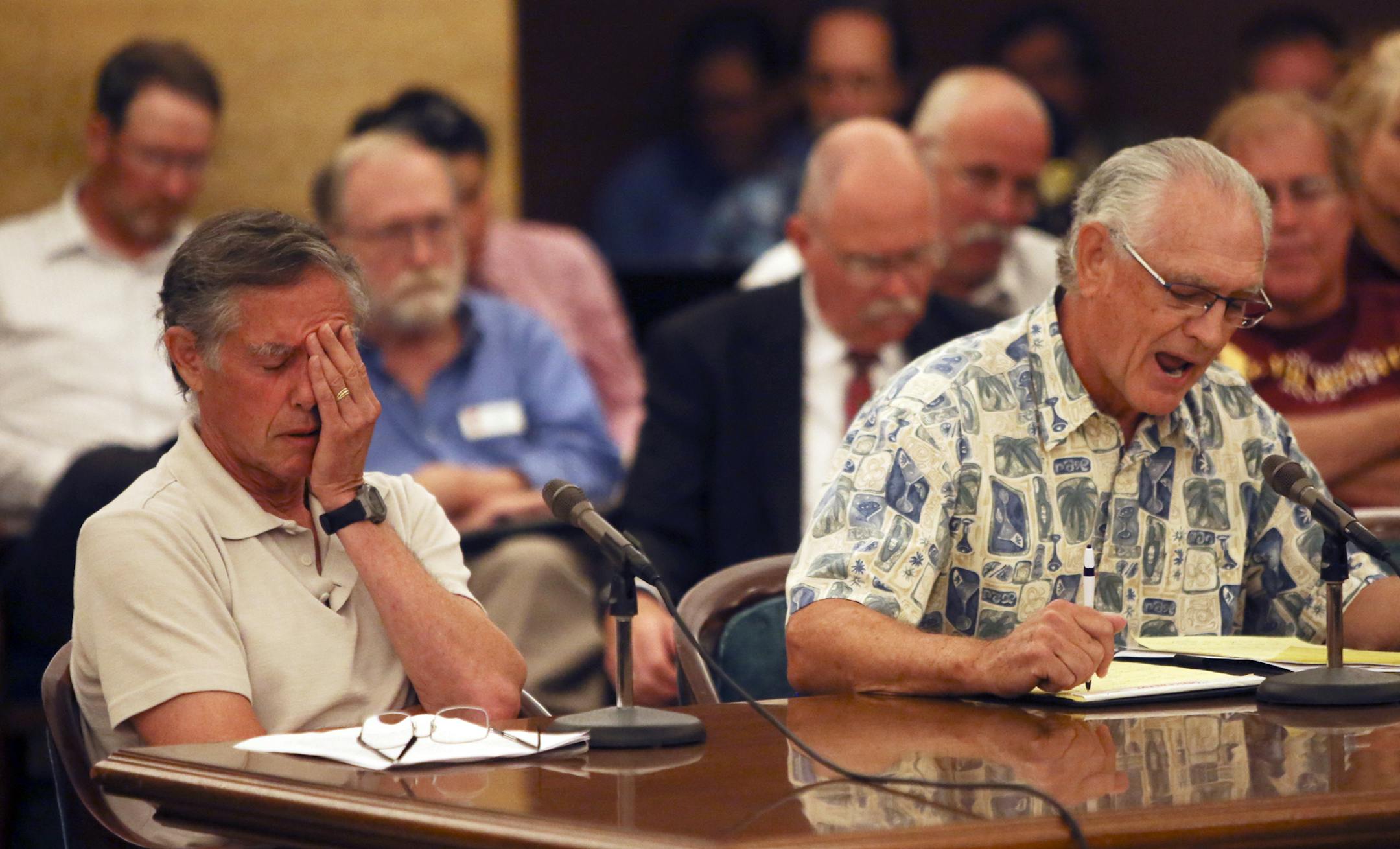
 djoles@startribune.com During the second day of hearings on gun-carrying at the Capitol, comments from public were heard with both sides of the issue weighing in Tuesday, Aug. 20, 2013,](https://arc.stimg.co/startribunemedia/EL7WXAU4NDOZHZTMZZBV4NLXDM.jpg?&w=1080)


