

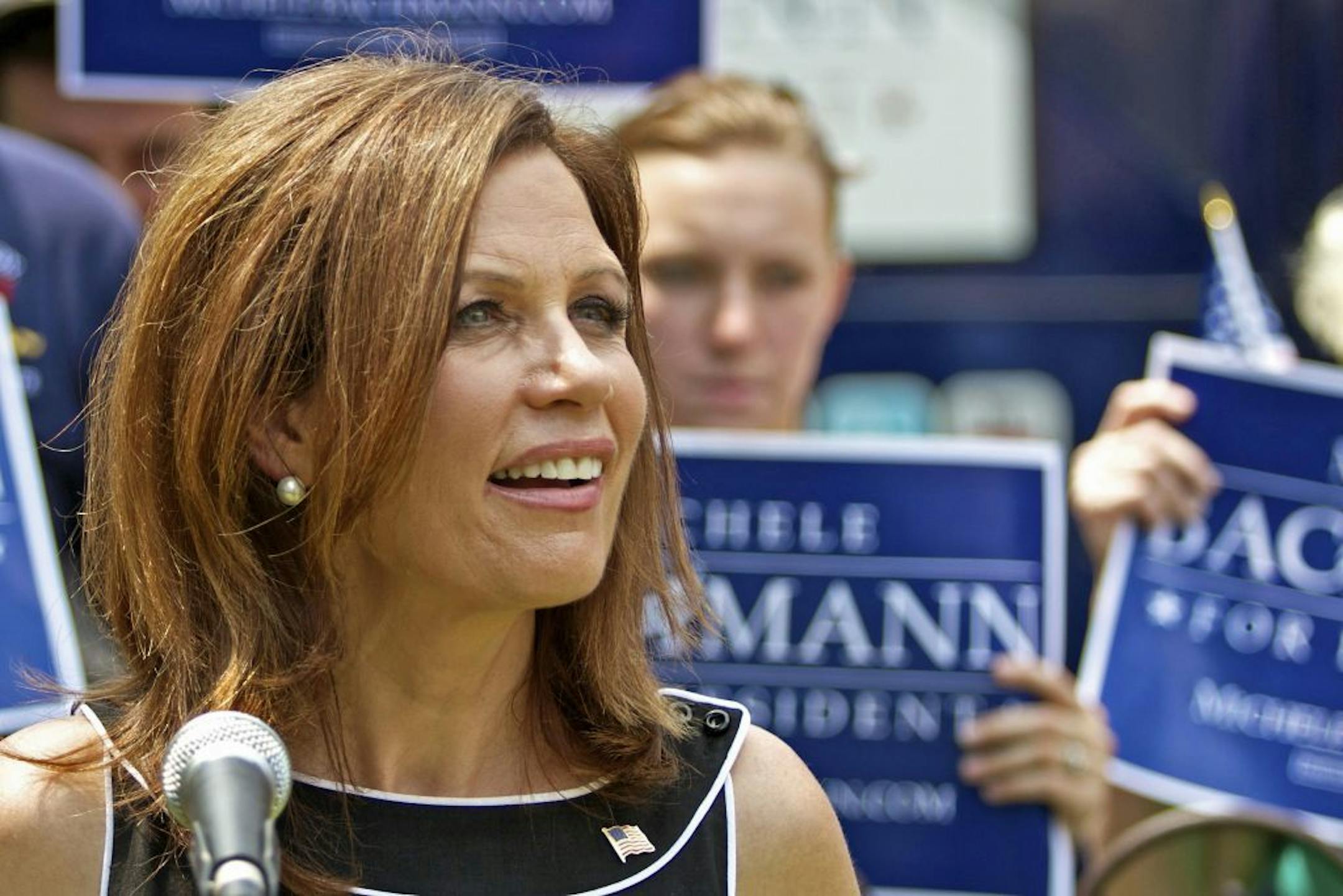
WASHINGTON - Michele Bachmann's powerful fundraising force has gained some superpower.
The Minnesota congresswoman has two new so-called Super PACs on her side that can raise unlimited cash from donors, corporations and anyone else who wants to see a President Bachmann in 2012.
Pro-Bachmann conservative activists Ken Blackwell, Ed Brookover and Bob Harris are among political activists taking advantage of the new political finance rules, created in the wake of the Supreme Court's 2010 Citizens United decision, that allow the formation of new groups with few limits on their fundraising.
The pro-Bachmann groups are on the edge of a rapidly expanding trend in political fundraising that is poised to shape campaign spending next year. Super PACs have become the new powerful vehicle for high-dollar donors to influence elections, while decreasing the role that political parties play. As long as Super PACs and their nonprofit cousins, known as 501(c)(4)s stay independent of a candidate's campaign, they can rake in as much as they want.
"We're going to see an explosion of this type of money in 2012," said Craig Holman, a lobbyist for open government advocate Public Citizen. "2010 was the test run."
One Super PAC supporting Mitt Romney raised more than $12 million to aid the former Massachusetts governor. A half-dozen Super PACs are now backing Texas Gov. Rick Perry's presidential efforts. Outside political groups led by Republican Karl Rove have pledged to raise $120 million to defeat President Obama in 2012. Pro-Obama and Democratic groups have joined in the fray, too.
Hundreds of millions of dollars will probably be funneled through these outside political groups in the 2012 elections for everything from House races to the presidential contest.
Super PACs and 501(c)(4) groups, which can raise money anonymously, burst onto the political scene after the Supreme Court's Citizens United decision, in which the court essentially ruled that corporations could directly spend money to influence elections.

