

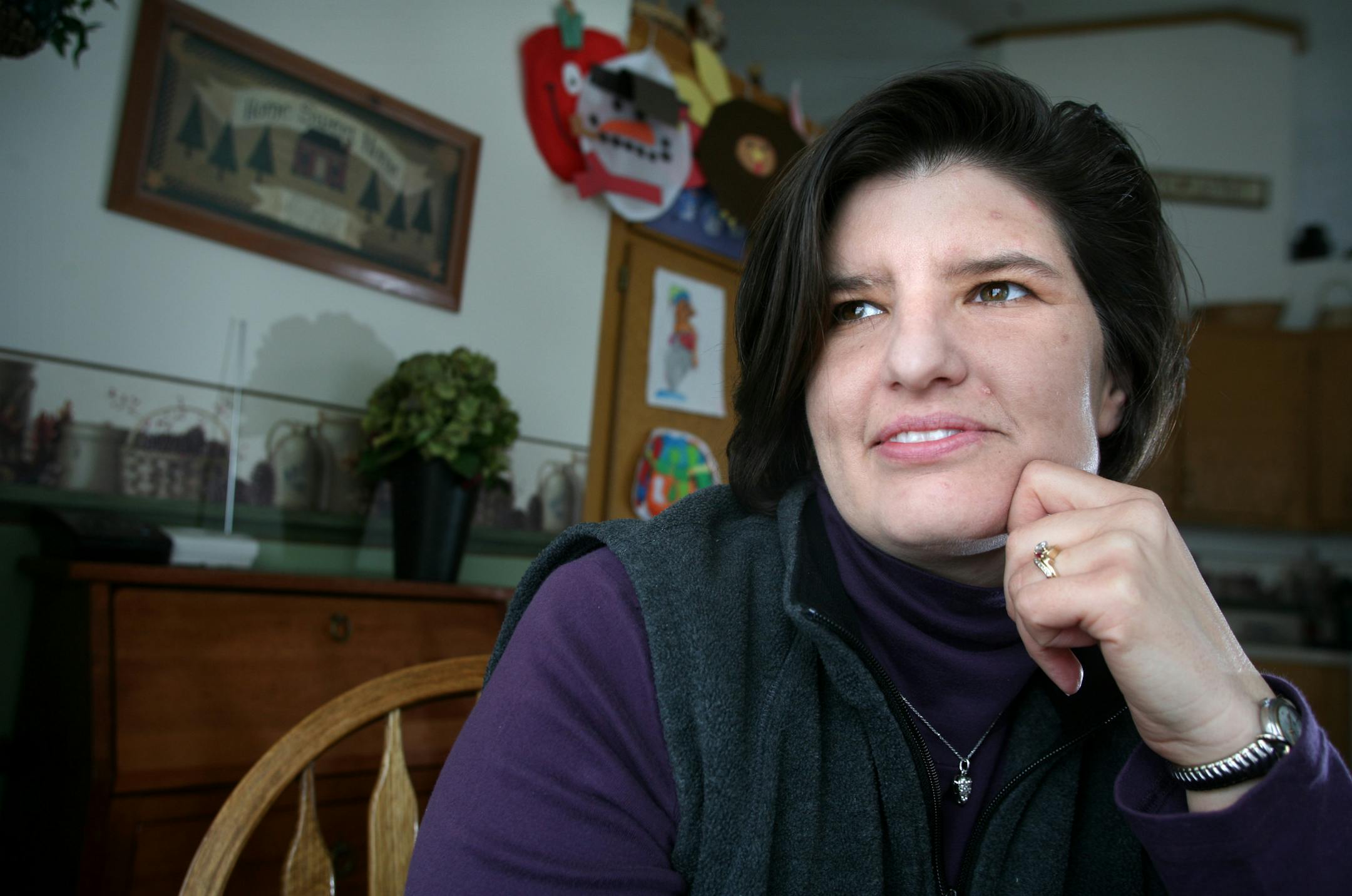
Chris Caulkins awoke at 2 a.m., rolled over and panicked. His 38-year-old wife, Mary, who had battled depression for years, had not come home.
For two weeks afterward, hundreds of St. Paul friends and strangers searched for her, including Tim Hopkins, an emergency medical technician, whose determination was relentless. "I also suffer from depression," he told Caulkins, a paramedic who worked with Hopkins on many occasions, "and I really want to help."
Mary, mother of a 5-year-old girl, was found in her car two weeks later, dead of a drug overdose. Three and a half years after that, Hopkins, 43, a father of five, took his life with a gun.
Their tragic stories are becoming less surprising to public health officials. A recent analysis of nationwide death rates from 1999 to 2004 found suicide rates increasing nearly 20 percent among people in their mid-40s to mid-50s. For men and women 35 to 44, suicide ranked as the fourth most common cause of death.
Canada's baby boomers are also likelier than people in other age groups to take their lives, said Brian Mishara, director of the Centre for Research and Intervention on Suicide and Euthanasia at the University of Quebec in Montreal. Canada's overall suicide numbers rose by 10 percent in 1999, largely the result of so many people in their 40s taking their lives. The suicide figures for people of that age jumped by 24 percent, while teen deaths attributable to suicide dropped by 6 percent.
Health officials are quick with caveats. The increase might largely be the result of more accurate reporting on cause of death, as suicide sheds its stigma. And other risks, including car crashes, cancer and heart disease, are far deadlier to boomers and those slightly younger.
Yet Dr. Alex Crosby, a medical epidemiologist with the Centers for Disease Control (CDC) and study co-author, said the findings are "something to look at more closely. We're really grappling to understand this better," he said, noting that boomers, compared with their parents, have had higher suicide rates throughout their life spans.
"Maybe this whole generation is at increased risk," Crosby said. "There are issues around substance abuse, alcohol, as well as depression and massive social changes."


