

Q: I have dogs, and we also have skunks in our neighborhood. How can we coexist with them without the dogs getting skunked?
A: Most of our pets will encounter wildlife — including skunks — whether we live in the city, suburbs or country. February through the end of March is skunk breeding season. From now through May and early June, when they give birth to kits, it's important to be extra cautious about skunk encounters.
Skunks are nocturnal. Before letting dogs out in the evening or very early morning, make some noise to give skunks a heads up that it's time to move on.
Skunks have poor eyesight. Avoid startling them. If you meet up with one, speak softly and try to keep your dog calm as well. Back off, and the skunk will probably do the same.
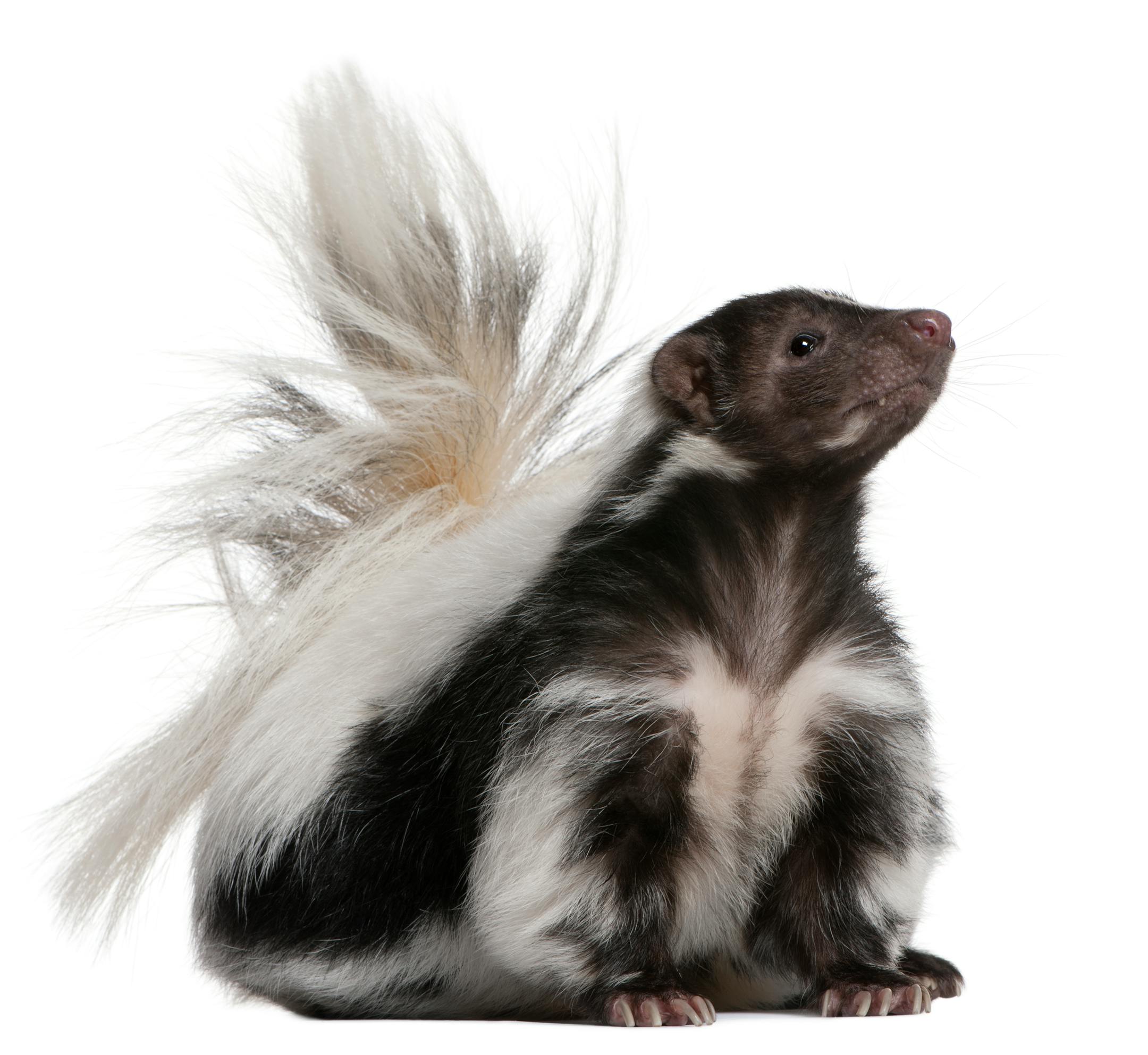
It's easy to read skunk body language. If a skunk feels threatened by you or your dog, it will arch its back, stamp its front paws, turn its back or shuffle backward, lift its tail and ... hopefully you and your dog are gone by then, because if not, you're going to get a blast of skunk musk.
If skunks are an issue, try to landscape your yard so that only the perimeter is of interest to skunks. They like to forage and won't be interested in a large, open lawn. Add some mulch and shrubby cover near the fence line, and they should stick to that area.
Other ways to deter skunks are to avoid leaving out pet food, store trash in tightly sealed cans and remove lumber and junk piles. Seal foundation openings so skunks don't den beneath your house.
Skunks can carry rabies, so keep your dog's vaccinations up to date.


