

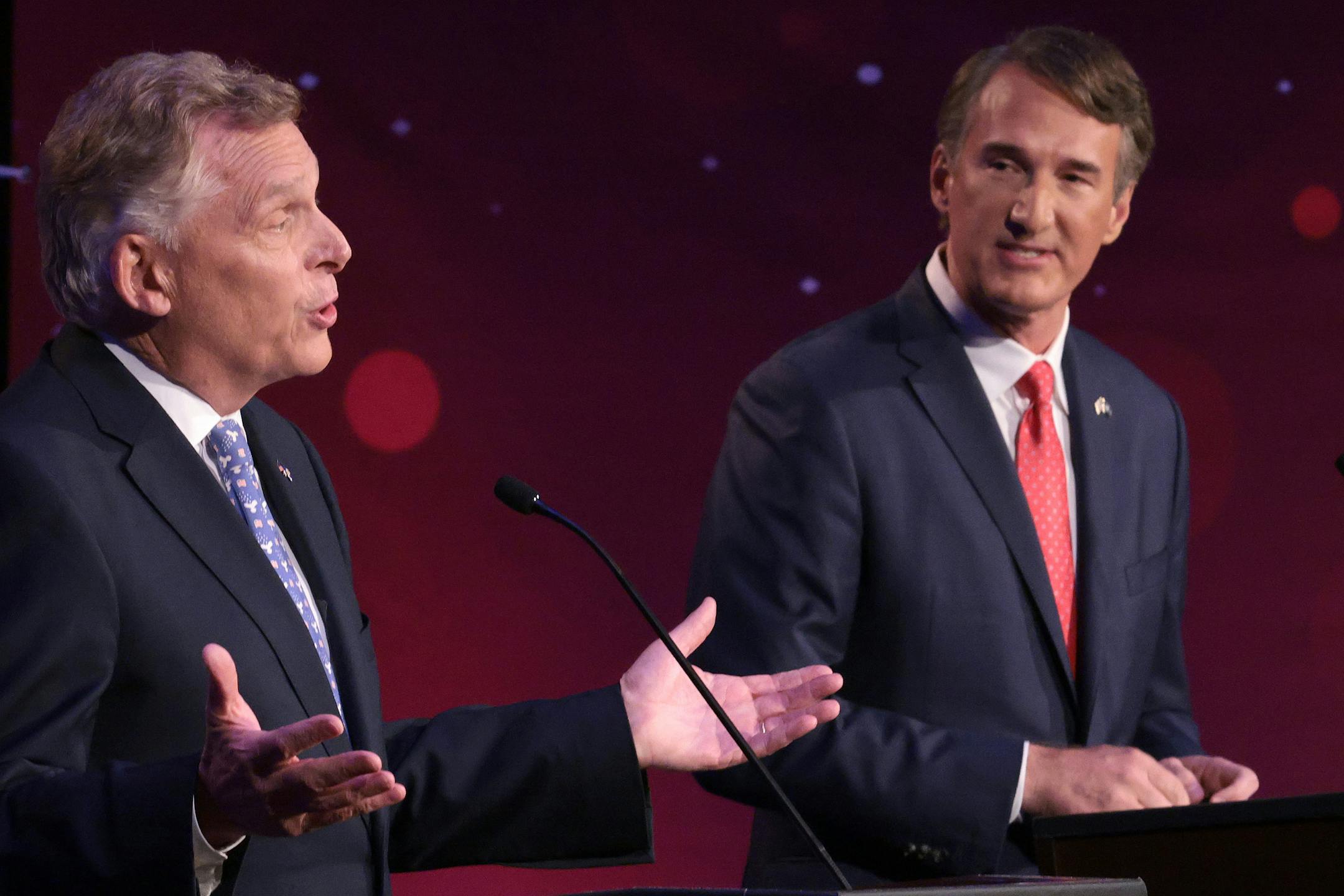
Watching Terry McAuliffe stumble to defeat in a state that Joe Biden won by 10 points exactly one year ago tonight, a mild suggestion seems in order: Democrats probably need a new way to talk about progressive ideology and education.
In the Virginia race the script for both candidates was straightforward and consistent: Glenn Youngkin attacked critical race theory, combining it with a larger attack on how the education bureaucracy has handled the pandemic, while McAuliffe denied that anything like CRT was being taught in Virginia schools and also insisted that the whole controversy was a racist dog whistle.
The problem with the McAuliffe strategy is that it fell back on technicalities — as in, yes, fourth-graders in the Commonwealth of Virginia are presumably not being assigned the academic works of Derrick Bell — while evading the context that has made this issue part of a polarizing national debate.
That context, obvious to any sentient person who lived through the last few years, is an ideological revolution in elite spaces in American culture, in which concepts heretofore associated with academic progressivism have permeated the language of many important institutions, from professional guilds and major foundations to elite private schools and corporate H.R. departments.
Critical race theory is an imperfect term for this movement, too narrow and specialized to capture its full complexity. But a new form of racecraft clearly lies close to the heart of the new progressivism, with the somewhat different, somewhat overlapping ideas of figures like Ibram X. Kendi and Robin DiAngelo enjoying particular influence.
And that influence extends into schools and public-education bureaucracies, where Kendi and DiAngelo and their epigones often show up on resources recommended to educators — like the racial-equity reading list sent around in 2019 by one state educational superintendent, for instance, which recommended both DiAngelo's "White Fragility" and an academic treatise on the "Foundations of Critical Race Theory in Education."
That superintendent was responsible for Virginia's public schools.
Now progressives will counter that the backlash that may have helped carry Youngkin to victory (and it's certainly only one factor among many) isn't just about these texts and ideologies but about a broader discomfort with any tough truth-telling about America's racist past, whether it takes the form of Toni Morrison novels or Norman Rockwell paintings. And they're right that the anti-CRT movement has combined a set of moderate and even liberal objections to the new progressivism — objections that show up in super-liberal New York as well as suburban Loudoun County, Virginia — with an older style of objections to talking about slavery and segregation at all.


