

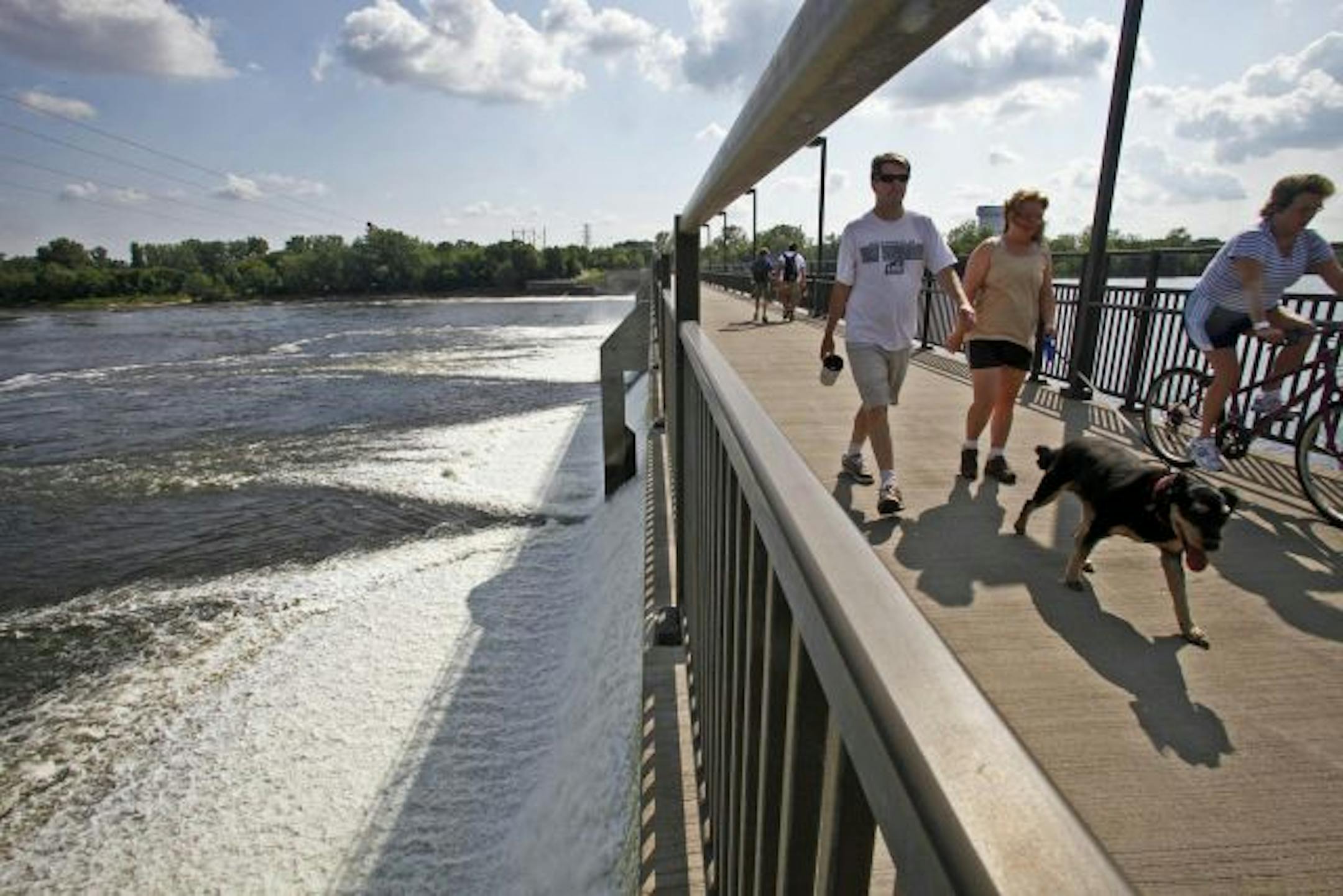
Can the 97-year-old Coon Rapids dam over the Mississippi River serve as Minnesota's barrier to the northward migration of unwanted fish, including the notorious Asian carp?
Stanley Consultants, an international firm with an office in Wayzata, has a $164,087 contract with Three Rivers Park District to answer that question by the first of next year.
The west-suburban park district, which owns and operates the dam, will be reimbursed by the Minnesota Department of Natural Resources from a $500,000 fund set up by the Legislature to create a fish barrier on the Mississippi.
Although the dam at St. Anthony Falls in Minneapolis, the Ford Dam in St. Paul and the Hastings Dam are taller and therefore better blocks to the invasive fish, they all have locks that allow fish to move upstream with boats, said Luke Skinner, DNR supervisor of the state's invasive species program. "Coon Rapids dam is the first dam on the river that does not have a lock."
Several Asian carp were caught last year in the Mississippi River near Winona.
An aggressive, unwanted species, they out-compete native fish for food and take over the habitat, Skinner said. Asian carp can jump 10 feet out of the water, even striking people in boats, discouraging recreational use and negatively affecting surrounding properties and businesses, he said.
After considering sound and bubble barriers, the DNR has decided that a tall physical barrier that is already in place would best stop the fish, Skinner said.
Under the contract with Three Rivers, Stanley Consultants will report on what would have to be done and how much it would cost to make the Coon Rapids dam a more effective fish barrier. The investigation will include measurements of how high the fish can jump and how much distance separates the top of the dam and the water level when the water is at its high point, Skinner said.


