

Opinion editor's note: Star Tribune Opinion publishes a mix of national and local commentaries online and in print each day. To contribute, click here.
•••
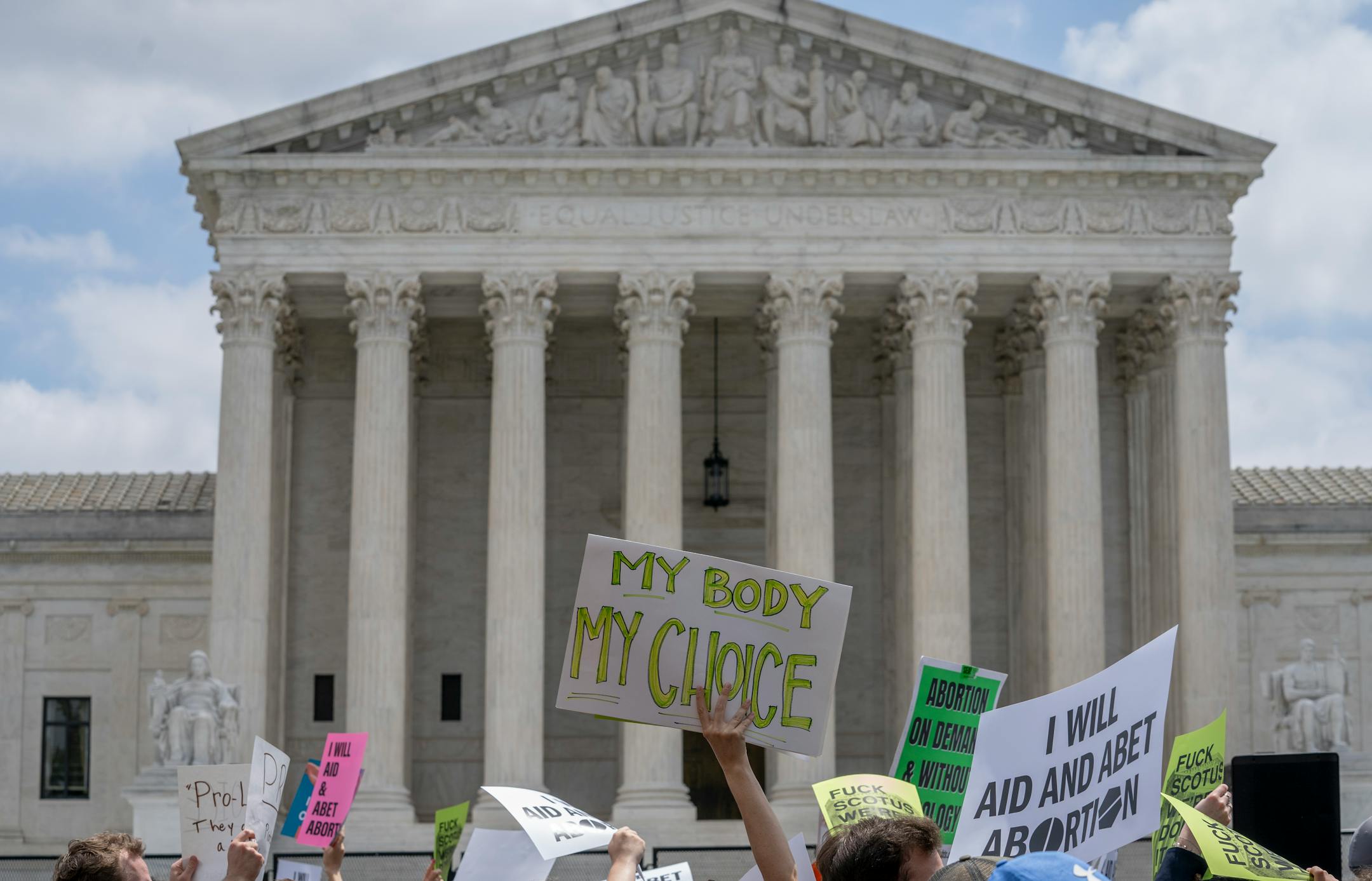
Since the Dobbs decision came down, I've heard a lot of liberals lamenting the Republican theft of the Supreme Court.
As the story goes, Sen. Mitch McConnell stole the majority when he refused to give Merrick Garland so much as a hearing in 2016, holding the vacancy open until Donald Trump took office in 2017. McConnell's justification was his deep commitment to small-d democracy: No seat should be filled in a presidential election year; the people should be given a chance to weigh in. In 2020, he discarded that invented principle aflame and rushed to confirm Amy Coney Barrett to replace Ruth Bader Ginsburg.
McConnell gaslit the nation, but he didn't steal any seats. Nothing he did was against the rules. Liberals, in their anger, have too often ignored McConnell's logic. He understood that America's age of norms is over. This is the age of power.
Let's start here: The Supreme Court has changed. In the '50s and '60s, you would have had a hard time inferring a justice's political background from his votes, as an analysis by professors Lee Epstein and Eric Posner shows. In the '90s, Byron White, a Democratic appointee, had a more conservative voting record than most Republican-appointed justices. John Paul Stevens, an anchor of the court's liberal wing until his retirement in 2010, was appointed by President Gerald Ford, a Republican.
But this independence was understood, by the parties that produced it, as a record of failure. The vetting process by which nominees are chosen was revamped to all but guarantee ideological predictability. In recent years, "justices have hardly ever voted against the ideology of the president who appointed them," Epstein and Posner find.
I am, to put it mildly, obsessed with the way ideological polarization is colliding with America's peculiar political institutions. I wrote a whole book about it. Our political system is not designed for political parties this different, and this antagonistic. It wasn't designed for political parties at all. The three branches of our system were intended to check each other through competition. Instead, parties compete and cooperate across branches, and power in one can be used to build power in another — as McConnell well understood.


