

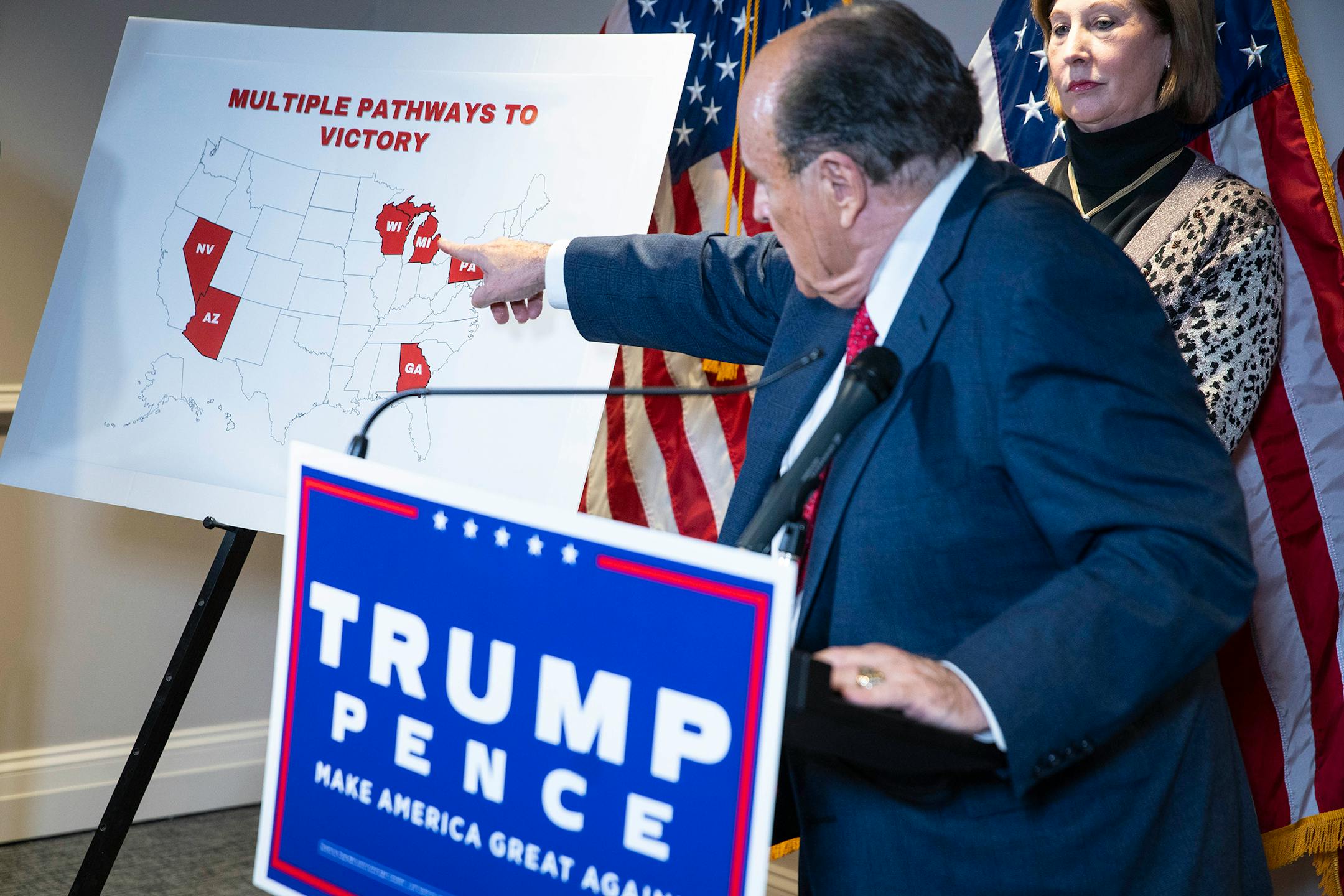
WASHINGTON - It was a month after the 2020 presidential election, and Bernard Kerik was starting to panic. The former New York City police chief and his friend Rudy Giuliani were shelling out thousands of dollars for hotel rooms and travel in their effort to find evidence of voting fraud and persuade state legislators to overturn Joe Biden's victory.
Yet President Donald Trump's campaign had turned down Kerik's request for a campaign credit card. The bills were piling up. "How do I know I'm gonna get my money back?" Kerik remembers thinking to himself at the time, according to a recent interview he did with The Washington Post.
The bills went unpaid until after Fox News personality Jeanine Pirro went to bat on their behalf, according to a Republican official, who like some others interviewed for this article spoke on the condition of anonymity to discuss private conversations. Soon after, the campaign cut Kerik a check - with Trump's approval, according to a former senior campaign official.
That move, in mid-December, smoothed the way for what would eventually be more than $225,000 in campaign payments to firms owned by Kerik and Giuliani - including more than $50,000 for rooms and suites at the posh Willard hotel in Washington that served as a "command center" for efforts to deny Biden the presidency in the days leading up to the attack on the Capitol on Jan. 6.
The fact that campaign funds were used to finance efforts to subvert Biden's victory could complicate the former president's ongoing attempt to use claims of executive privilege to shield documents and testimony from the Congressional committee investigating Jan. 6, according to some legal scholars.
The Congressional panel has made sweeping requests to the archivist of the United States for papers from the Trump White House, including for all documents stretching back to April 2020 that relate to efforts to challenge the results of the election or delay the counting of electoral college votes.
The requests specifically name dozens of people, including Kerik, Giuliani and others who were present in the Willard command center, such as former White House strategic adviser Stephen Bannon and legal scholar John Eastman. Eastman wrote two memos laying out legal arguments for Vice President Mike Pence to either reject Biden's electoral votes on Jan. 6 or delay certifying the results so that states could conduct further investigations.
Trump has asked a federal court to block the release of the documents, claiming that they are protected by executive privilege. And Bannon, facing a subpoena from the committee, has cited Trump's executive privilege claims as a reason for his refusal to comply.


