

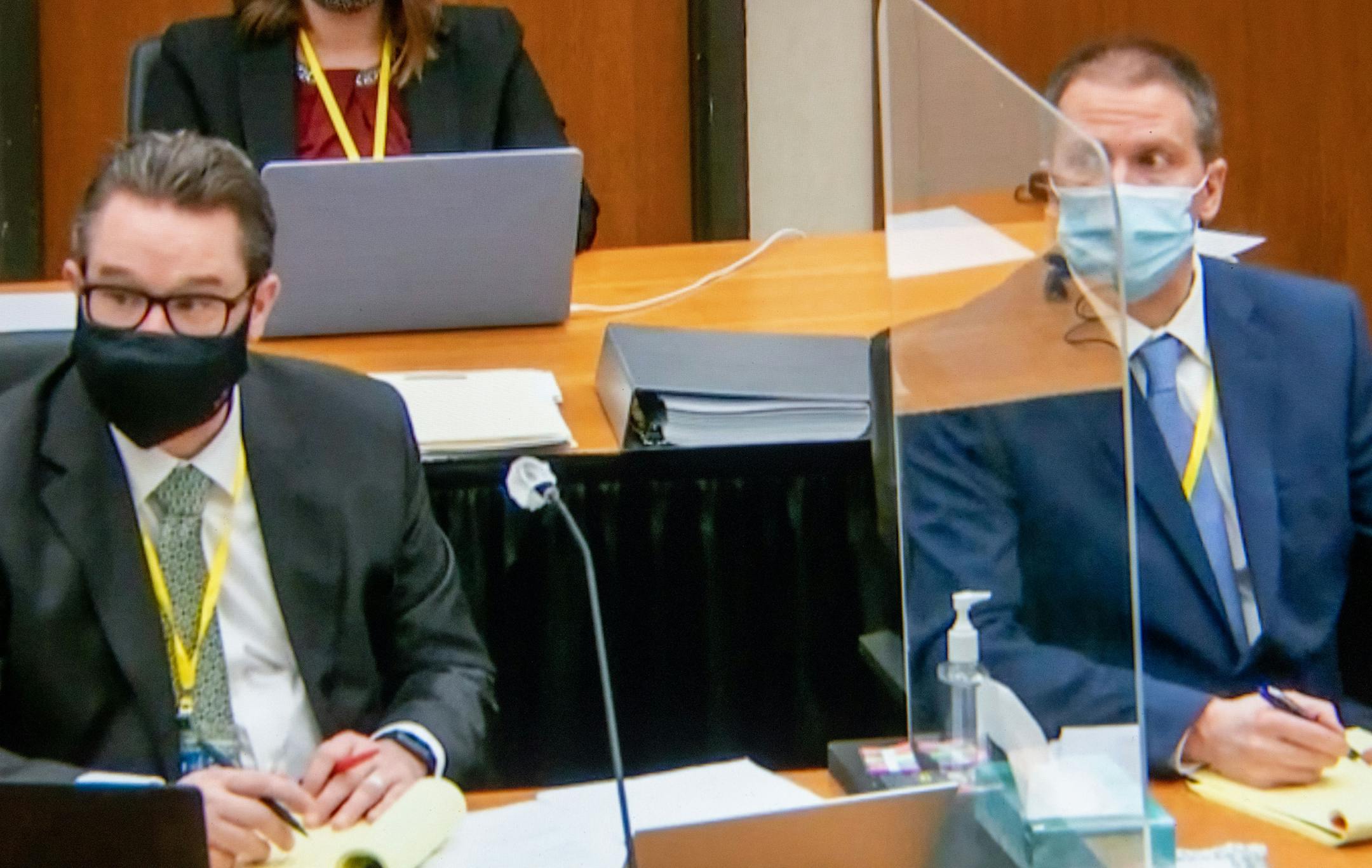
The apex of the unraveling of civil society could come one day with the courts, given the injustice that dwells there, where transparency is often distant and confidence is waning.
So it should be in the interest of jurists and others to open the courts, to shine light on the justice and injustice, and to allow the governed to see in what ways and circumstances freedom is lost. To experience that in Minnesota now, one has to physically go to a courtroom, during working hours and spend long spans of time figuring out what procedure matters.
It doesn't have to be that way.
The Minnesota Supreme Court heard testimony last month urging it to expand its narrow rule, which currently only allows cameras in courtrooms once a trial has ended. Cameras are allowed only at sentencings, and even then there are restrictions, some of which seem unfair. Victims can opt out of being photographed, but defendants cannot.
The efforts to open courts to cameras has been years long, as the courts considered a pilot project of limited degree. A committee commissioned by Chief Justice Lorie Skjerven Gildea was tasked about a year ago with examining the results of the pilot program and recommending to the Supreme Court if the program should be expanded.
The committee, made up of judges, lawyers and victims' advocates, but no journalists, took testimony and statements from journalists, defense lawyers, prosecutors, and victims' advocates over a yearlong process. It recommended to the Supreme Court that use of cameras should not be expanded.
The Supreme Court took testimony from six people (including Mankato Free Press Managing Editor Joe Spear and Star Tribune Editor Suki Dardarian). Five represented the media and the public and the other was the judge who presided over the committee.
While the preponderance of evidence, overwhelming at times, showed there was no harm done to the institution of justice and no harm or complaints in any of the cases where cameras were allowed, the committee recommended against expansion stating there "could" be disruptions to trials and there "could" be harm to victims and there "could" be a tainting of the jury pool. But no evidence of such harm was provided.


