

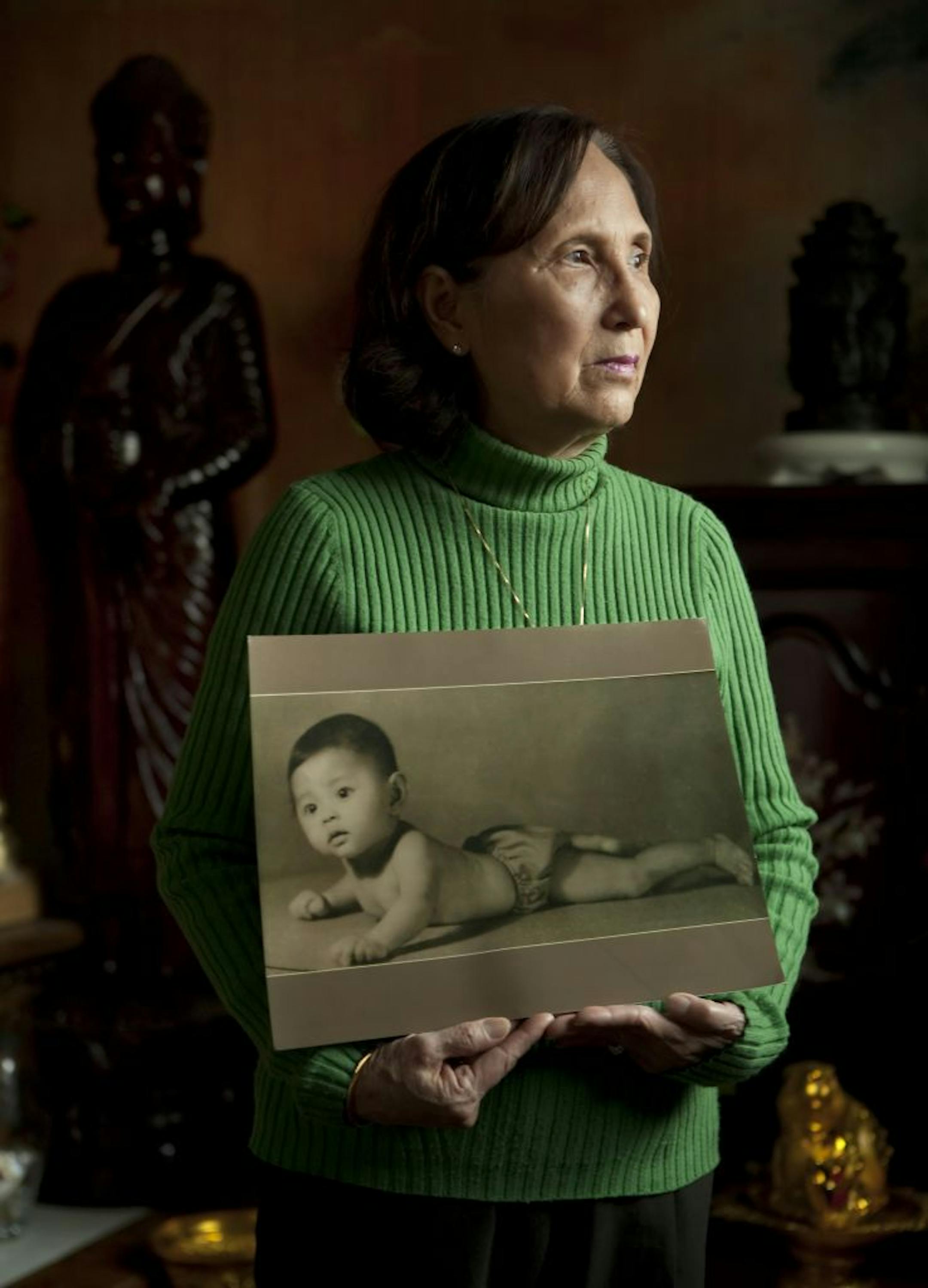
SAN JOSE, CALIF. - Sophany Bay's three young children died in her arms, one after the other, during Cambodia's genocide.
Sarem Neou lost her two daughters to starvation and disease; her mother was dragged to death by a horse after she was suspected of stealing food for one of the girls, and her husband died after learning of the horrific deaths of his children.
Kelvin So's brother, a surgeon, was one of thousands of professionals executed by Khmer Rouge soldiers.
Collectively, the three survivors lost hundreds of relatives -- aunts, uncles, cousins, nieces, nephews -- during the reign of terror from 1975 to 1979 in Cambodia when an estimated 1.7 million people died, about a quarter of the small Southeast Asian country's population.
Now Bay, So and Neou are among 45 Cambodian-Americans getting the opportunity to see justice done. When opening arguments started Monday in Phnom Penh in a trial of former Khmer Rouge leaders charged with crimes against humanity, Bay and Neou were sitting in the gallery alongside other witnesses to genocide. They and the other Cambodian-Americans are being legally represented in the trial. "I want to see justice before I die," said Bay, 66, a San Jose mental health counselor. "I want to see those killers and ask them, 'Why? Why did they kill so many people? Who stood behind the killing fields?' Before I die, I want justice."
The United Nations-backed tribunal, the second prosecution of Khmer Rouge leaders, is simultaneously a criminal and civil proceeding that could last more than two years. Its mandate is to try leaders responsible for the killing of hundreds of thousands of Cambodians. Civil claimants seek reparations, perhaps a permanent memorial in Cambodia, and the chance to face those who unleashed ineffable brutality on their lives.
The defendants are Ieng Sary, who was foreign minister; Khieu Samphan, a former head of state; and Nuon Chea. A fourth defendant, Ieng Thirith, has dementia and last week was declared unfit to be tried and ordered freed from detention. The regime's top leader, Pol Pot, died in 1998. In the first trial, Kaing Guek Eav was sentenced to 19 years in prison for the torture and death of at least 14,000 people.
The Khmer Rouge took control in 1975 after the war in next-door Vietnam spread to Cambodia. Khmer Rouge leaders evacuated cities and banned modern technology to create an agrarian culture to purify the nation as a foundation for a new Communist society. This included killing countless Cambodians, particularly the educated.

