
Call it deep (sea) intrigue: World's largest sponge discovered

June 3, 2016 at 4:33AM
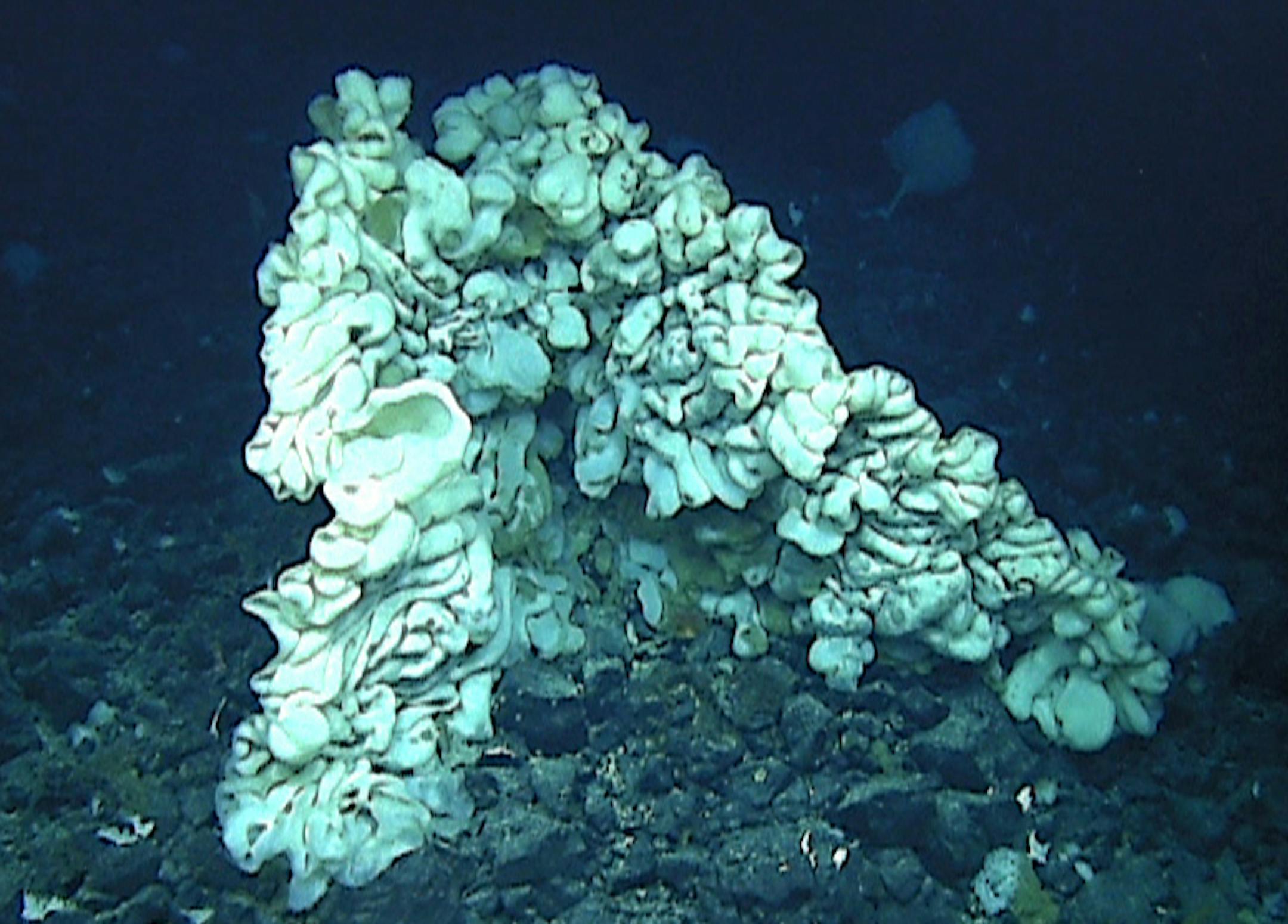
This Aug. 12, 2015 photo provided by NOAA’s Office of Exploration and Research/Hohonu Moana 2015 shows a massive sponge photographed at a depth of about 7,000 feet in the Papahanaumokuakea Marine National Monument off the shores of the Northwestern Hawaiian Islands. A team of scientists on a deep-sea expedition discovered the sponge, which they say is the world’s largest ever documented.A study published this week in the scientific journal Marine Biodiversity described the massive
This Aug. 12, 2015 photo provided by NOAA’s Office of Exploration and Research/Hohonu Moana 2015 shows a massive sponge photographed at a depth of about 7,000 feet in the Papahanaumokuakea Marine National Monument off the shores of the Northwestern Hawaiian Islands. A team of scientists on a deep-sea expedition discovered the sponge, which they say is the world’s largest ever documented. (The Minnesota Star Tribune)

Researchers discovered what they say is the world's largest known sponge.

The creature is 12 feet long and seven feet wide — about the size of a minivan.

It could also be among the oldest living animals on Earth.

Papahanaumokuakea research specialist Daniel Wagner said he estimates the sponge found off Hawaii to be around 1,000 years old.

"Here's this animal that has presumably never been encountered before and it's enormous and that kind of bring up a little intrigue for deep water and what else exists down there," said biologist Christopher Kelley, at the Hawaii Undersea Research Lab.

about the writer

about the writer

News services

More from No Section

See More
FILE -- A rent deposit slot at an apartment complex in Tucker, Ga., on July 21, 2020. As an eviction crisis has seemed increasingly likely this summer, everyone in the housing market has made the same plea to Washington: Send money — lots of it — that would keep renters in their homes and landlords afloat. (Melissa Golden/The New York Times) ORG XMIT: XNYT58
Melissa Golden/The New York Times

It’s too soon to tell how much the immigration crackdown is to blame.