

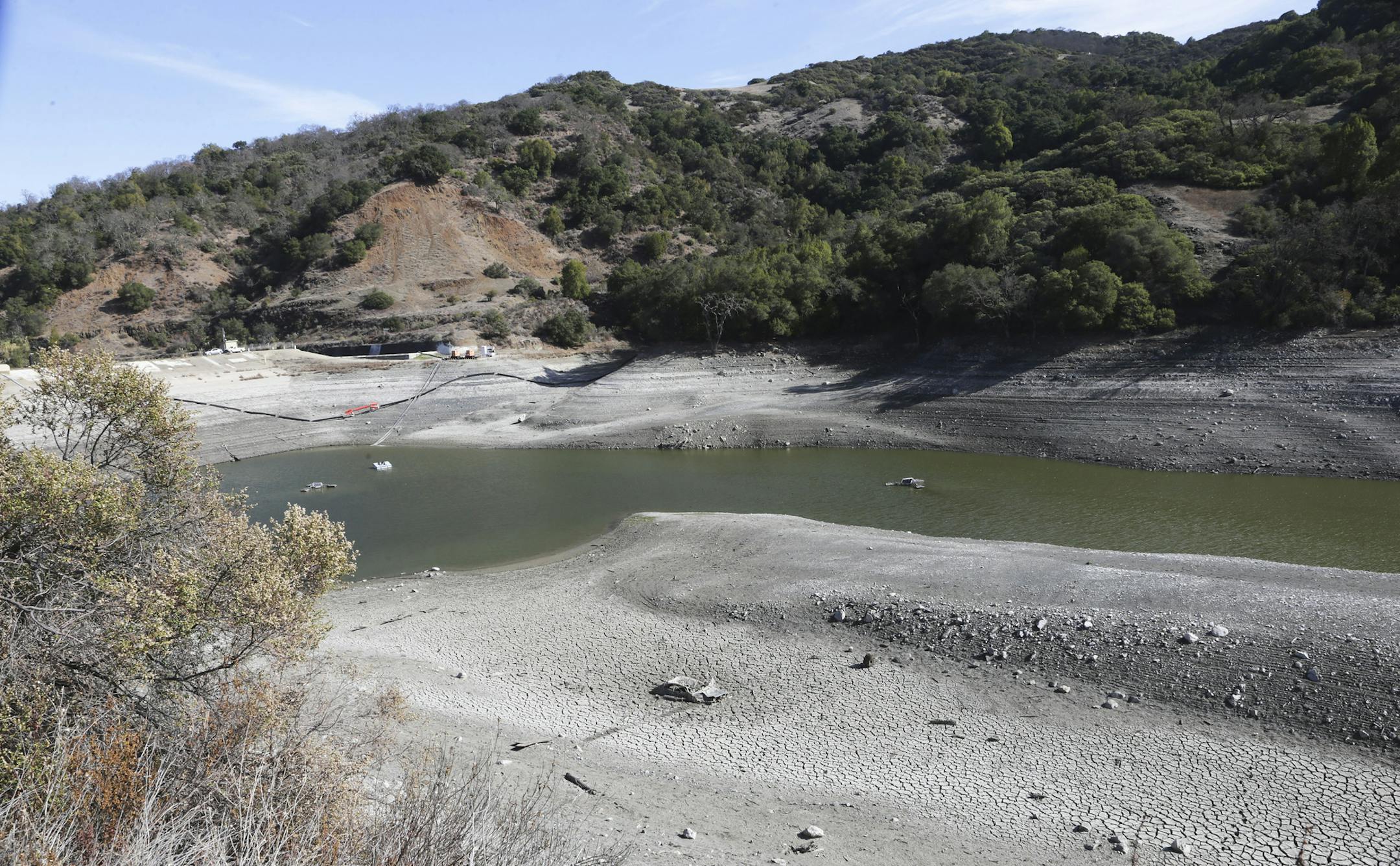
LOS ANGELES – Cities and institutions across California are resorting to exceptional measures to deal with a worsening drought, from mandatory water restrictions in beachside Santa Cruz to voluntary cutbacks in Los Angeles.
Santa Cruz, which relies on rainfall, won't permit residents to refill swimming pools or hot tubs and has barred restaurants from serving water unless specifically requested.
The Metropolitan Water District, the Los Angeles-based utility for 19 million people in Southern California, is asking customers to voluntarily reduce water use by 20 percent.
About two-thirds of California is gripped by "severe" or "exceptional" drought, the most severe conditions, according to the U.S. Drought Monitor, a federal website.
Nine percent of the state is considered exceptionally dry. It's the state's most severe drought since at least 1977, according to Jeffrey Kightlinger, general manager of the Metropolitan Water District.
"People do know about this and are becoming convinced that there's a statewide crisis," said Tim Quinn, executive director of the Association of California Water Agencies.
With California's snowpack at just 12 percent of the average for this period, the state Water Resources Department said Jan. 31 that it was allocating no water from the Sacramento-San Joaquin River Delta to local water agencies, for the first time in state history.
Snowmelt and rain feeding the delta make it the single largest source for California's 38 million residents and 25.4 million acres of farmland.


