0:42
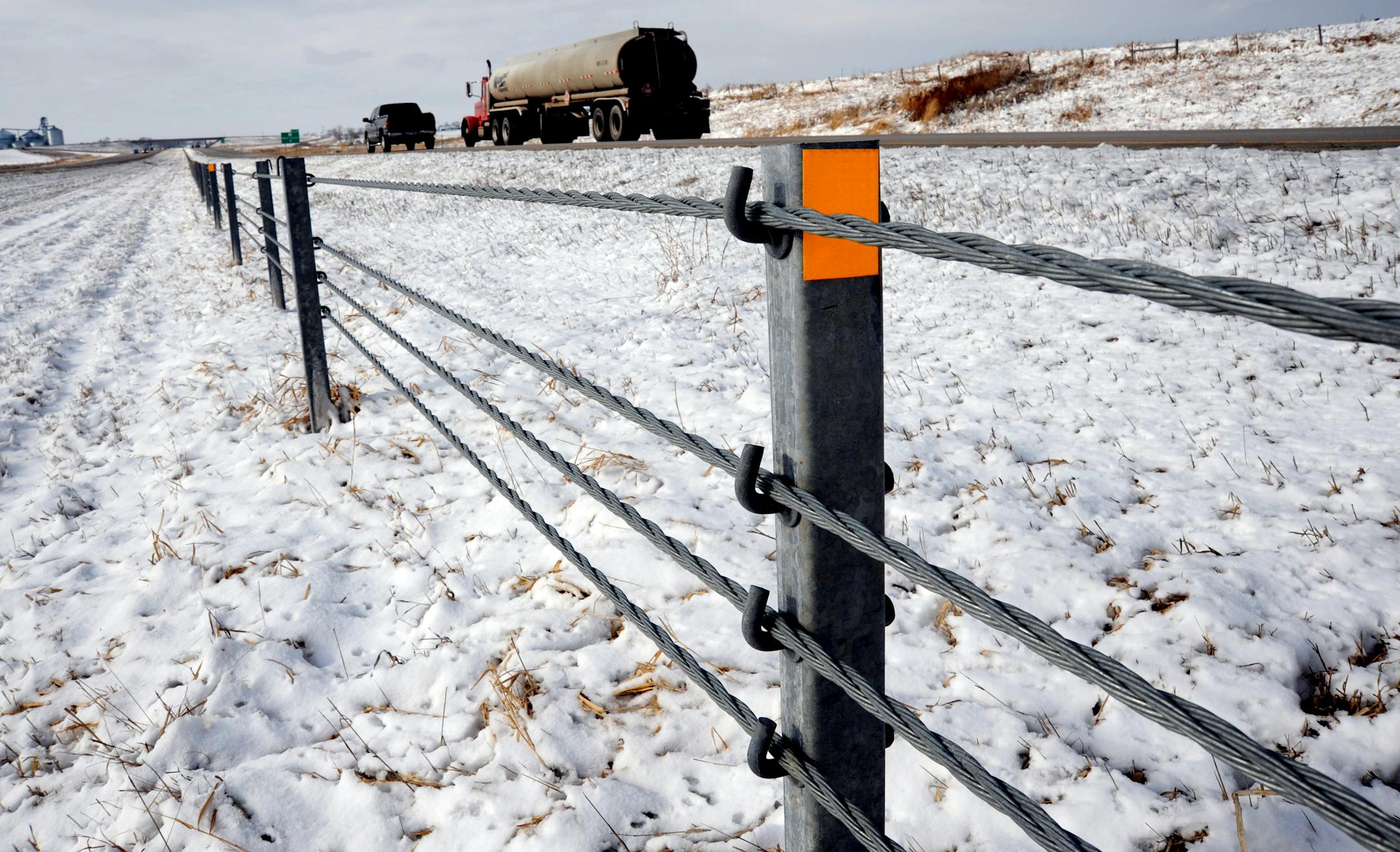
0:42Steel safety cables that state officials have been working to install in many highway medians could have saved the four young women killed Monday in a crash on a rural stretch of Interstate 94 near Alexandria, traffic experts say.
But placement of barriers, which cost up to $150,000 per mile to install, is based on traffic volume, the number of crashes and average speeds, said Bernie Arseneau, deputy commissioner and chief engineer for the Minnesota Department of Transportation (MnDOT).
"This is a very low-volume section of 94," Arseneau said. "This wouldn't be one of those areas where it would stand out" to have the cables, those taut bands of steel strung in lines of three or four that increasingly line miles of highways.
Since the barriers were first installed in 2004 on Interstate 94 in the northwest metro, more of the steel cables have been added every year to divided highways all around Minnesota, primarily in the heavily traveled Twin Cities area.
According to the latest MnDOT data, there are 260 or so miles of highway with the cable barriers, and another 79 miles are on the drawing board this year. Still, Arseneau said, "there's much more four-lane that doesn't have cable than does.
"Ideally we would have cable barriers all along I-94, and we are moving to that end," he said. "It's ultimately an ending pot of money. We have to be smart about how we go ahead."
From 13 deaths to 0
When Lauren Peterson's Chevy Malibu slid off I-94 west of Alexandria with three fellow North Dakota State University students with her, the vehicle continued unimpeded into eastbound traffic and collided with a much larger Chevy Suburban.