If you plan to buy a newer stucco home in Minnesota, heads up: stucco homes in Minnesota built since the late 80′s or so have had a nasty history of catastrophic failures. I decided to write about this after doing a home inspection in Blaine where the entire development was having the stucco torn off all the homes and James Hardie siding was being installed instead. The average cost per home exceeded $100k.
Newer stucco homes are more likely to have moisture instrusion problems than other types of homes, and the damage is usually far more serious. The City of Woodbury has an excellent position paper about Stucco in Residential Construction, which should be required reading for anyone buying a stucco home built during this time period. In many cases, there are no visible signs of moisture instrusion. My advice to anyone buying a newer stucco home in Minnesota is to have invasive moisture testing performed, which can be done from the interior or exterior.
Invasive Testing Basics
Exterior testing of stucco is done by drilling holes in the stucco at suspect locations, sticking a moisture probe in to the wall, and measuring the moisture content of the wood or wall sheathing with a special moisture testing device, such as a Delmhorst Moisture Meter.
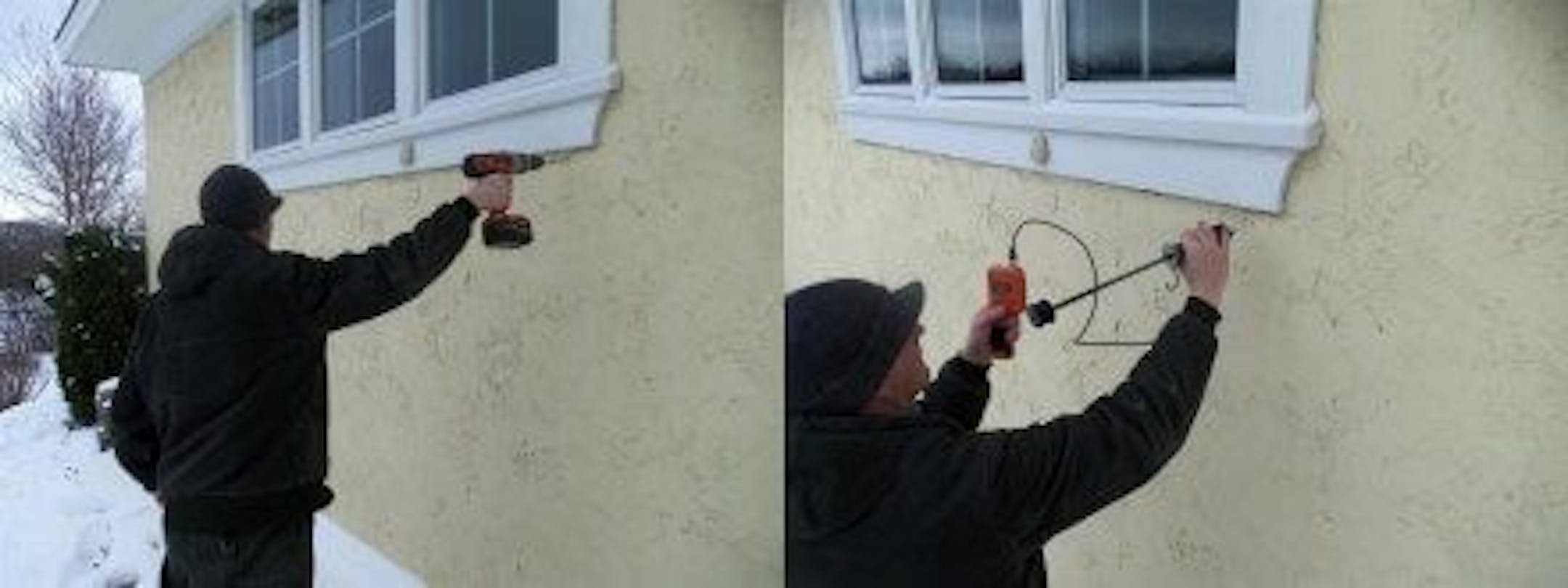
Interior testing is done by drilling holes in the interior walls, and then sticking a long moisture probe through the wall to the exterior wall sheathing to take a moisture reading. As long as the person doing the testing is good at it, the results that come from invasive moisture testing on stucco homes are highly reliable.
To gather information for this blog, I spoke with moisture testing experts from three of the larger stucco testing firms in the Twin Cities: Barry Eliason of Private Eye Home Inspections & Moisture Testing, Wayne Shellabarger of Acuity Engineers, Inc., and Alan Powell of Certified Moisture Testing. I asked them about their preferred testing methods, and asked them to explain why. All three can provide both interior and exterior testing, but they each have their own preferences.
Interior vs. Exterior – Cosmetic Issues
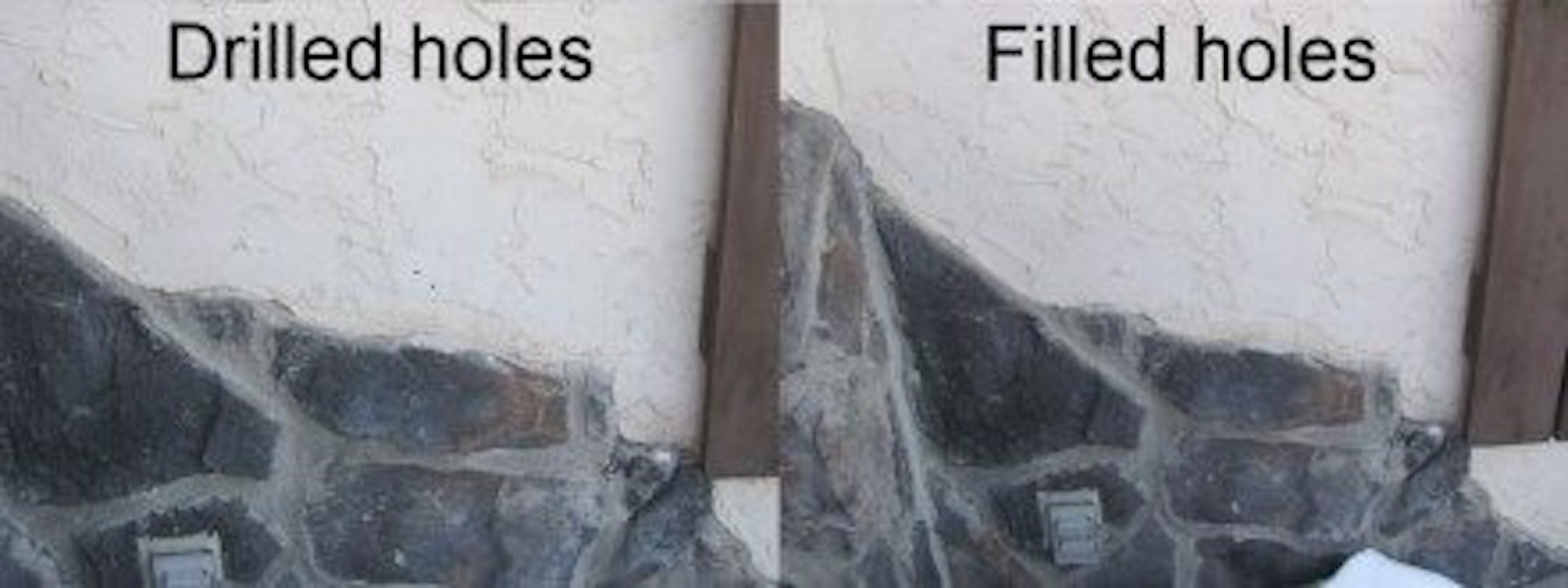
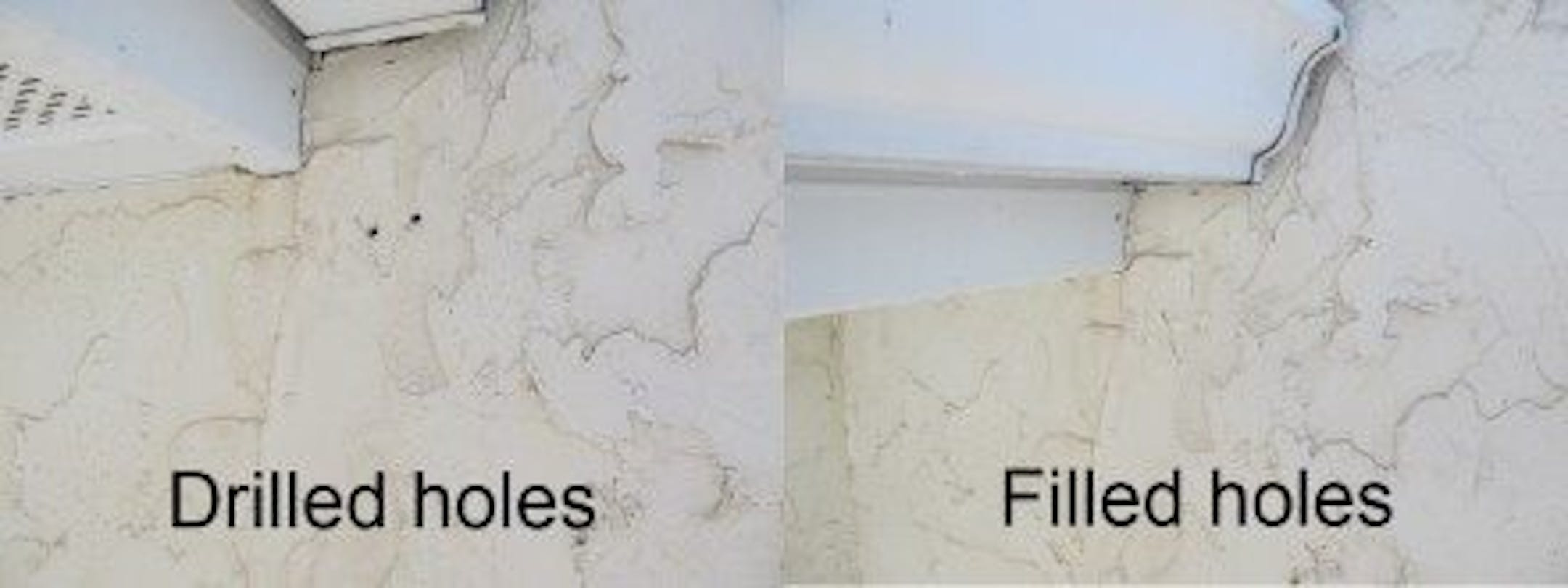
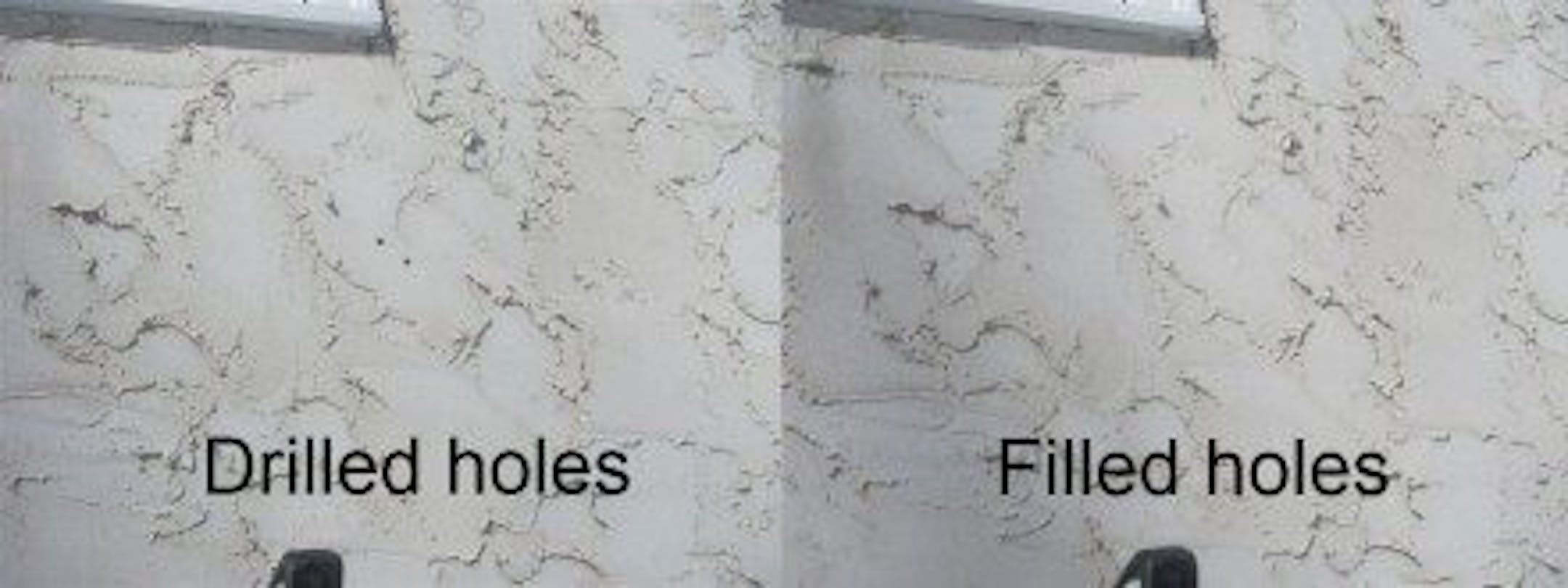
Whether holes are drilled in walls from the exterior or interior, the walls won't look exactly the same when the work is done. The person drilling holes in stucco will come equipped with a wide range of sealants to fill the holes when they're done, and the resulting 1/4″ holes are barely noticeable once filled with with matching caulk. For interior testing, the holes aren't as easy to hide or patch. If holes are drilled in drywall, they'll obviously need to be patched and painted over again.
Cosmetically, exterior testing is certainly preferred, as you really need to walk around the exterior of the house and carefully look for the test locations; they're not obvious. The photos below should help to illustrate just how inconspicuous the holes from exterior testing are. Click on any of the photos for a larger version.
Interior vs. Exterior – Holes In The Stucco
One concern with drilling holes in stucco is that this will compromise the drainage plane behind the wall, and the caulking used to fill the holes won't get far enough in to the wall to seal the drainage plane again.