

Why is everybody scoffing at the anti-shutdown lawsuits? It seems to me that they may have more of a point than critics seem to realize.
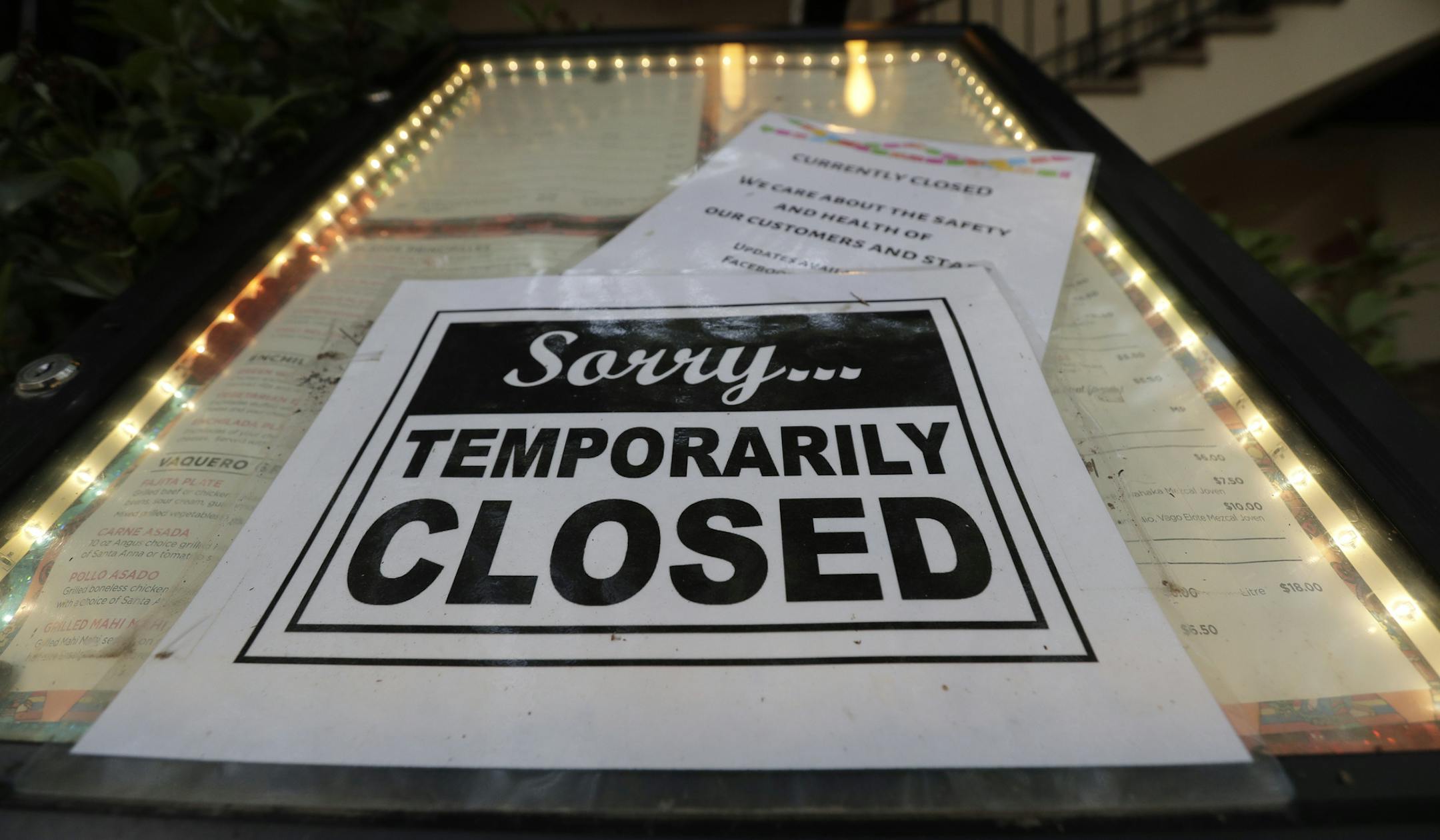
Consider the claims by shuttered businesses that continue to suffer losses — and in many cases face extinction — as shelter-in-place orders drag on. In their lawsuits, they essentially argue that by destroying their economic viability, the state governments have violated the Takings Clause of the Fifth Amendment to the U.S. Constitution, which requires just compensation when private property is taken for public use. The suits may not prevail; but they raise questions we should not ignore.
It's true that the courts usually reject claims for compensation when the government restricts or even destroys private property to prevent the spread of disease. Cases involving the destruction of plants and animals are common. But almost always, the plants and animals are infected — or reasonably believed to be at high risk. In 1928, for example, the U.S. Supreme Court denied compensation after a state ordered the cutting down of ornamental cedars infected with a disease that would have caused enormous damage had it spread to a nearby apple orchard.
Ironically, the case was grounded in the need to protect the value of the state's orchards, in which "many millions of dollars are invested" and "which furnish employment for a large portion of the population." In other words, the justification for the destruction of the trees was the protection of the state's economy.
Similarly, there will be times when no compensation is due even though properties are demolished entirely. In 1909, for example, the Supreme Court ruled that no compensation was due after the U.S. military commander in Cuba during the Spanish-American War ordered the destruction of several buildings to prevent the spread of yellow fever. There, however, the buildings were believed to be harboring germs; and the justices rested the outcome explicitly on the exigencies of wartime emergency.
Sounds pretty strong — but as it turned out, the claim of war did not bar all suits. In 1946, in a case called United States v. Causby, the justices ruled that the government had to pay damages for depreciation in the value of a farm adjacent to an airstrip for military planes. That the damage occurred during a national emergency made no difference. Nor did it matter that the farm was still usable; the compensation was due to loss in property value caused by low-flying planes.
Modern cases of this type rest heavily on the degree of economic harm. If the harm is small, the plaintiff loses. In 2009, for example, a federal appellate court rejected the claim of a Maine hospital forced by state law to serve indigent patients. The cost of the care was hundreds of thousands of dollars, but the judges pointed out that this amounted to only one half of 1% of the hospital's gross revenue.
But this line of cases consistently notes that the outcome might be different if the economic harm is significant. In the coronavirus shutdowns, the harm is enormous. Many small businesses as well as some huge retailers are expected to fail.


