

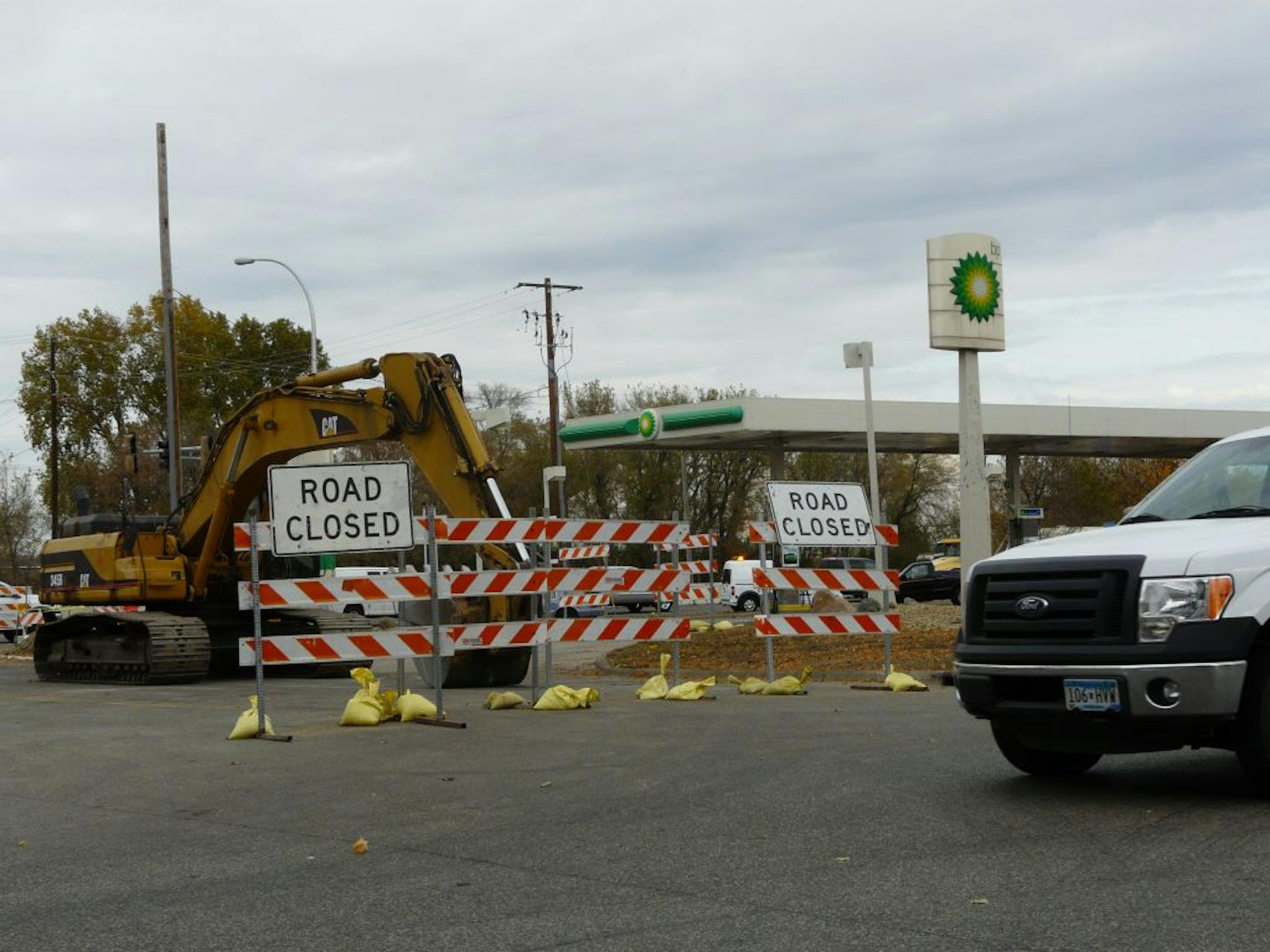
Merchants in downtown Savage say they're not happy with the impact an ambitious project to rebuild Hwy. 13 is having on their businesses -- and they fear that the problems won't disappear when the temporary orange cones and construction barriers go away.
Their concern centers on the permanent closing of access roads that previously allowed drivers to turn off the highway into the commercial district from Natchez, Ottawa and Princeton avenues. A lesser headache is the temporary closing of another access point at Lynn Avenue, which is to reopen next month.
The closures are part of a larger goal to improve mobility and safety on the highway, a principal artery that connects Hwy. 169 and Interstate 35W. Two Hwy. 13 intersections in particular -- at Hwy. 101 and at County Road 5 -- have had unusually high accident rates over the years, said Lezlie Vermillion, Scott County deputy administrator. "Study after study has shown a direct correlation between the number of access points and safety." Vermillion said more access points translate to higher crash rates.
The original plan called for closing off just Natchez and Ottawa. Budget issues and changes to accommodate railroads operating in the area resulted in the current design that also closes off Princeton. The city agreed to this and other changes in order to retain a $3.9 million federal grant to help pay for the project. Even so, some business owners wonder if too many turnoffs have been eliminated.
"It has really messed things up," said Marcos Gomez, whose El Loro restaurant has operated just off the highway near Ottawa for 12 years.
Gomez says business at the Savage location is down about 40 percent. His other restaurants in Burnsville and Shakopee are performing well and have been supporting the Savage outlet, which he said is now unprofitable.
The City Council recently approved a $600,000 settlement to the owner of the Motor Mart gas station at the Princeton intersection. He claimed his business had been permanently harmed as result of the changes. City Attorney Ric Rosow told council members the payout was about half the damages the city might have had to pay if the owner, Cory Townsend, pursued and won his case in court. That estimate didn't include attorney's fees.
Mayor Janet Williams said the $600,000 amount was determined through negotiations by the city's and Townsend's attorneys. Townsend could not be reached for comment.


