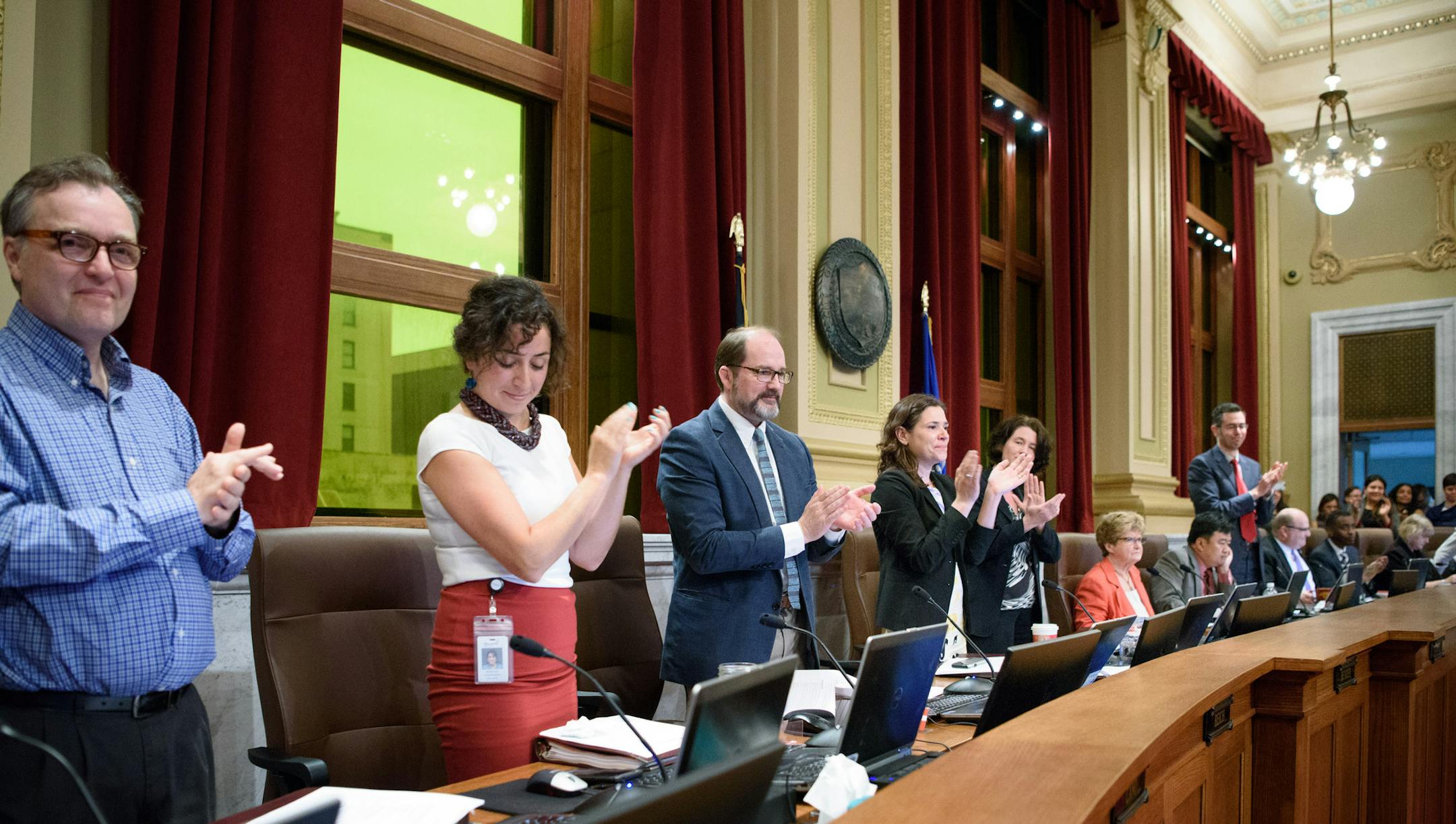
![A coalition of groups including Main Street Alliance, TakeAction Minnesota, Neighborhoods Organizing for Change (NOC), SEIU Minnesota, AFL-CIO, and ISAIAH protested the preemption bill outside the Senate Chamber Thursday morning. ] GLEN STUBBE ï glen.stubbe@startribune.com Thursday April 20, 2017 Minnesota Senate votes Thursday on the bill that would prevent cities from mandating sick leave or setting a minimum wage. A coalition of groups including Main Street Alliance, TakeAction Minnesota](https://arc.stimg.co/startribunemedia/FZ6YB7RSZWACJXMOWDFEWWTXBI.jpg?&w=1080)
The state's largest business association was back in court Wednesday arguing that Minneapolis' ordinance guaranteeing safe and sick time to workers conflicts with state law and forces employer to keep burdensome records.
The hearing was the latest in a lawsuit that's been ongoing for two years, brought by the Minnesota Chamber of Commerce and several local businesses, seeking to halt the safe-and-sick time ordinance passed by the Minneapolis City Council.
The new rules, which went into effect last summer, mandated all employers must allow workers to accrue one hour of time off per every 30 hours worked. As of March, the city had cited more than 60 businesses for violating the ordinance.
Last year, Judge Mel Dickstein ruled the ordinance could move forward, and a Court of Appeals decision affirmed the city's authority to roll out the law. However, Dickstein ordered a temporary injunction stopping the city from enforcing the law against "nonresident" employers, which the city has appealed.
Now the chamber wants Dickstein to rule that the ordinance is illegal.
In court documents filed earlier this month, the chamber argued that the ordinance will likely hurt hundreds of employers, especially if it applies to workers who spend a minimum of 80 hours per year in the city limits, as it was written.
Christopher Larus, attorney for the chamber, said it forces employers to maintain meticulous records for these workers, even if their time working in the city is minimal. He said the city's ordinance conflicts with state labor laws and that because Minneapolis is at the center of the state's interconnected economy, the ordinance has unfair implications for outstate employers who do business in the city limits.
Minneapolis City Attorney Susan Segal disputed Larus' claim that the record-keeping was burdensome to employers, saying they are already required to keep records on worker hours. While the state has its own labor laws, that doesn't pre-empt Minneapolis from implementing these standards to address its individual problems, Segal said. She named Uber and Lyft as examples of businesses located outside Minneapolis that still face city regulations.