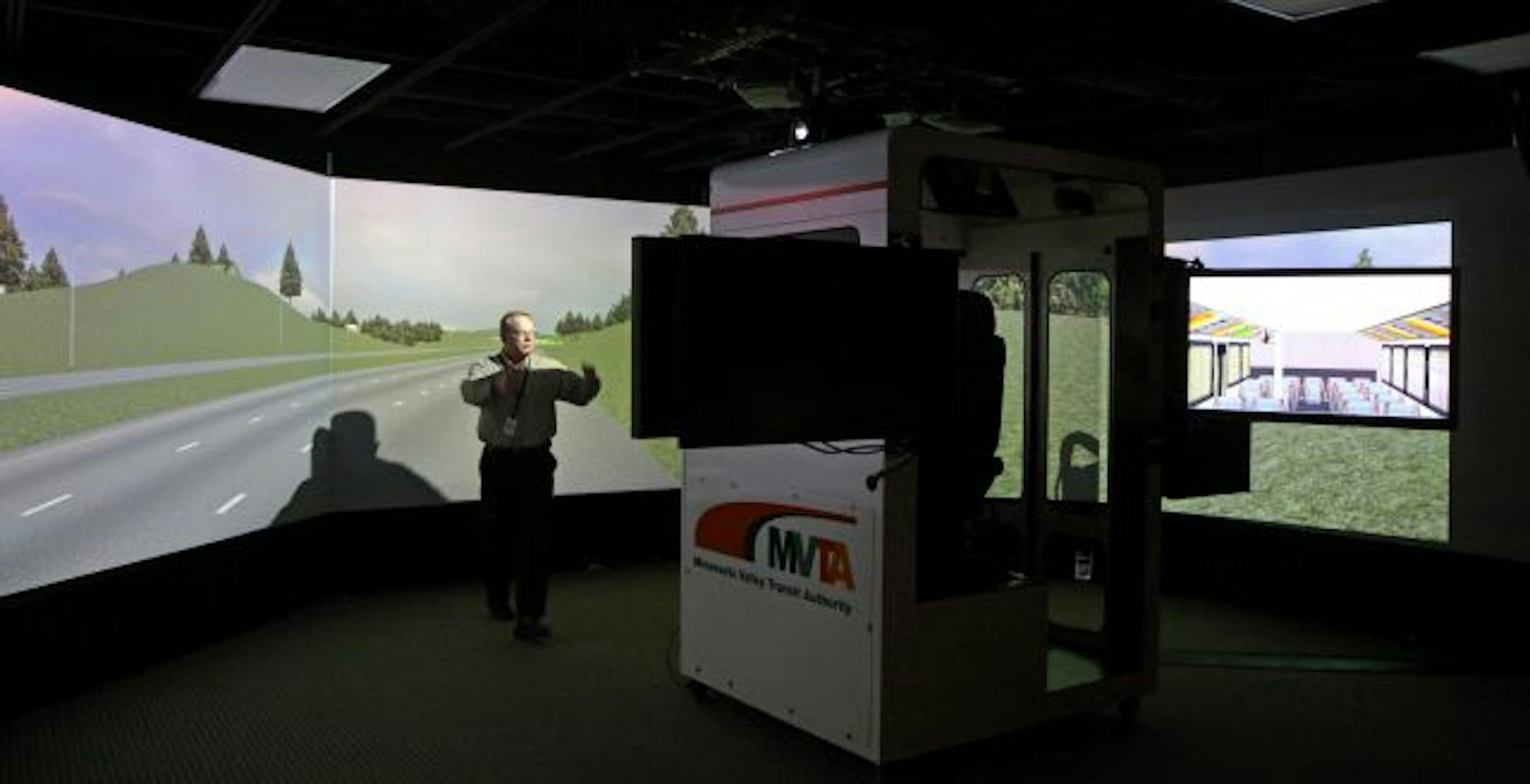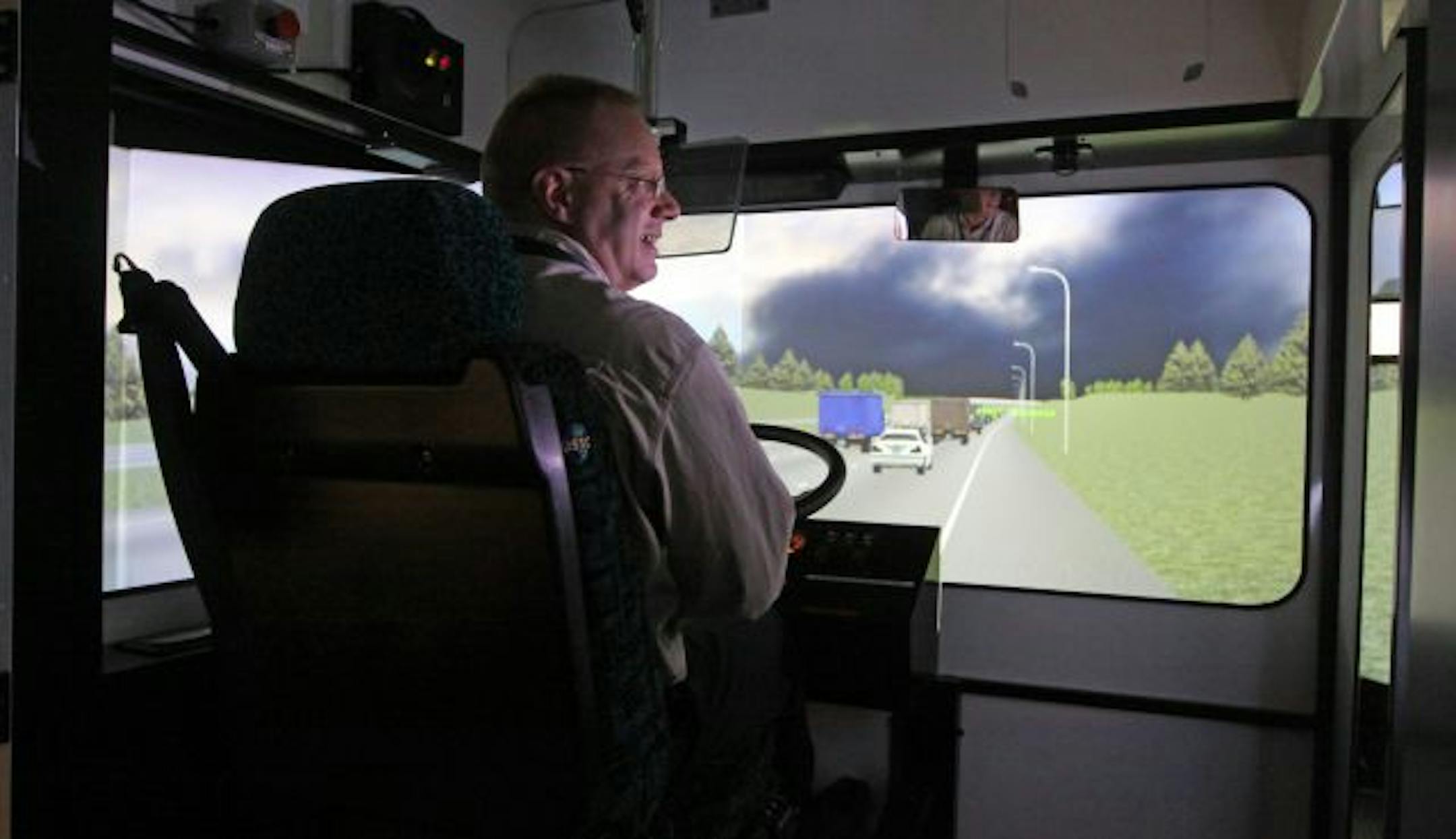
As snow fell and rush-hour gridlock worsened on Cedar Avenue S., bus driver James Geiger couldn't see the road markings beneath the snow and slush -- but he kept rolling right down the shoulder.
Other bus drivers, sensing a harrowing ride down the narrow strip, had pulled back into traffic. Geiger, however, was piloting a Minnesota Valley Transit Authority (MVTA) bus through a virtual world, projected before his eyes on a drop-down viewfinder.
His bus was equipped with a new navigational system designed at the University of Minnesota. Using a combination of GPS, laser sensors and visual and tactile alerts, the system aims to help drivers navigate shoulders where there is little room for error.
In some places, buses that are 9 1/2 feet wide, including their mirrors, run on shoulders that are 10 1/2 feet wide.
"We're not steering the bus for them. The driver's job is to control the bus," said Michael Abegg, planning manager at MVTA. "We're going to provide assistance to the drivers, comfort."
With that extra reassurance, MVTA, the south-metro suburban transit provider, hopes that drivers will have the confidence to stick to the shoulders, move quickly and improve reliability.
That will be especially important when the metro area's first bus rapid transit corridor opens on Cedar Avenue in Lakeville, Apple Valley, Eagan and Bloomington next year. The busway is meant to mimic light rail, but with buses running on the shoulder between stations instead of trains on a track.
Louis Sanders, director of technical services for the American Public Transportation Association, said transit providers nationwide are using technology to improve passenger safety, speed and reliability on buses. In California, another system to guide buses is being developed using magnets embedded in the road.