

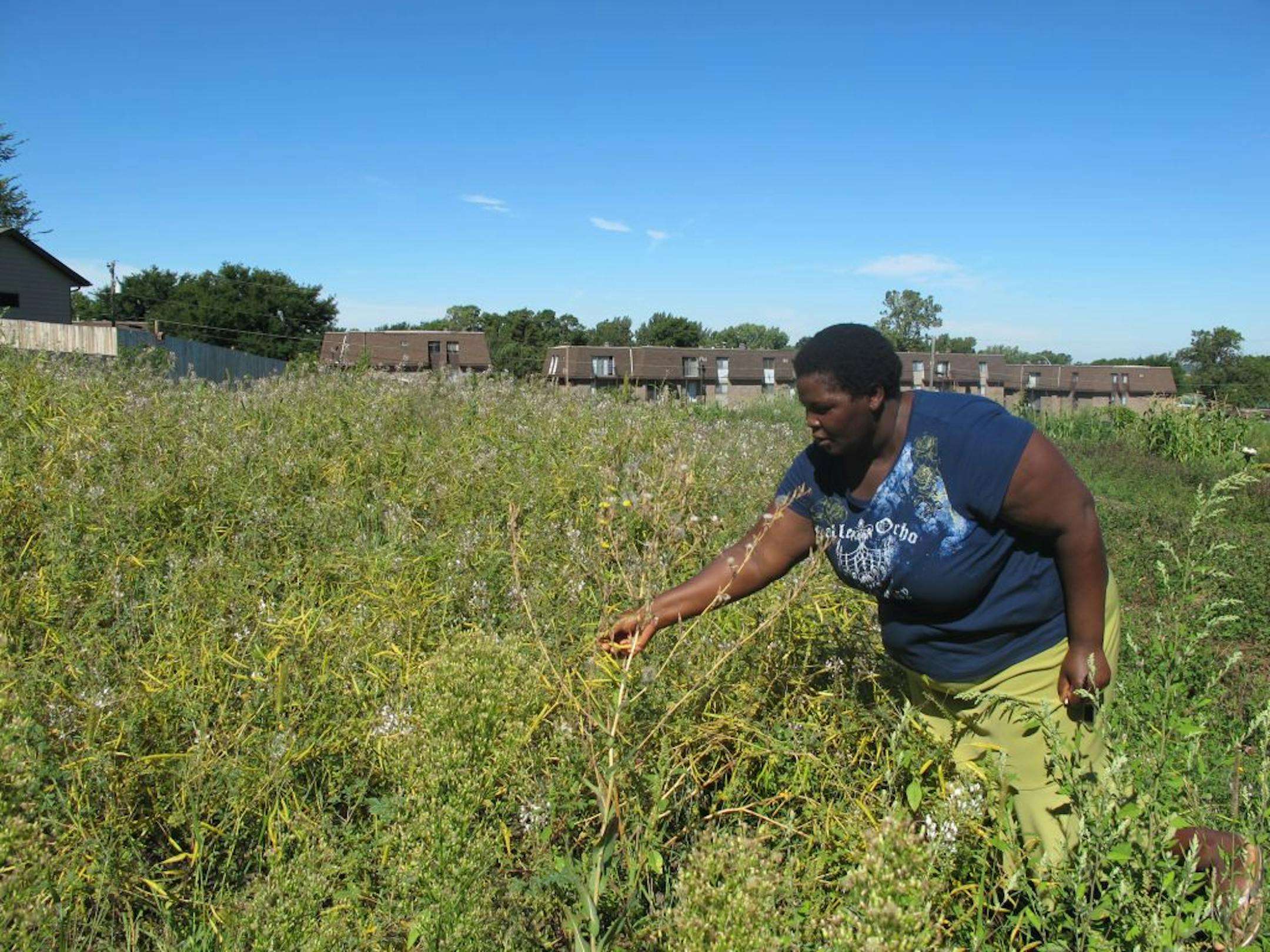
Among the cucumbers and tomatoes at two Burnsville community gardens, there are patches of a leafy green unknown to most Americans.
It's called spider plant, and it's tended with care by a group of Kenyan women who cherish the chance to grow greens that are a nutrient-packed and culturally important food in their homeland.
"It's a blessing," said Sarah Nyakeri, a Bloomington woman who tends the crop, which is regularly harvested and sold to others in the Kenyan immigrant community. "It was so hard to get it here."
The spider plants grew out of a wider community gardening initiative launched on the grounds of International Outreach Church in Burnsville that has since spread to another garden at the city's Wolk Park.
Hundreds of garden plots are available to the wider community each year, and many of them were scooped up by immigrants from around the world. Russian, Hmong, Latino and African families, many of whom left gardens behind when they came to the United States, work the land side by side.
As Elizabeth Kackman, one of the garden's founders, got to know the farmers and learn about their crops, the Kenyan Women's Farm Project was born to expand access to the spider plant that was almost impossible to find in the Twin Cities.
With federal and state grant funding, they designed the gardens, got spider plant seeds (with approval from federal agriculture officials), and the women got to work. Now in their second year, the Kenyan women's plots produce enough spider plant for their families and to sell to others.
"This plant is so important to their culture," said Kackman, who has since founded nonprofit Woodhill Urban Agriculture with her husband, Tom, to coordinate and expand the gardens. "It's a very labor-intensive plant to harvest, [one] that they pick almost every other day."


