

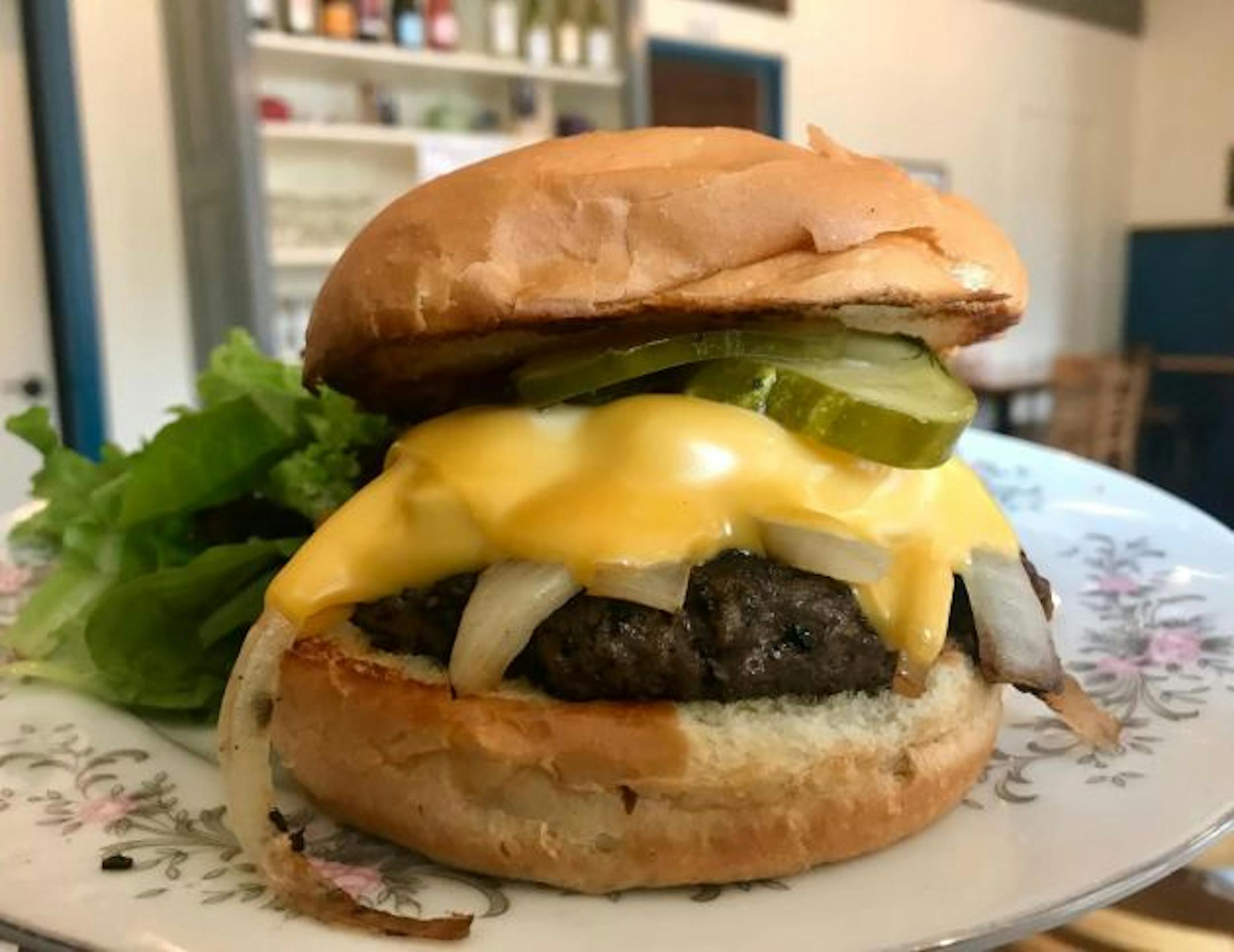
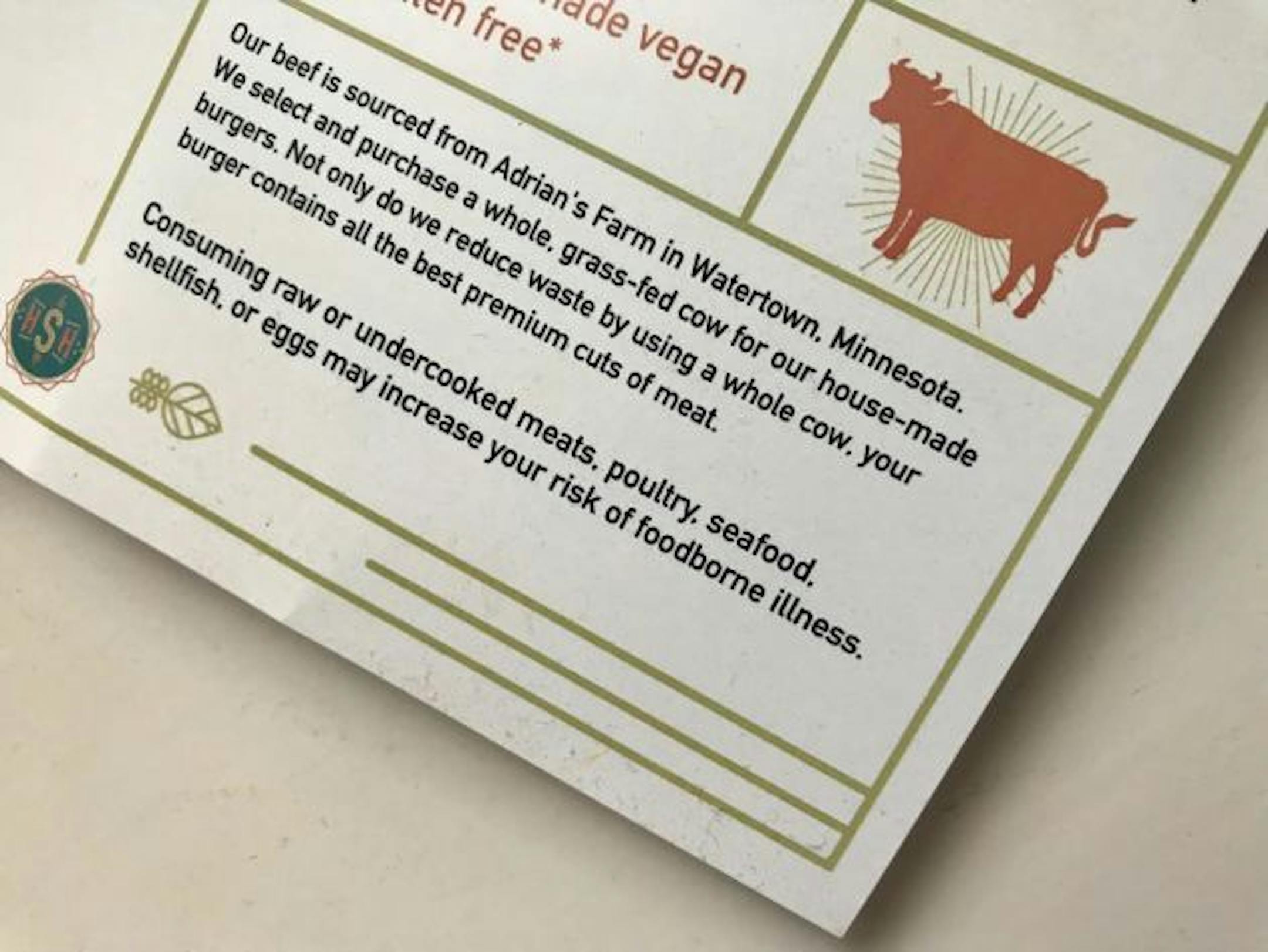
The burger: Destiny Buron, chef/owner of Home Street Home Cafe, purchases entire cows from a farmer in Watertown, Minn. "I get the liver, the heart, the tongue, the bones -- I just made chili with the bones -- it's all packaged, everything," she said. "The rest of the whole cow is ground into beef, for burgers. That's about 400 pounds of burger meat, per cow. My farmer is really cool, he calls them 'critters.' He'll call me up and say, 'That critter will be ready for you in December, that's when we'll send him to the butcher.'"
The single-cow burger is a growing trend among Twin Cities kitchens (find others at Lowry Hill Meats and Birch's Lowertown), and a good one. "That it's from one cow – locally sourced, grass-fed – and not a blend of a bunch of different cows, that's really neat," said Buron. "I think that's what makes the burger really good and juicy."
Agreed. For the first five years of her business – she started as a food truck operator in 2011, and matriculated to her neighborhood cafe in August -- Buron was relying upon a farm in Buffalo. "It was owned by a couple, and they retired," she said. "They referred me to a friend of theirs, Leon. When we first met, I asked him, 'What's the name of your farm, because I'd like to put it on the menu,' and he said, 'I don't have name.' I wanted to call it 'Maggie's Farm,' because I love that Bob Dylan song. But if I did that, his wife would probably get mad. I call his farm, 'Adrian's Farm,' because that's Leon's wife's name."
That premium, ultra-flavorful beef is the backbone of a memorable burger. The thick-ish patties tip the scale at 5 ounces, and Buron deftly places a gently crunchy char on the exterior but keeps the interior to a medium pink. Just before the patty hits the flattop, it's lightly (I'd ramp it up a bit) seasoned with salt and pepper. "That's it," said Buron. "There's no real secret. It's just all the good parts of the cow, and then we don't overcook it. It's so good, you can't beat it."
As lavish as she goes with the beef, Buron remains restrained with the burger's other components. She chooses her finishing touches with discernment, and handles them with finesse.
A generous layer of house-made pickles – snappy, vinegary, with a slight garlic punch – are a necessary foil to that rich beef. Buron just finished putting up a batch that will hopefully tide her over for months. "Three or four weeks ago, I discovered that, oh my gosh, we were almost out of pickles," she said. "I had to track down some pickling cucumbers before it was too late. I spent a Saturday going from farmers market to farmers market, and thank goodness for the one in front of Sun Foods. There was a stand that had some, and when I asked if she would give me a deal if I bought all of them, she said, 'I've got more,' and she took me behind the stand, and lifted up a tarp, and there had to have been 70 pounds of pickling cucumbers. I bought them all, and I spent the rest of the weekend slicing cucumbers. That should get us almost through most of the winter."
Buron prefers to pile on the American cheese, and selects Minnesota-made Bongards. "I like it because it's locally made," she said. "But I also really like it because I think it's a higher quality cheese. It's not that greasy, generic American cheese."
Onions? They're sliced thick and grilled. But they don't spend a lot of time on the stove; sure, they take on a bit of a browned flavor, yet they still retain much of their snap. "If the onions are cooked too long, they tend to melt too much into the cheese," said Buron. "I like them to be a little crisper than that, because I like to layer different textures on a burger."


