
Buoyant boom collecting plastic breaks apart in the Pacific; will be towed for repairs

Device will be towed 800 miles to Hawaii for repairs.

January 7, 2019 at 1:24AM
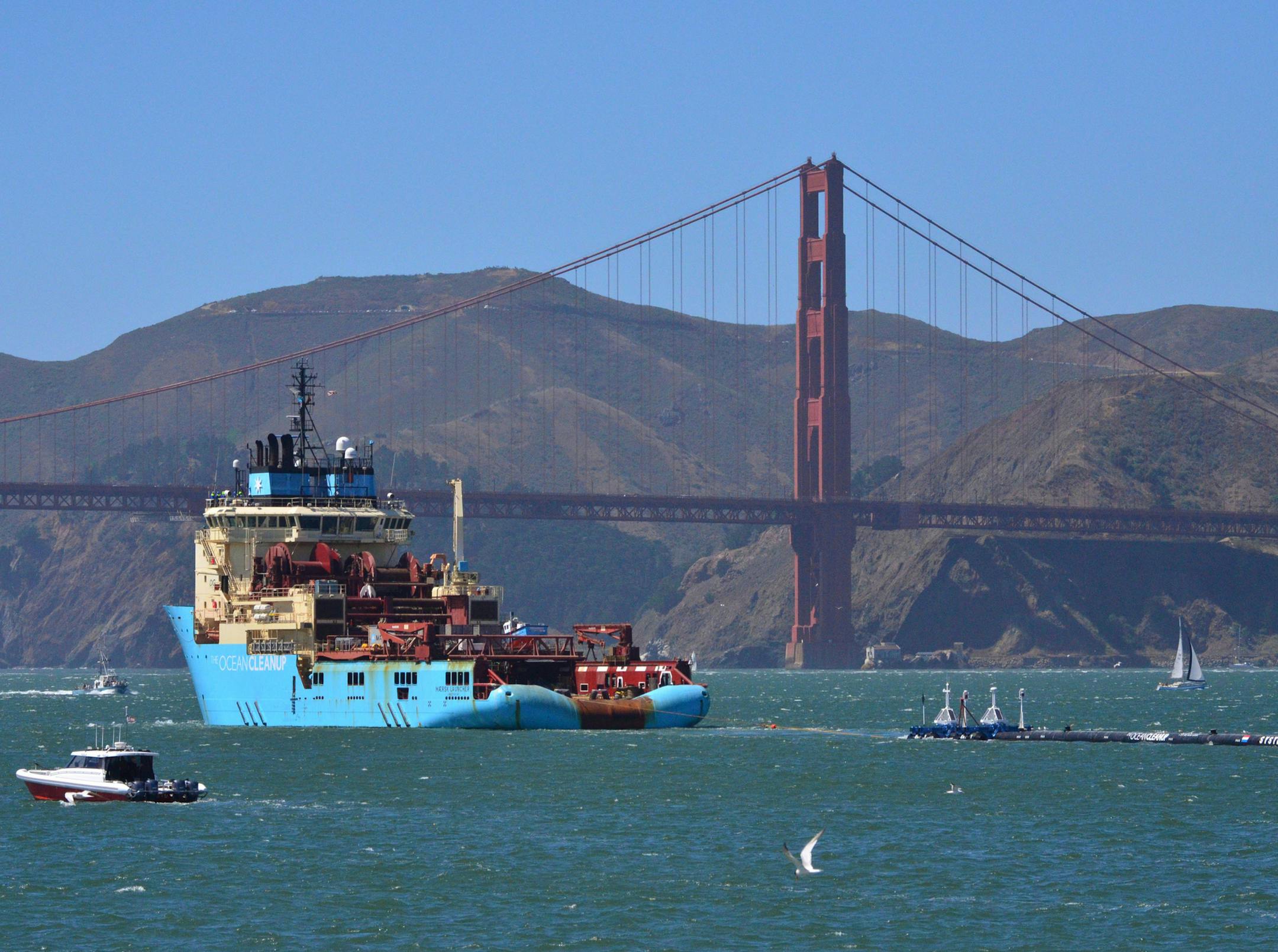
FILE- In this Sept. 8, 2018 file photo, a ship tows The Ocean Cleanup's first buoyant trash-collecting device toward the Golden Gate Bridge in San Francisco en route to the Pacific Ocean. A trash collection device deployed to corral plastic litter floating between California and Hawaii will be hauled back to dry land for repairs. Boyan Slat, who launched the Pacific Ocean cleanup project, tells NBC the 2,000-foot (600-meter) long floating boom will be towed to Hawaii. If it can't be repaired the
In September, a trash-collecting device was towed into the Pacific Ocean from San Francisco to snare some of the 1.8 trillion pieces of plastic in the Great Pacific Garbage Patch. (The Minnesota Star Tribune)

LOS ANGELES – A trash collection device deployed to corral plastic litter floating in the Pacific Ocean between California and Hawaii has broken apart and will be hauled back to dry land for repairs.

Boyan Slat, who launched the Pacific Ocean cleanup project, told NBC News that the 2,000-foot-long floating boom will be towed 800 miles to Hawaii.

If it can't be repaired there, it will be loaded on a barge and returned to its home port of Alameda, Calif.

The boom broke apart under constant wind and waves in the Pacific.

Slat said he's disappointed, but not discouraged, and pledged that operations would resume as soon as possible. "This is an entirely new category of machine that is out there in extremely challenging conditions," the 24-year-old Dutch inventor said. "We always took into account that we might have to take it back and forth a few times. So it's really not a significant departure from the original plan."

Previously Slat said the boom was moving slower than the plastic, allowing the trash to float away.

A ship towed the U-shaped barrier in September from San Francisco to the Great Pacific Garbage Patch — an island of trash twice the size of Texas. It had been in place since the end of October.

The plastic barrier with a tapered 10-foot-deep screen is intended to act like a coastline, trapping some of the 1.8 trillion pieces of plastic that scientists estimate are swirling in the patch while allowing marine life to safely swim beneath it.

Slat has said he hopes one day to deploy 60 of the devices to skim plastic debris off the surface of the ocean.

Associated Press

about the writer

about the writer

More from No Section

See More
FILE -- A rent deposit slot at an apartment complex in Tucker, Ga., on July 21, 2020. As an eviction crisis has seemed increasingly likely this summer, everyone in the housing market has made the same plea to Washington: Send money — lots of it — that would keep renters in their homes and landlords afloat. (Melissa Golden/The New York Times) ORG XMIT: XNYT58
Melissa Golden/The New York Times

It’s too soon to tell how much the immigration crackdown is to blame.