

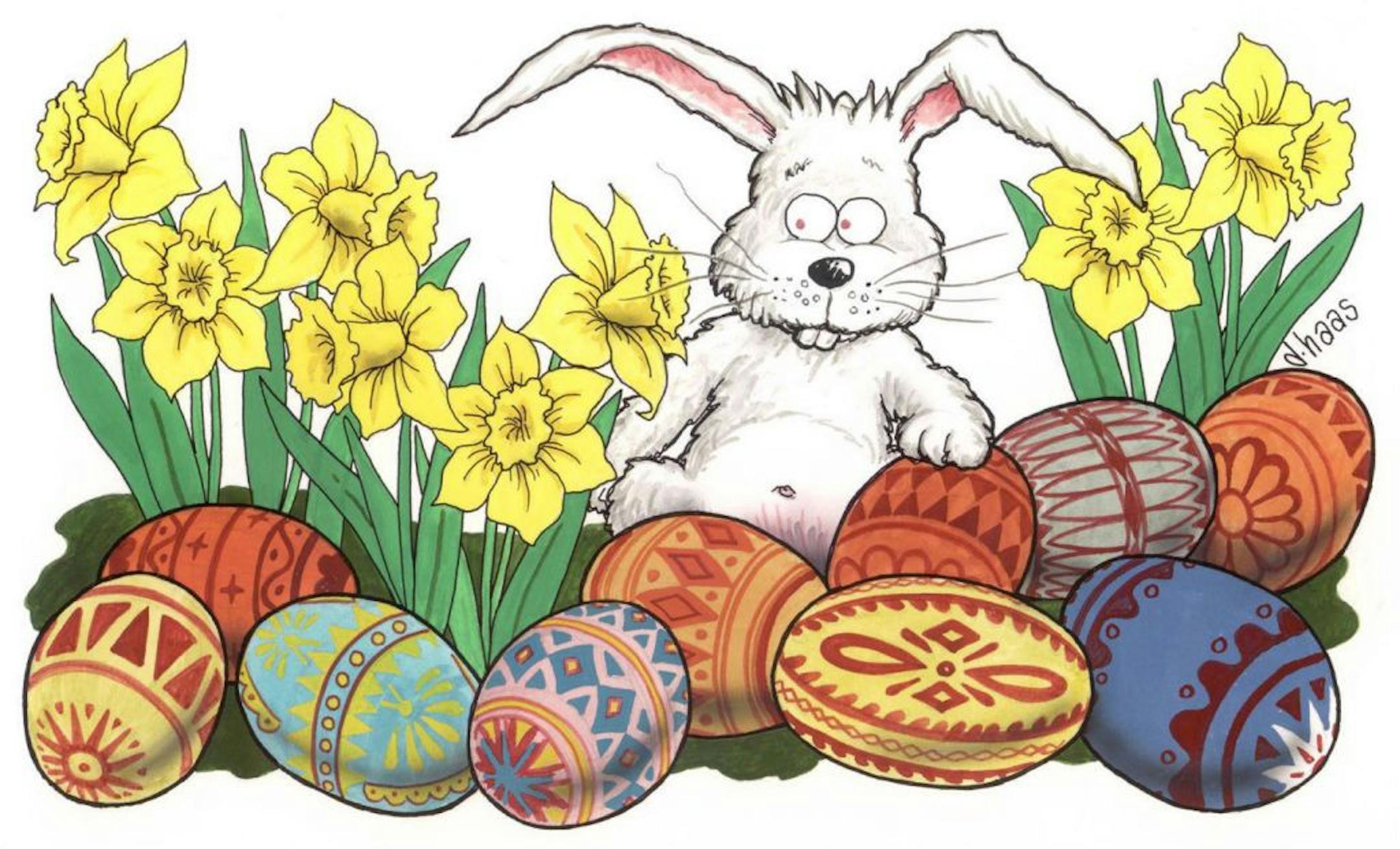
Once again, just as it happens each Easter, here comes Peter Cottontail.
But even as the animated flick "Hop" jumps up the box-office rankings and tykes nationwide get ready to scramble for the beloved annual tradition of the Easter egg hunt, we take a moment to ask: What exactly does the Easter Bunny have to do with the resurrection of Christ? (Not so much.) And why does the bunny hide eggs anyway?
As Bugs might say, "What's up, Doc?"
Although the true origins of the Easter Bunny might remain lost in the mists of time, many point to the springtime celebrations of 13th-century Germany. One of the deities worshipped was Eostre, the goddess of spring and the dawn who has been portrayed as a comely maiden carrying a basket filled with dyed-red eggs and a pair of cuddly baby hares.
Over time, some say, the goddess got lost -- but the bunny and the eggs stuck.
"It's really a lovely tradition," says Scot Guenter, professor of American studies at San Jose State in California. "The bunny symbolizes fecundity, and the eggs represent the cycle of life."
These customs might go even further back in antiquity. Some say that giving eggs in spring might trace back to the Persians and that the bunny first popped up in Celtic lore.
The bottom line is that when our children are hunting around in the grass, they might be harking back to pagan fertility rituals.


