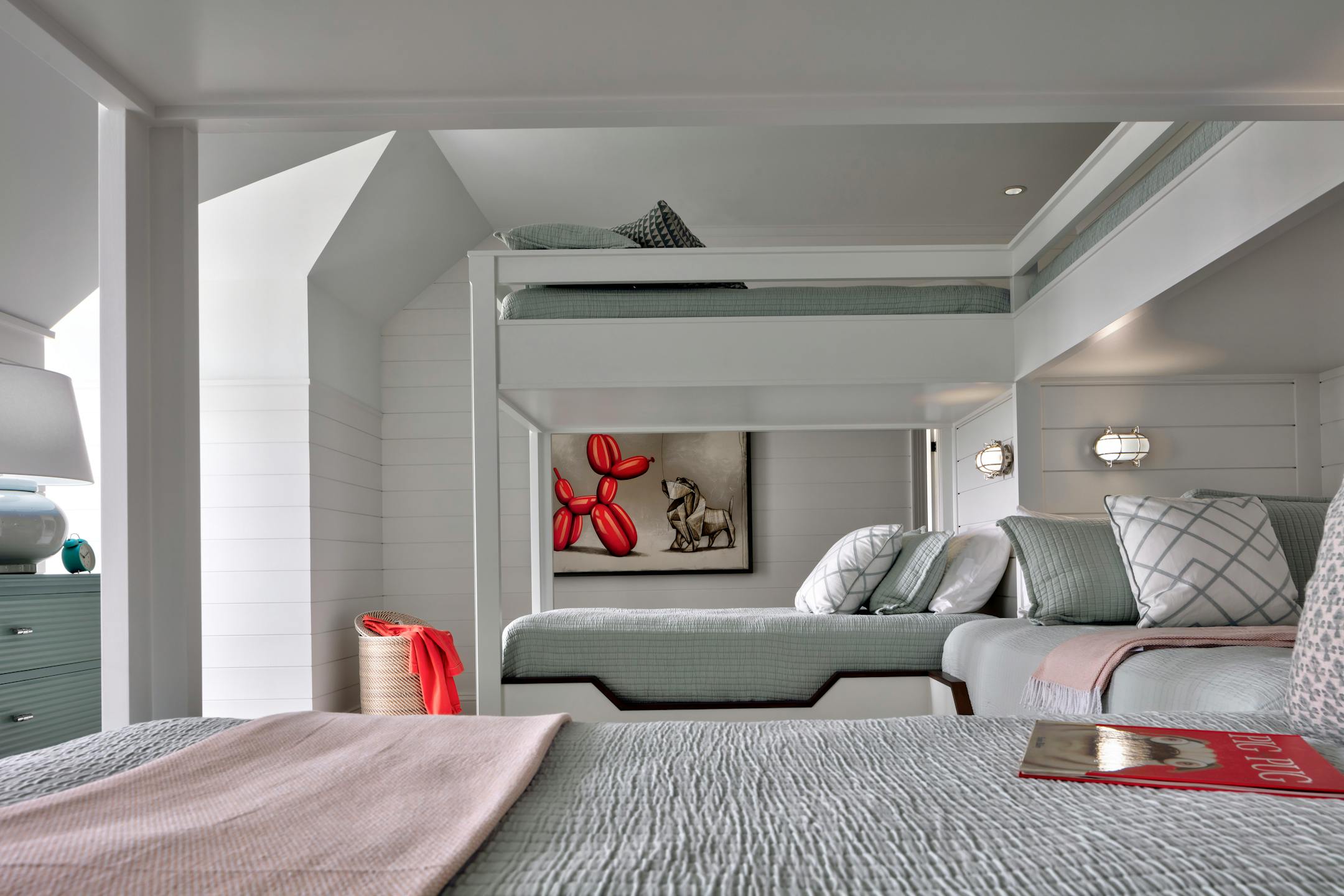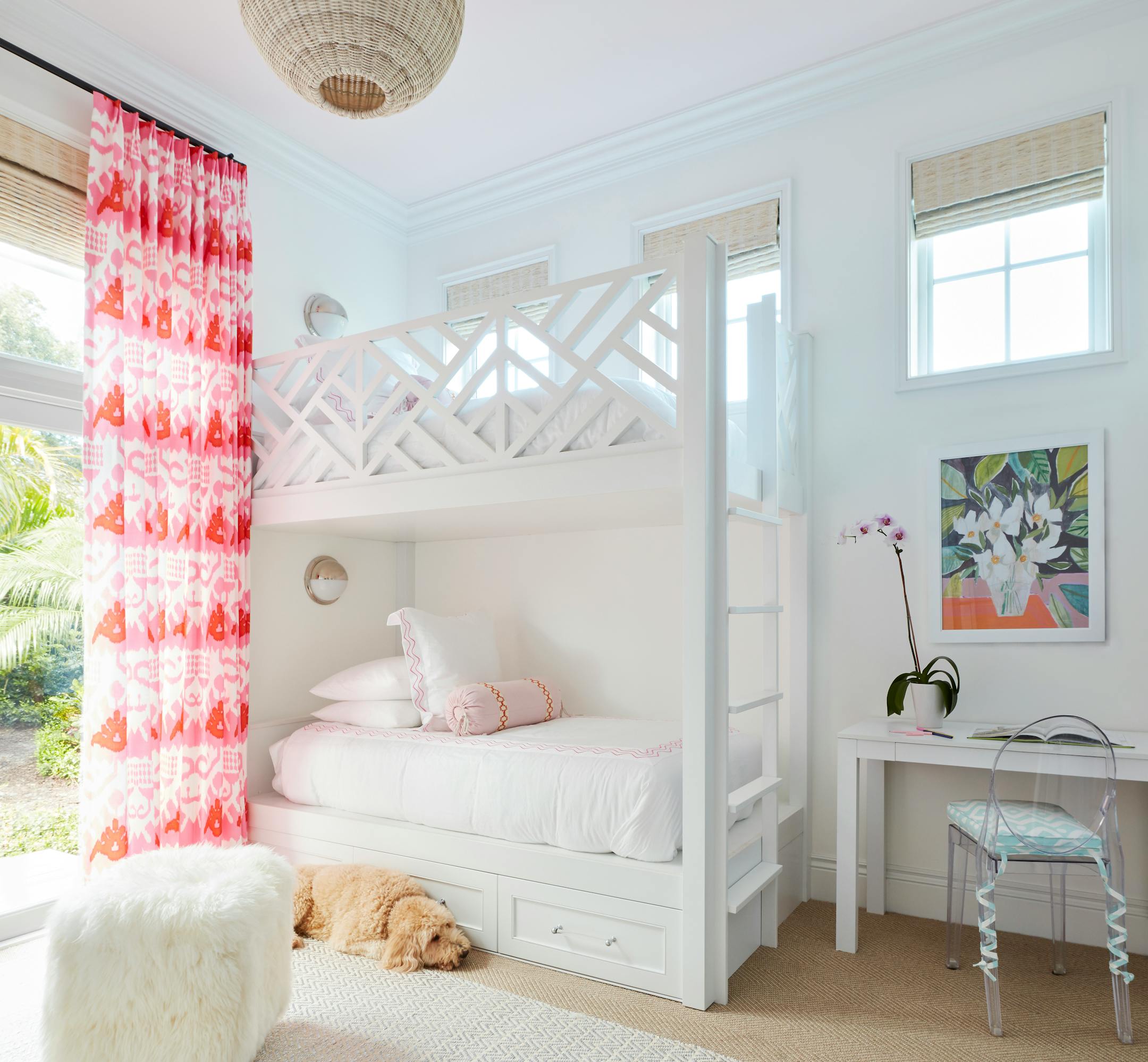
The bunk bed, born two centuries ago as an austerity measure, is living in some splendor. For country homes, luxury hotels and yachts, architects and designers are theming and decking out the basic components of pillars, railings and ladders with timbers, zingy colors, playful cutouts and gingerbread.
In the realm of custom bunk rooms, "there's always an element of whimsy," said Kara Miller, an interior designer based in Jupiter, Fla., who has trimmed bunk beds in diagonal filigree based on Chinese Chippendale precedents. When clients start to plan new houses, "right out of the gate," she said, the bedrooms' windows, doors and closets are being configured to leave cubic footage available for bunk beds.
"You can let your imagination run wild with them," she added.
The trend has been partly attributed to COVID-19. As retreat from society may be required, some homeowners want to be prepared to hole up someplace cheerful and comforting, which can accommodate groups of people not necessarily willing to share mattresses. Liz Caan, an interior designer in Newton, Mass., said her bunk room clients had said, in effect, "We want to be able to sleep a gazillion people."
Owners report that bunk rooms free up floor area while generating a sense of camaraderie, and that openings between chambers allow for communication and clambering.
"My grandkids just love going in and out of those portholes," said Margaret Condit, whose Maryland shorefront house, designed by Purple Cherry Architects, has caramel-colored trim on its white bunk beds' portholes.
"Everybody says they want to sleep in that room," she said.
Nostalgia also helps motivate new bunk commissions. David Williams, a marketing and investment executive based in Annapolis, Md., grew up and attended college while sleeping in bunk beds. Purple Cherry Architects designed twin bunk rooms for one of his homes, each with a U of six stacked beds trimmed in shiplap siding and painted off-white. He described the sets as "certainly a fun thing, and a great creator of space." For his grandchildren and subsequent generations, he added, "I hope those bunks become a part of their history, as it has for me."