

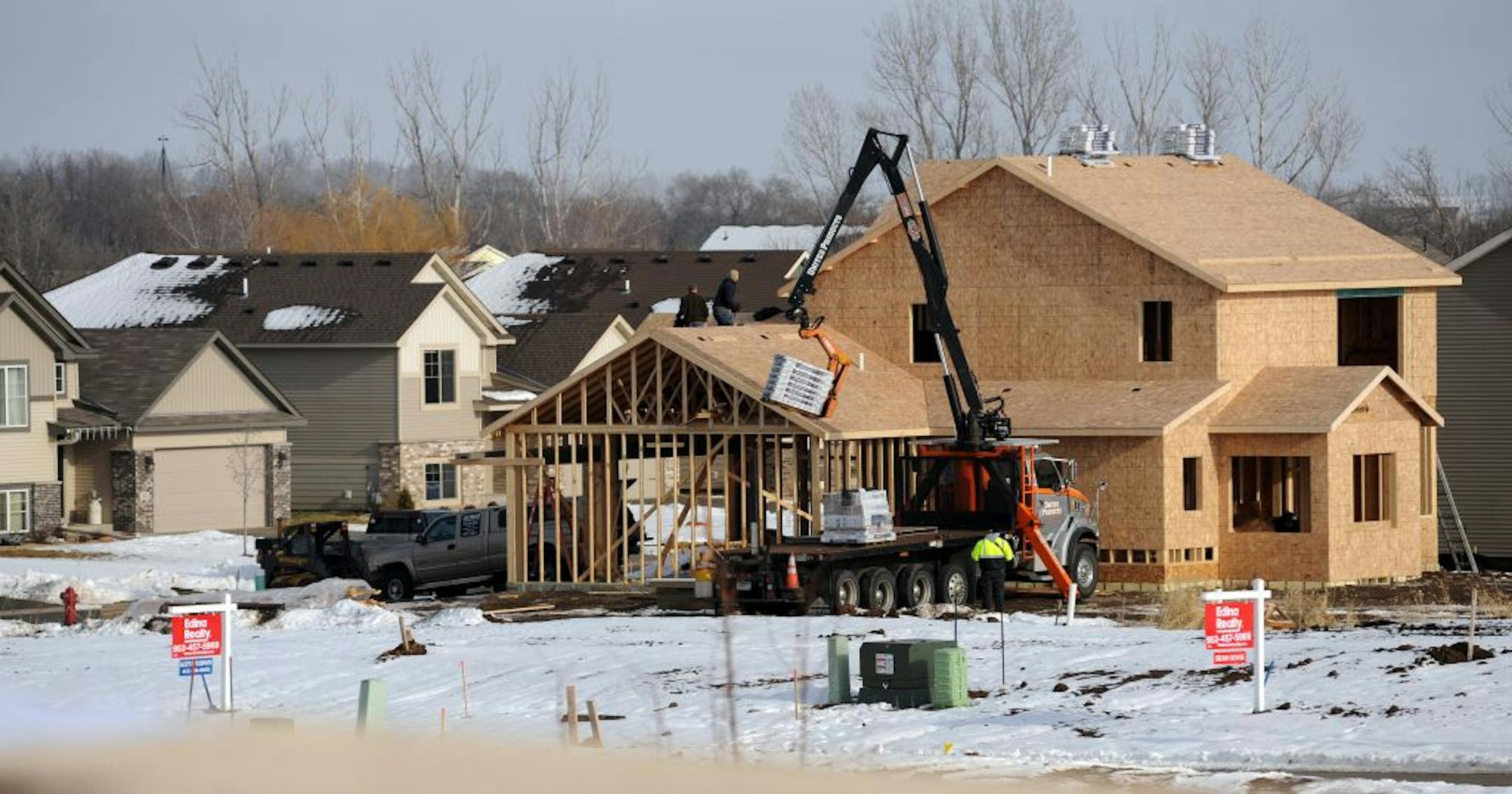
Even in the worst of times, Farmington was the little city that could.
It was the only south-of-the-river community remote from major freeways that never fell below 70 new housing units per year, no matter how bad the housing crash became.
Lee Smick, the city's top planner, is convinced that one reason is Farmington's willingness to zig while others zagged by creating compact, affordable lots.
"We right now have an opportunity for 5,000-square-foot lots," she said. "We have a whole development whose lots are only 34 feet wide."
With newly available full-year 2012 statistics now in hand -- a year that appears to mark at least the beginning of the end of the housing bust -- it is now possible to peer back at the bust years and compare.
Among the conclusions:
• Apart from Farmington, cities with fairly upscale demographics, quick freeway access, or both -- like Prior Lake, Savage and Lakeville -- were the most consistent performers.
• As the outer rings of suburbia age, and with senior housing moving to the fore, suburbs south of the river are starting to look statistically more and more like inner-ring suburbs -- meaning, they rely more on multifamily projects, so their unit counts jump wildly from year to year. One inner-ring suburb, St. Louis Park, ballooned from just five new units in 2011 to more than 500 in 2012.


