

MARCUS, Iowa — The last time the federal government decided that a few big meatpacking firms were abusing their market power, in the early 1920s, it chopped those companies into smaller pieces.
These days, it's almost impossible to imagine the nation's political leaders mounting that kind of frontal assault on businesses. So to curb the power of Big Beef, instead of wielding a cleaver, the Biden administration is counting on people like Chad Tentinger.
Tentinger, a 44-year-old cattle farmer in this town in northwestern Iowa, is seeking to persuade his fellow farmers to bet tens of millions of dollars on an audacious plan to build their own meatpacking plant near Council Bluffs, about 120 miles south of here. In July, Tom Vilsack, the secretary of agriculture, visited Council Bluffs to announce $500 million in federal support for smaller meatpackers. This month, President Joe Biden announced he was doubling the total commitment to $1 billion. "Capitalism without competition isn't capitalism — it's exploitation," the president said.
The administration's focus on meatpacking is reflective of a larger shift in thinking about the costs of monopoly power. For years, the only thing that carried weight in debates about competition was whether the customer came out ahead. But people are more than just consumers. They are also producers. And they are members of communities that depend on diverse and sustainable economies to flourish.
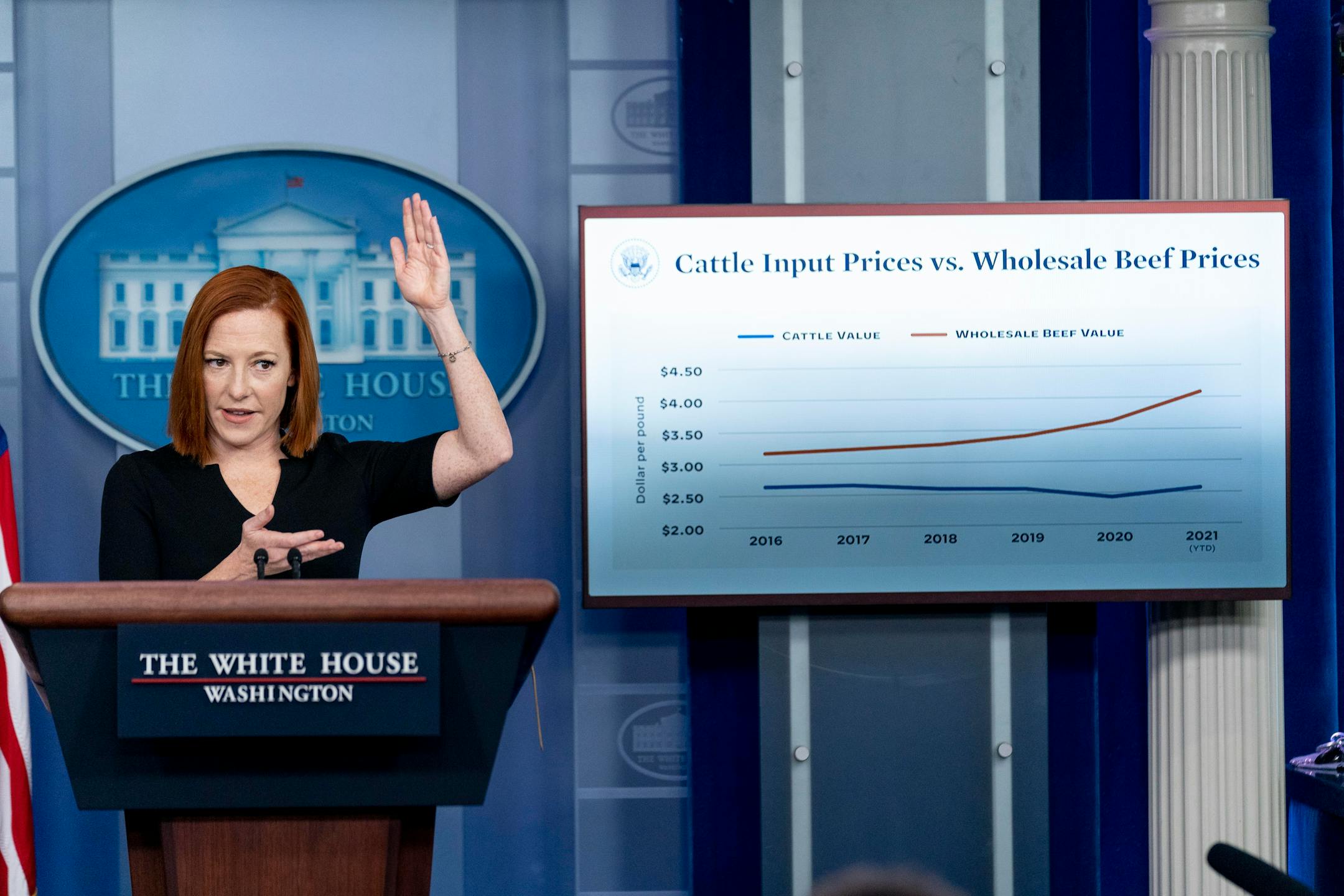
All of which has made the cattle business a ripe target. Corporate concentration is a growing problem across the economy, but meatpacking is especially afflicted. Four companies produce more than 80% of the nation's beef, and their dominance has come at the expense of cattle farmers, meatpacking workers and American consumers, who eat an average of 55 pounds of beef each year.
"I'm a cattle farmer who cannot afford my own meat," Melissa Dunford, who operates a small farm in southwestern Virginia, wrote to the Department of Agriculture this past summer — one of the dozens of letters the department received from farmers and small meatpackers eager for government aid.
There is a clear need for politically viable strategies to counter the concentration of corporate power, and seeding new kinds of competition is an intriguing experiment. Cracking down on corporate behemoths is politically difficult; it's also hard to compel good behavior from companies that profit from bad behavior. If alternative models flourish, they might produce enduring changes.
It won't be quick. The Biden administration has described its plans as aimed at reducing beef prices, but Tentinger doesn't plan to open his meatpacking operation until 2024. It also won't be easy. The government still needs to tighten regulation of existing producers, not least to prevent the big firms from buying up new meatpackers or pushing them out of business.


