

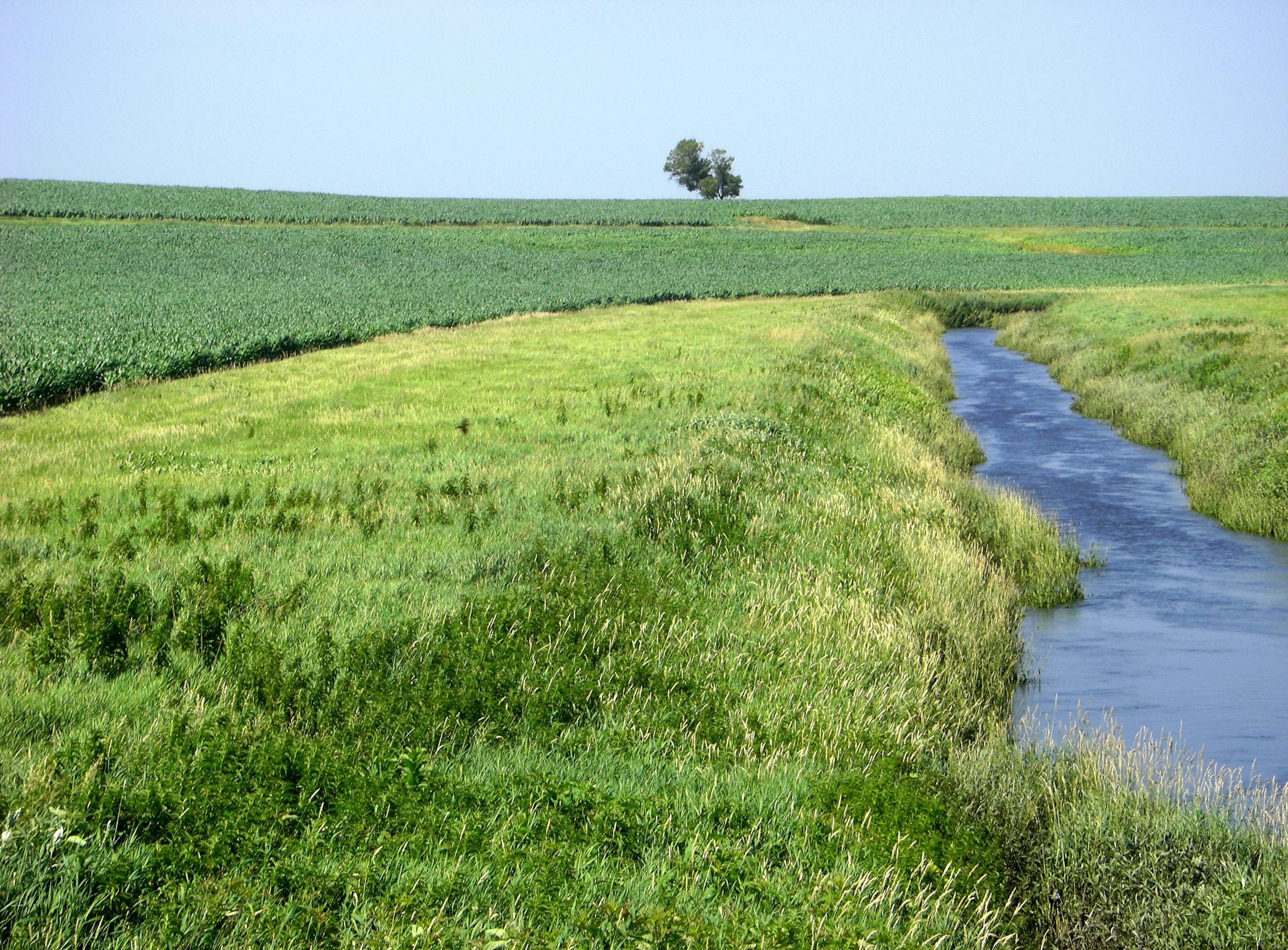
Fifty-foot grass buffer strips would be required along nearly all Minnesota waters, including streams, rivers and ditches, to reduce soil erosion, improve water quality and create wildlife habitat, under a landmark bill introduced this week in the Legislature.
The bill is the brainchild of Gov. Mark Dayton, who called for a new buffer requirement after learning last fall at a Pheasant Summit that the state's current buffer laws were sporadically enforced.
Under the bill, local soil and water conservation districts would implement the requirements, but enforcement would fall to the Department of Natural Resources (DNR).
"This is very significant," said Tom Landwehr, DNR commissioner. "Buffers are not the silver bullet; they're not going to fix everything. But buffers will improve water quality." And provide aquatic and wildlife habitat.
Environmental and sportsmen's groups hailed the bill, but the agricultural community expressed opposition.
"It's an important step that we think Minnesota needs to take," said Joe Duggan, a Pheasants Forever vice president. "We're hoping a lot of the buffers can be managed for wildlife."
But Thom Petersen, government relations director for the Minnesota Farmers Union, said his group won't support the bill, as written. He said there are too many unanswered questions.
"Buffers are important — we support buffers — but we want to do it right," he said. "The 50-foot, one-size-fits-all approach isn't widely supported. For some farmers, that's a lot of land [to take out of production.] You're asking people to give up their land. But we're willing to keep working on it."


