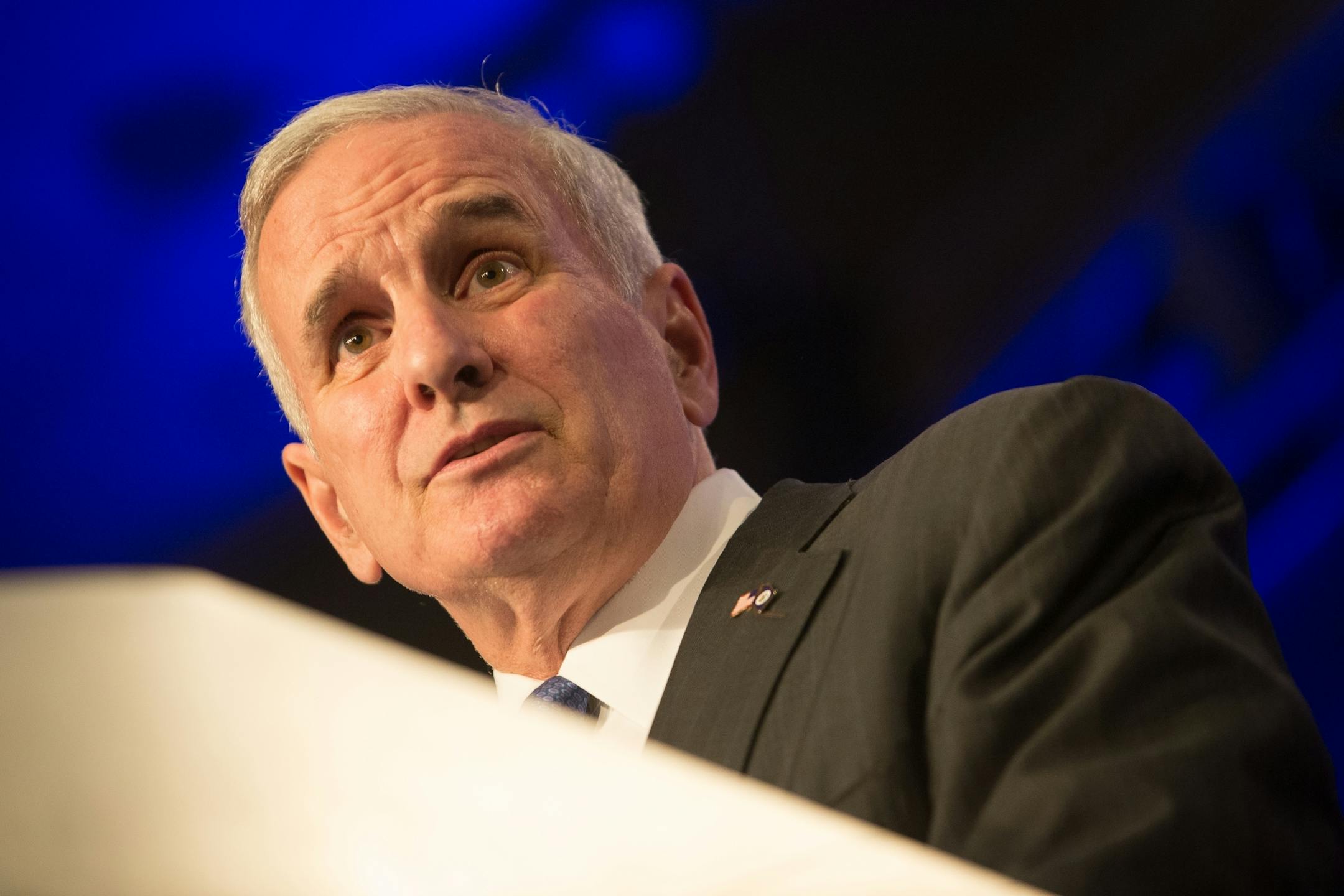
Gov. Mark Dayton and state lawmakers are expecting good news with this week's release of the state budget and economic forecast, a twice-yearly report that sets the stage for major state budgeting decisions in coming months. Just how good remains to be seen.
"I think our economic foundation is very solid in Minnesota," Dayton said Tuesday. "I expect a surplus — we'll have to see on the amount."
Since February, when the Minnesota Management and Budget agency published its last forecast, the state's economy has performed well and mostly met expectations. Stronger hiring by employers has shrunk the unemployment rate to its lowest level in more than eight years — 3.9 percent. The state's budget reserve is replenished, and tax revenue is pouring in.
Dayton cautioned that while Minnesota's economy is doing well, the forecast also accounts for national and global economic conditions. Any changes nationally or abroad since February could affect long-term projections, economists said.
Thursday's forecast will guide the governor's budget proposal, which Dayton has said he will present to the Legislature by Jan. 27. The governor has not gone into great detail on his priorities, but they are likely to include a request to fund child-care tax credits.
"I'm not going to make any decisions until I see the revenue projections, but that's still one I would give a high priority," he said.
The tax credit would be intended to help families afford the cost of child care — a goal also supported by DFL legislators. The governor's budget proposal may include funding requests for transportation, or a specific proposal may be introduced separately early next year. Dayton said during his re-election campaign that funding basic maintenance of the state's infrastructure will be a key legislative priority during the next legislative session, set to start next month.
A surplus would likely make for a smoother session. Republicans are back in the majority in the House, but having extra money to work with would help the GOP, the DFL governor and DFL-controlled Senate create some common ground for compromise. In the unlikely event a deficit is projected, "that would make the session a lot tougher," said Sen. Dick Cohen, DFL-St. Paul, chair of the Senate Finance Committee.