

WASHINGTON - U.S. budget negotiators are narrowing a possible deal to ease automatic spending cuts to just one year amid objections from affected groups and lawmakers in both parties, said people familiar with the talks.
A compromise being crafted by the two leaders of a 29-member panel is drawing protests from Democrats and groups including federal employees, who could contribute more to their pensions under the proposal, and airlines, which could face higher fees. Some Republicans are concerned a bipartisan deal will replace spending cuts set in law with promises of future savings that might not be realized.
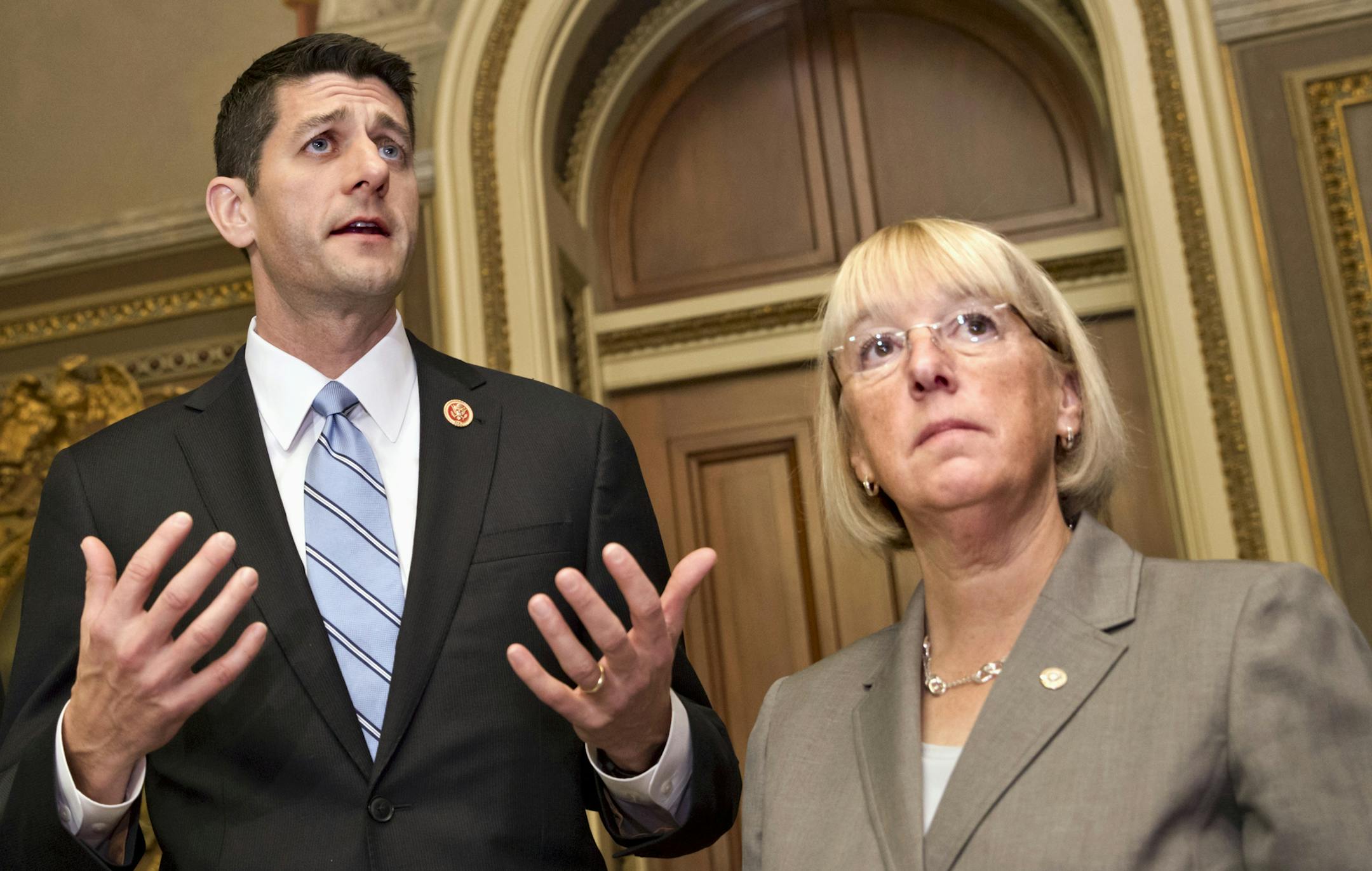
Congressional aides say Rep. Paul Ryan, R-Wis., and Sen. Patty Murray, D-Wash., who are leading the talks, may urge the House and Senate to bring the accord directly to a vote, bypassing the bipartisan committee.
Both sides are "constantly working and talking," Ryan told reporters Thursday as he left a meeting with House Speaker John Boehner. Asked if a deal could be reached for a vote next week, Ryan said, "I don't know, we're still talking."
Boehner, at a news conference Thursday, said he's "hopeful" Ryan and Murray can reach a deal that would pass both chambers.
The negotiators have been seeking to boost domestic and defense spending by $65 billion over two years to soften the effects of spending cuts on the Pentagon and programs including scientific and medical research and services for poor children.
One year instead of two
The deal now being discussed may alleviate some of the automatic spending cuts, known as sequestration, for one year instead of two, according to a congressional aide close to the talks.
"This deal is either going to be really pathetic or it's not going to be a deal," said Steve Bell, a former Senate budget adviser now with the Bipartisan Policy Center.


