

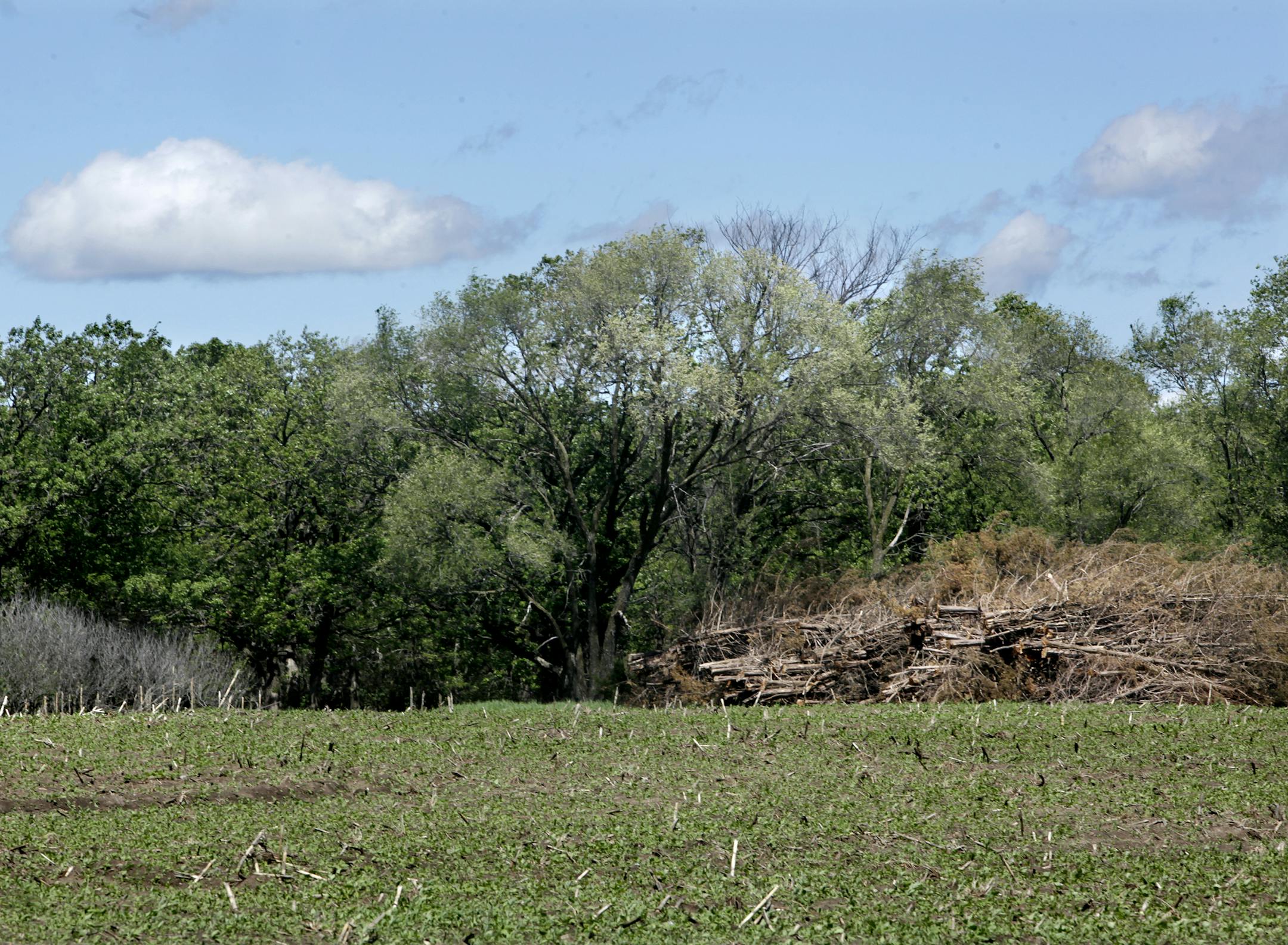
After hauling away more than 40 semitrailers full of buckthorn over the past two years, the Anoka Nature Preserve lit at least that much more on fire in a controlled burn this past weekend.
It was the final step in a two-year campaign designed to tame the buckthorn infestation that choked the 200-acre preserve along the Rum River. Although nobody believes the area can ever be completely rid of the fast-growing, invasive plant, officials hope that their prolonged battle will allow native plants and wildlife to continue returning to the preserve.
"I would expect to see more deer, wild turkeys, forest raptors like harriers," said Chris Lord, district manager for the Anoka Conservation District. "When you restore the ecology, it starts from the bottom up. The insects come in; the smaller mammals like voles come in.
"And then suddenly an owl can actually capture a vole or a field mouse. So it rebuilds the entire food web."
The intent of the controlled burn was to minimize the use of herbicides by burning out small seedlings, as well as seeds on the ground or buried among leaves.
The larger buckthorn plants have been removed over the past two years. They were treated with herbicide, then knocked down, mulched and hauled away to be burned in St. Paul's District Energy plant, which provides steam heat and cooling for downtown homes and buildings, including the State Capitol. More than 400 tons of Rum River buckthorn were hauled to the plant from about 150 acres of the preserve.
Buckthorn comes from Europe. It was brought to the United States as a hedge and became popular in the 1970s, before people realized that it would start taking over places where it wasn't wanted. Buckthorn roots give off a toxin that weakens or prevents nearby plant growth. And its berries contain a laxative that causes birds to excrete them, spreading seeds.
"Conservation districts like ours actually sold it for a number of years," Lord said. "There are some pathogens and insects that historically kept it in check in Europe, but not here."


