


The president of the University of Minnesota makes a million dollars a year. But if she didn’t clock in to work for a day, most students on campus would never notice.
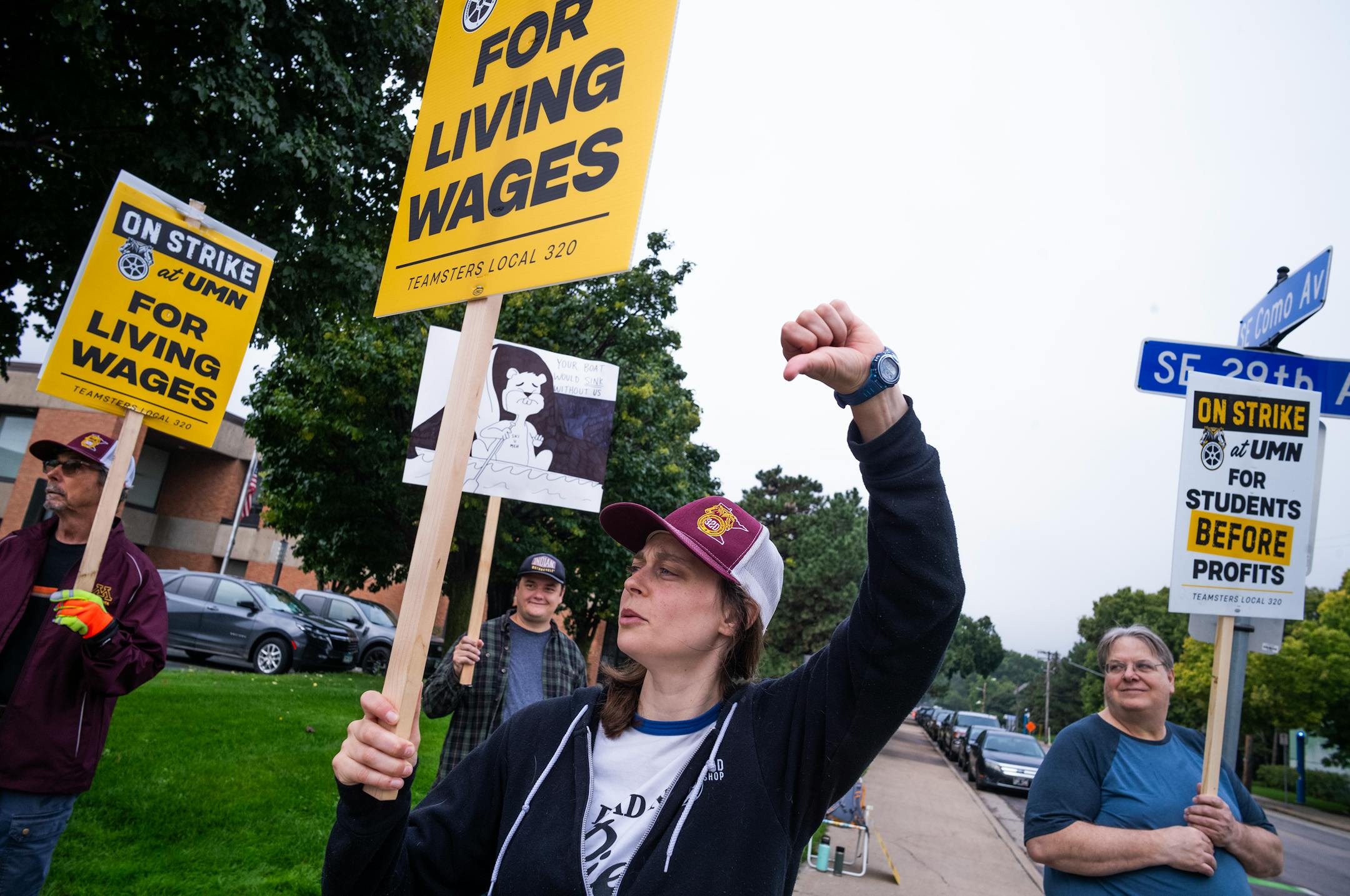
After all, she’s not the one who feeds them, cleans up after them or shovels snow out of their way so they can get to class. The people who do that – 1,400 of them – are out on strike, leaving empty spaces and full trash bins where campus custodians, mechanics, gardeners and food service workers ought to be.
Some of them, like an assistant gardener, work all year for not that much more money than U President Rebecca Cunningham earns every two weeks.
They’re asking for a little more money in their paychecks to keep up with inflation and their skyrocketing health insurance premiums. But as the economy sours, university budgets shrink and good jobs become scarce. The little bit of power that workers enjoyed after the pandemic is bleeding away.
For a while after lockdown, there were more jobs than workers willing to take them. If you didn’t like your job, if your company didn’t pay you well or treat you well, you could leave and find work that suited you better. The Great Resignation, they called it.
Now, the economy is sour, inflation is high and the job market is much weaker than we thought. It’s amazing the president didn’t fire everyone else who still had a job at the Bureau of Labor Statistics.
For corporate America, that meant back to business as usual. Target summoned its red-clad workforce back to the office this week for meetings that could have been an email. So what if you work someplace that doesn’t pay you well or treat you well? What are you going to do? Go on strike?
“We touch every aspect of campus life,” said Lauren Thompson, who graduated from the U last year and returned a few months ago to start work as an assistant gardener, keeping the campus green and growing.


