
Brooklyn Center woman grieves for 9 relatives lost to Ebola

Cynthia and her husband, Andrew Kwennah, are part of a community of nearly 30,000 Liberians concentrated in the northern Twin Cities suburbs who are anxious for any scrap of news from family and friends living in the outbreak zones of Liberia, Sierra Leone, Guinea and now Nigeria.

August 12, 2014 at 5:09AM
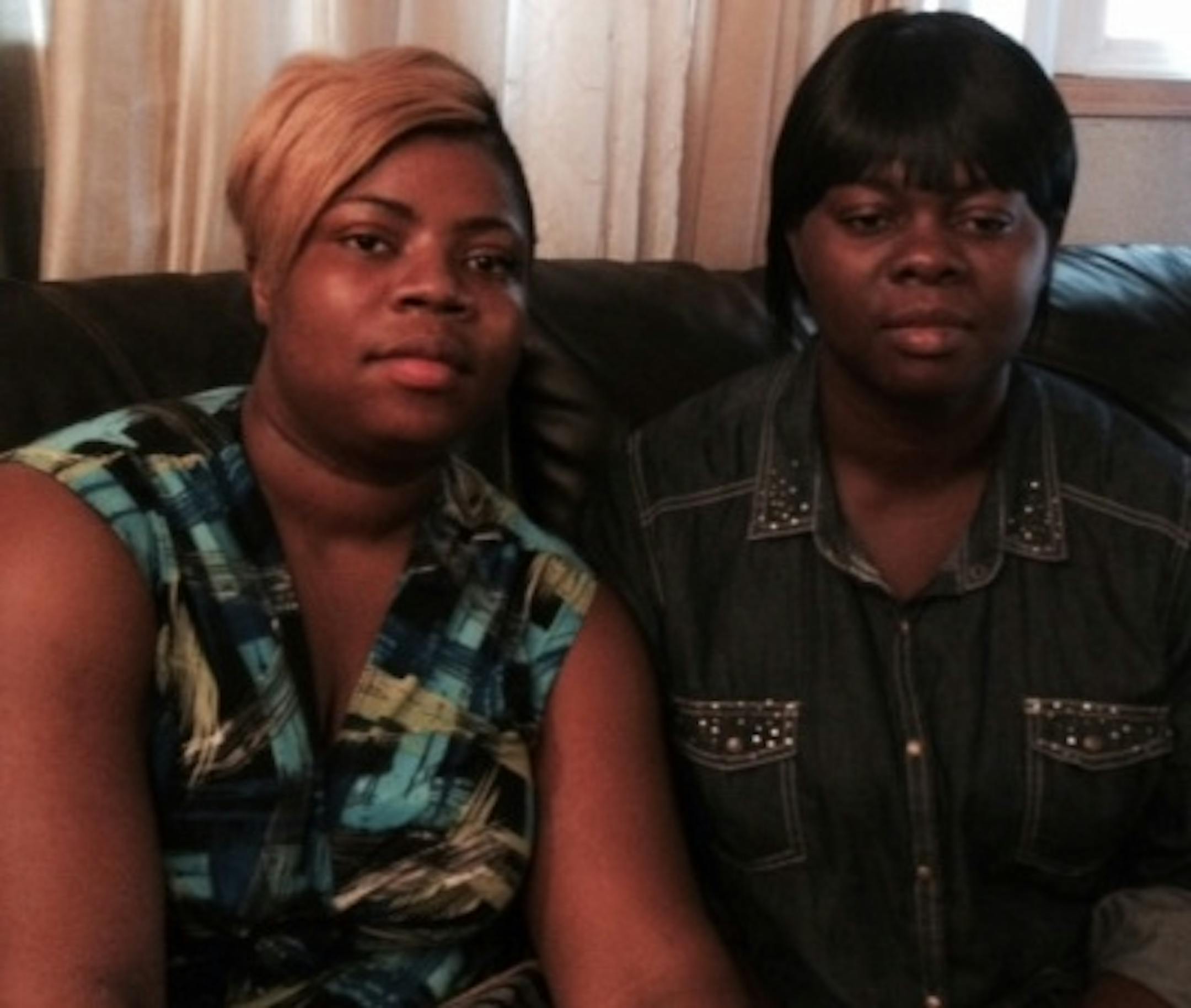
Photo by Shannon Prather Woman with blonde hair is Thelma Saye, whose 17-yr-old son and husband, are in Liberia. Other woman in Cynthia Kwennah, who has lost 9 family members including her mom, dad, sister, niece, nephew, cousins and other inlaws to Ebola. Cynthia, her husband Andrew Kwennah and their two daughters Andrea and Lydia live in Brooklyn Center. Cynthia and Thelma are neighbors and good friends.
Cynthia Kwennah, right, has lost nine family members to Ebola. At left is Kwennah’s neighbor and good friend Thelma Saye, whose husband and son are in Liberia. (The Minnesota Star Tribune)

Cynthia Kwennah's father fell ill in June in Liberia, where doctors told family members that he was suffering from typhoid and malaria. They rallied at his bedside to try to nurse him back to health, at one point admitting him to a hospital.

Only after his death did his family learn that he'd died of Ebola.

Then the deadly virus swept through Kwennah's overseas family, killing eight more. Kwennah, 32, of Brooklyn Center, now has lost her father; her mother; her 28-year-old sister, who recently graduated from college; a 13-year-old nephew and 18-year-old niece; cousins and in-laws. In addition, her aunt has been hospitalized with a suspected case of Ebola, and another niece is showing symptoms.

Kwennah said Monday that family members have told her that they have no idea how her father, an accountant in Monrovia, contracted the virus, which has killed nearly 1,000 people in four West African nations.

"Losing my entire family has become a stigma and a burden in my heart," she said, sitting in her living room as her daughters, ages 4 and 1, played at her side. "I would like to work in their honor."

Cynthia and her husband, Andrew Kwennah, are part of a community of nearly 30,000 Liberians concentrated in the northern Twin Cities suburbs who are anxious for any scrap of news from family and friends living in the outbreak zones of Liberia, Sierra Leone, Guinea and now Nigeria.

Hundreds of people packed two community meetings in Brooklyn Park and Brooklyn Center last week to discuss the epidemic.

At the Brooklyn Park meeting, hosted by the city, Hennepin County health officials and African community groups, many asked how to counsel their loved ones back home: Should my family in Liberia avoid hugs and handshakes? Can sexual contract transmit the disease? Should my family avoid bush meat? Which agency can we trust with donations for medical supplies?

Ebola is spread through contact with infected bodily fluids, including blood, semen and saliva, making family members of the infected and health care workers the most susceptible. The likelihood that an airline passenger would carry the illness to the United States is remote, according to the Centers for Disease Control and Prevention in Atlanta, but the fatal outbreak in Africa still feels close to home for many Minnesota families.

'What would you do?'

In July, Minnesota's Liberian community was stunned to learn of the death of Coon Rapids resident Patrick Sawyer. The Liberian government worker, who had traveled between Minnesota and West Africa, died from Ebola in Africa.

He had been caring for his ill sister, assuming that she had malaria. After her death, authorities confirmed that she had Ebola.

Days before his death, Sawyer traveled to Nigeria. According to international media reports, Nigerian officials have said that Sawyer infected several other people.

On Monday, his widow, Decontee Sawyer, of Coon Rapids,addressed widespread reports that Sawyer may have known that he was ill when traveling to Nigeria and tried to avoid contact with people.

She said her husband deeply mistrusted Liberian health care and may have sought better care in Nigeria.

"I think it was stupid and reckless, but I think this was a desperate man who wanted to be helped," she said. "He loved life, and he didn't want to die. He was probably thinking, 'If I could only get to Nigeria, I have a chance.' …

"I heard the stories of how he wouldn't let anyone touch him. He wouldn't want to spread it or infect anyone. It's just desperate, desperate, desperate. He just wanted to go and get help."

Sawyer said some in the local African community have confronted her about the reports. Her 6-year-old daughter also been asked about it by other children, she said. "She asked me, 'Is my daddy killing everyone?' " Sawyer said.

But she said she understands that people are grieving. "They are just processing in their own way," she said.

She said she does take issue with Liberian government officials' criticizing her husband when they failed to manage the epidemic by waiting until it reached crisis proportions to close borders.

"What would you do if that was you and you absolutely didn't trust the health care system where you were, and you felt [if] you could get to this other location they could help you?" she asked.

The instinct to help

Many families in Minnesota in addition to Kwennah's have heard that family members, friends and neighbors in West Africa have fallen ill, said Wynfred Russell, executive director of the nonprofit African Career, Education and Resource Inc. in Brooklyn Park.

"These are extended families. You have several generations living in the same household," she said. "The propensity is to want to help."

And for many residents of the afflicted areas, the protective measures required to care for the sick safely appear foreign and shocking, she said. "Even in America, it would be strange — these guys dressed up in biocontainment suits come and pick up your sick relatives. They hide their sick relatives thinking they are doing something good, but they are infecting more people."

Fear about the disease recently led a Minnesota woman returning from Liberia to check into a hotel in a self-imposed quarantine, Russell said.

She repeatedly demanded to be tested for Ebola even though she showed no symptoms.

Such anxiety has led many Minnesotans with West African ties to curtail overseas travel plans to see family or conduct business in the affected regions.

Even though Kwennah fears for her lone surviving sister, who is in Monrovia with a sick 16-year-old daughter and a 3-month-old baby, she said she will not travel to the region until "everything is under control."

She said her sister is no longer comfortable staying in the family home where so many have died but is being shunned by acquaintances.

"Everywhere she has been driven away," said Kwennah, who has been unable to contact her for two days. "I've been so scared."

Her husband, Andrew Kwennah, called the situation "a hard reality."

So far, his side of the family has avoided illness, even though they, too, had visited Cynthia Kwennah's sick parents.

"My family took a lot of risks. They didn't know what was going on," he said. "They are good so far."

Russell said the goal now is to provide accurate information Minnesotans can share with family members in the impact zones, to address the psychological effect felt by families in the Twin Cities area and to mobilize relief and fundraising efforts.

"Folks here send a lot of resources back home," Russell said. "They do have a lot of influence over people back in Liberia."

Shannon Prather • 612-673-4804

about the writer

about the writer

Shannon Prather

Reporter

Shannon Prather covers Ramsey County for the Star Tribune. Previously, she covered philanthropy and nonprofits. Prather has two decades of experience reporting for newspapers in Minnesota, California, Idaho, Wisconsin and North Dakota. She has covered a variety of topics including the legal system, law enforcement, education, municipal government and slice-of-life community news.

See Moreicon

More from No Section

See More
FILE -- A rent deposit slot at an apartment complex in Tucker, Ga., on July 21, 2020. As an eviction crisis has seemed increasingly likely this summer, everyone in the housing market has made the same plea to Washington: Send money — lots of it — that would keep renters in their homes and landlords afloat. (Melissa Golden/The New York Times) ORG XMIT: XNYT58
Melissa Golden/The New York Times

It’s too soon to tell how much the immigration crackdown is to blame.